Bitcoin mining difficulty surges 15% — the sharpest increase since 2021 — even as prices remain under pressure
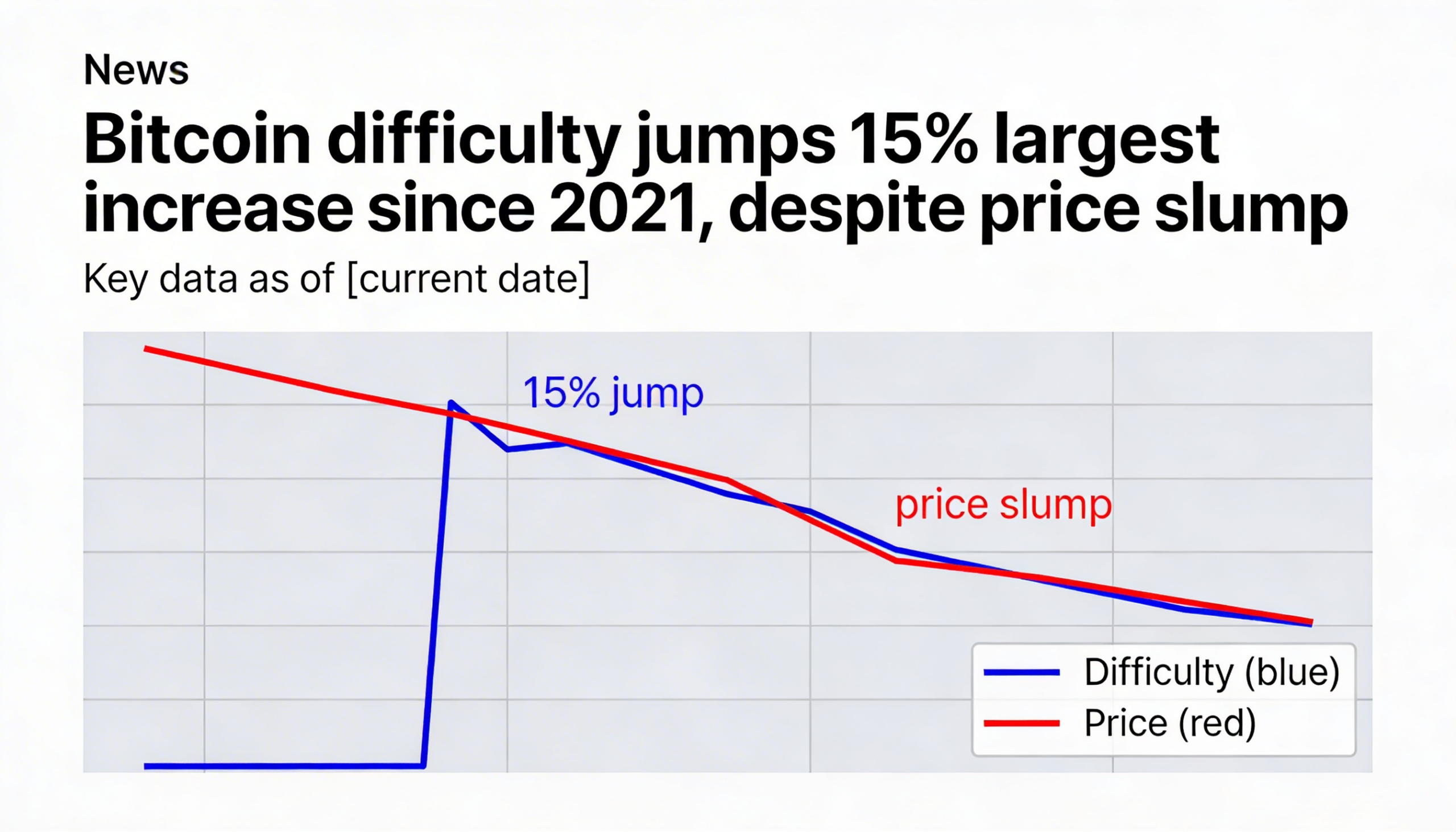
Bitcoin’s mining difficulty has rebounded sharply to 144.4 trillion, marking a 15% increase — the largest percentage jump since 2021. The surge comes as network hashrate recovers to 1 zettahash per second (ZH/s), even though hashprice remains near multi-year lows.
The latest adjustment follows a 22% increase in 2021 after China’s sweeping mining ban disrupted the network and forced a major reshuffling of global operations. Difficulty, which reflects how hard it is to mine a new block, automatically recalibrates every 2,016 blocks — roughly every two weeks — to keep block production on schedule at about 10 minutes, regardless of fluctuations in total computing power.
The new increase comes after a prior 12% drop in difficulty, triggered by a slide in hashrate — the total computational power securing the Bitcoin network. Mining activity saw its steepest pullback since late 2021 when a severe winter storm in the United States forced several large operators to curtail operations.
Network strength had previously peaked in October, when bitcoin hit an all-time high near $126,500 and hashrate climbed to 1.1 ZH/s. As prices later fell to around $60,000 in February, hashrate dropped to 826 exahash per second (EH/s). Since then, computing power has rebounded to 1 ZH/s, while bitcoin’s price has recovered to roughly $67,000.
Even so, miner economics remain under strain. Hashprice — the estimated daily revenue earned per unit of hashrate — is hovering around $23.9 per petahash per second (PH/s), levels not seen in years, compressing profit margins across the sector.
Despite the pressure, large-scale operators with access to inexpensive energy continue to expand operations. The United Arab Emirates, for instance, is estimated to be holding roughly $344 million in unrealized gains from its mining activities.
Well-capitalized miners capable of operating efficiently are helping keep the network’s hashrate elevated and resilient, even amid relatively subdued bitcoin prices.
At the same time, structural shifts are underway. A significant contributor to the earlier hashrate decline has been the decision by several publicly traded mining firms to redirect power capacity toward artificial intelligence and high-performance computing data centers.
Bitfarms (BITF) recently unveiled a rebrand that removes explicit reference to bitcoin as it pivots more aggressively toward AI-focused infrastructure. Meanwhile, activist investor Starboard has encouraged Riot Platforms (RIOT) to further expand into AI data center operations, underscoring a broader industry trend toward diversification beyond pure-play bitcoin mining.
Share this content: