Bitcoin Fund Redemptions Likely Driven by Arbitrage, Not IPO Rotation
Some market participants have suggested that Bitcoin selling is being driven by investors raising cash ahead of major IPOs such as SpaceX and Anthropic, but Sygnum CIO Fabian Dori says the data points in a different direction.
Bitcoin ETFs have recorded around $5.75 billion in outflows since mid-May, fueling speculation that institutional investors are trimming crypto exposure in preparation for a wave of high-profile listings beginning with SpaceX.
The selling pressure contributed to Bitcoin dropping below $60,000 in early June—its lowest level since 2026 and more than 50% below its peak near $125,000 last October. The move has been widely framed as part of a broader capital rotation from crypto into upcoming equity offerings.
Dori disputes that narrative.
“The ETF outflows are real,” he told CoinDesk, “but the data does not support the idea that Bitcoin is falling because of the SpaceX IPO.”
He argues that if investors were systematically selling Bitcoin to fund IPO allocations, it would likely show up in unusual exchange withdrawal patterns and a clear decline in stablecoin supply as capital exited the crypto ecosystem. According to him, neither signal is currently visible.
Exchange flows remain broadly in line with historical norms, while stablecoin market capitalization has shown little meaningful contraction. At the same time, higher-risk segments of the crypto market are still attracting inflows—behavior that would be unlikely if investors were broadly exiting the asset class.
Dori instead points to derivatives markets as a more reliable explanation.
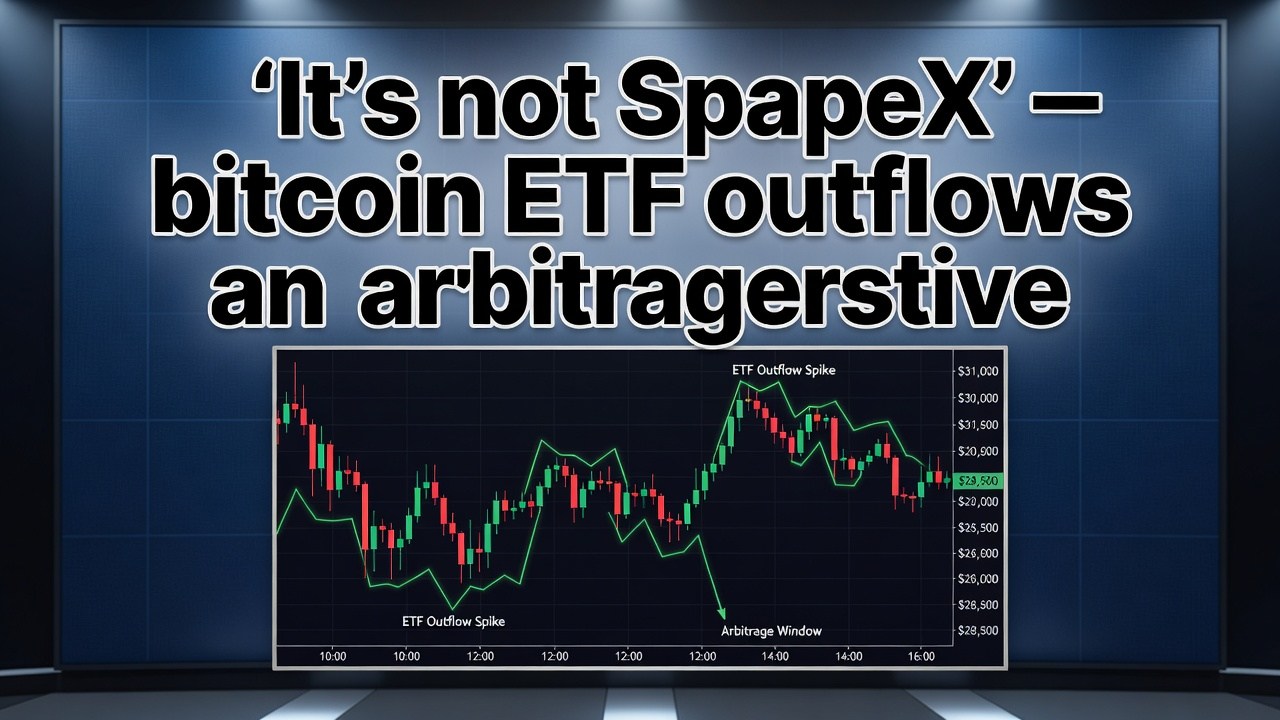
He highlights a decline in CME Bitcoin futures open interest alongside ETF redemptions, suggesting that much of the selling may be driven by the unwinding of cash-and-carry arbitrage trades rather than capital rotation into equities.
In a cash-and-carry trade, investors buy spot Bitcoin—often via ETFs—while simultaneously shorting futures to capture the spread between the two. When that premium narrows or funding conditions weaken, the position is closed, leading to ETF outflows even without a change in long-term conviction.
“Open interest and funding rates moved very positively together over the same period,” Dori said, adding that this pattern points to arbitrage unwinding rather than a broad-based exit from Bitcoin exposure.
Share this content: