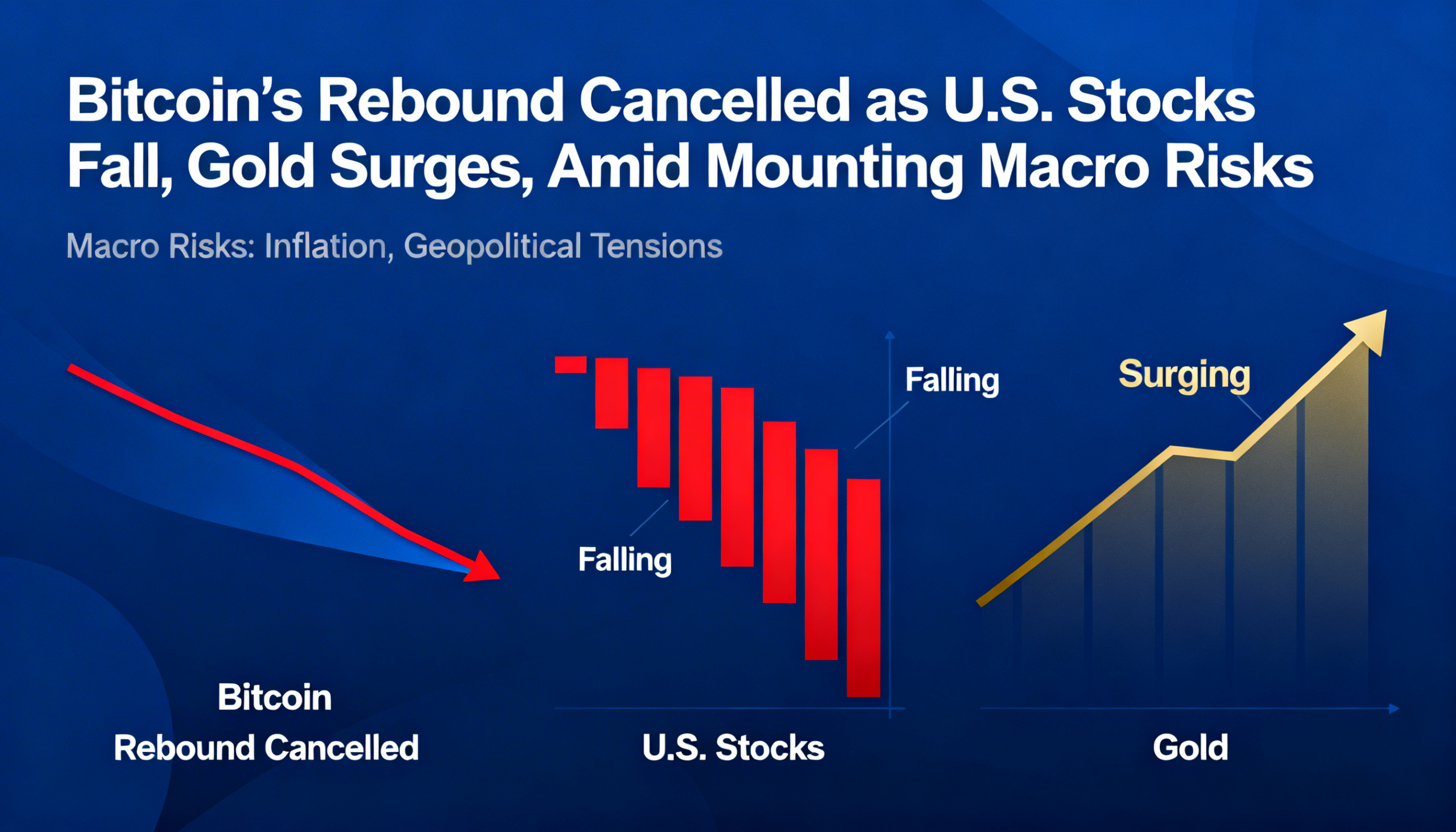
Bitcoin’s upswing reverses with U.S. markets under pressure and gold jumping as macro risks intensify
A mix of stubborn inflation, widening credit spreads and escalating geopolitical tensions drove investors out of risk assets, weighing on cryptocurrencies and related equities.
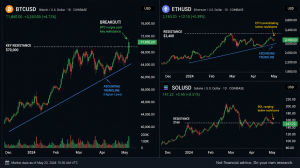
Bitcoin fell below $66,000 during Friday’s early U.S. trading, wiping out most of its midweek recovery. After briefly nearing $68,000, the asset slid roughly 3% in a matter of hours to around $65,600. The broader CoinDesk 20 Index dropped 2.3% over the past 24 hours, with Ethereum, XRP, and Solana posting comparable losses.
Crypto-linked stocks also retreated after earlier gains in the week. Strategy (MSTR), the largest public corporate holder of bitcoin, declined 3%, while Coinbase (COIN) slipped more than 2%. Stablecoin issuer Circle (CRCL) fell nearly 5%, snapping a sharp rebound that had seen the stock surge close to 50% in recent sessions.
Bitcoin mining companies — increasingly associated with AI infrastructure growth — experienced steeper losses. IREN, Cipher Mining (CIFR), Core Scientific (CORZ) and TeraWulf (WULF) dropped between 6% and 8%.
The pullback mirrored weakness in traditional markets. The Nasdaq Composite declined 0.8%, while the S&P 500 fell 0.6%.
Inflation Surprise and Credit Stress
A hotter-than-expected Producer Price Index reading reignited inflation concerns. Core PPI rose 3.6% year over year in January, exceeding forecasts of 3.0% and accelerating from the prior 3.3% pace. Markets now assign a 96% probability that the Federal Reserve will leave interest rates unchanged at its March 18 meeting.
At the same time, signs of strain in credit markets have intensified. Credit spreads widened to their highest levels in four months. Shares of alternative asset managers KKR, Ares Management, and Apollo Global Management slid 6% to 7% during the session, reflecting broader concerns about tightening financial conditions.
Geopolitical risks further unsettled investors. Prediction markets showed rising odds of potential U.S. military action against Iran, following reports that the U.S. began evacuating certain embassy staff from Israel.
Safe-Haven Demand Builds
As risk appetite faded, capital flowed into traditional defensive assets. The U.S. 10-year Treasury yield dipped below 4% for the first time since November 2024. Gold gained 1% to trade above $5,230 per ounce, while silver advanced 4% to reclaim the $92 level. Crude oil also rose 2.3% to above $67 per barrel.
Paul Howard, director at crypto trading firm Wincent, said bitcoin’s near-term upside appears constrained in the current risk-off environment. Following February’s options expiry, traders are positioning for BTC to remain capped between $72,000 and $74,000, with support seen near $54,000 into March.
“A cautious stance remains appropriate, especially given that March has historically been a softer month for major cryptocurrencies,” Howard said.
Share this content: