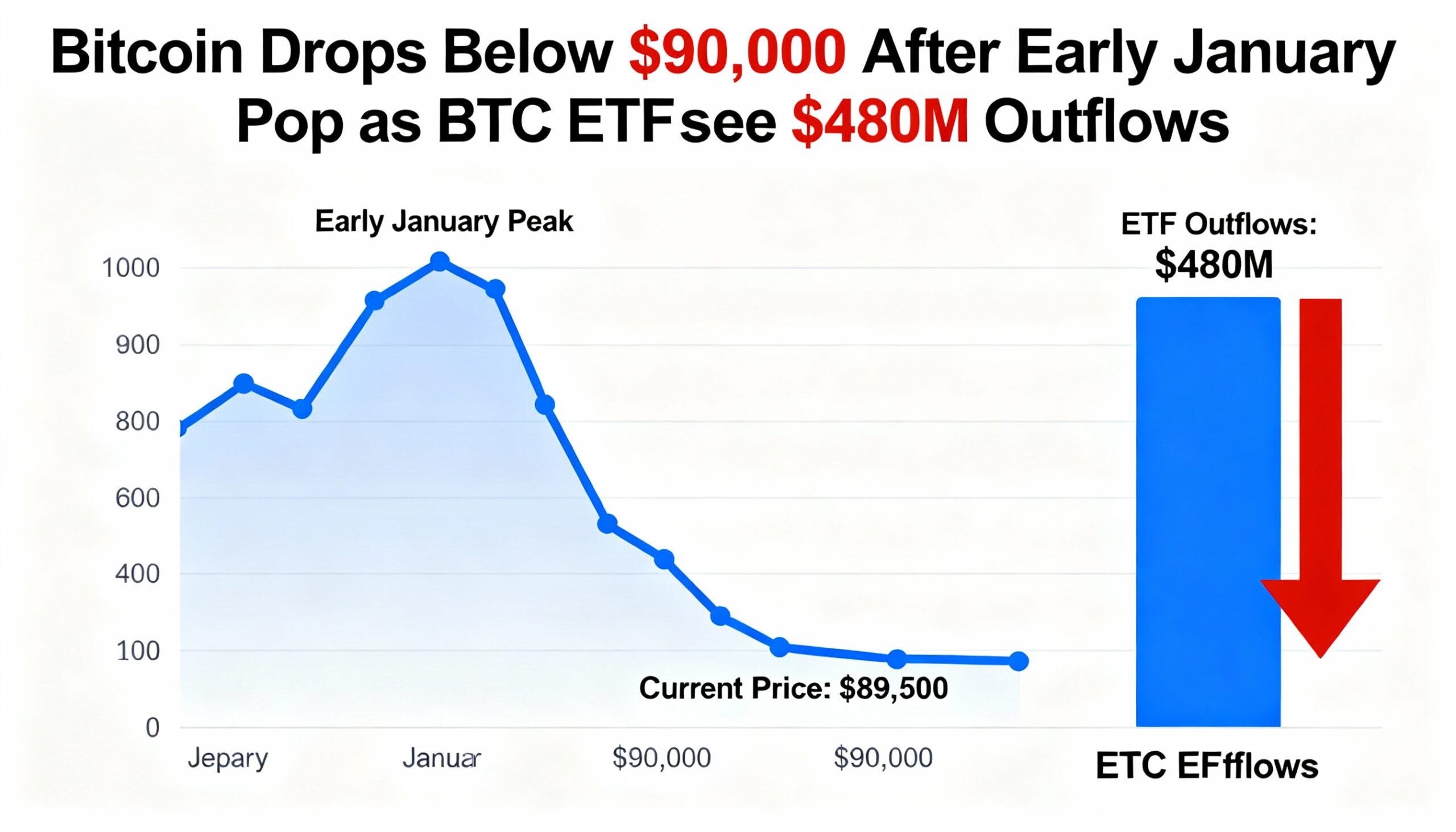
Bitcoin retreats below $90,000 after early January gains, driven in part by $480 million in BTC ETF outflows.
Bitcoin fell below $90,000 on Thursday as its early-January rebound cooled, even as global government bonds rallied and expectations for Federal Reserve rate cuts grew.
The cryptocurrency slipped roughly 2% over 24 hours but remains up more than 3% for the week. Ether declined about 3% on the day, holding a seven-day gain of roughly 6%, according to CoinGecko. U.S. spot bitcoin ETFs saw $486 million in outflows, marking their second consecutive day of losses this year.
Among major altcoins, XRP led declines with a 4.5% drop over 24 hours, though it remains up 17% for the week. Dogecoin posted the strongest weekly gain, rising over 22%.
Traditional markets mirrored the trend. U.S. Treasuries extended gains, pushing the 10-year yield down to around 4.14% after weak economic data reinforced bets that the Fed could cut rates later this year. ADP reported December private-sector payrolls rose 41,000, below Bloomberg survey expectations of 50,000. Some rate markets briefly priced in at least two additional quarter-point cuts by year-end.
Bond markets in Asia followed suit, with Australian and New Zealand debt climbing and Japanese bond futures holding gains after a 30-year auction. Analysts say expectations of easier monetary policy tend to support risk assets like crypto, particularly when cash offers limited returns.
“Macroeconomics is a crucial factor,” said B2BINPAY analysts, noting that crypto remains highly sensitive to bitcoin-led sentiment.
The early-year rally is also tied to a post-holiday reset, with December rangebound as desks reduced risk and liquidity thinned. Multiple tailwinds — including steadier policy expectations and improved liquidity — are supporting prices, though Thursday’s pullback shows the rebound is not guaranteed. Bitcoin dominance and shifts in investor flows could test crypto’s strength in the coming sessions.
Share this content: