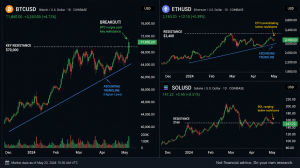
A broad sell-off grips crypto markets as bitcoin tumbles to $68,000.
Cryptocurrency markets began the week on the back foot as investors positioned for a heavy slate of U.S. economic updates, including the Federal Reserve’s January meeting minutes and the upcoming core PCE inflation reading.
Bitcoin (BTC) was trading around $68,200 at the time of writing, down roughly 3% over the previous 24 hours. The broader market fared worse, with major altcoins such as XRP, ether (ETH) and dogecoin (DOGE) registering steeper declines.
Selling pressure was widespread, with about 85 of the top 100 digital assets by market capitalization in negative territory. Privacy coins monero (XMR) and zcash (ZEC) fell sharply, while smart contract tokens also weakened. The CoinDesk Smart Contract Platform Select Capped Index dropped nearly 6%, extending its year-to-date slide to 28%.
The downturn comes despite last week’s softer U.S. inflation data, which had briefly fueled optimism for monetary easing. The consumer price index showed annual inflation slowing to 2.4% in January from 2.7% in December, reinforcing expectations that the Federal Reserve could deliver at least two 25-basis-point rate cuts this year. The 10-year U.S. Treasury yield fell to 4.05%, its lowest level since early December.
Bitcoin initially responded positively, climbing from roughly $66,800 late last week to above $70,000 over the weekend. However, the rally lost momentum, and prices failed to establish a sustained foothold above the key psychological level.
Vikram Subburaj, CEO of India-based exchange Giottus, said the market’s inability to hold gains reflects cautious risk appetite and ongoing deleveraging in derivatives markets.
“Risk appetite remains selective, and macro cross-currents are keeping traders defensive,” Subburaj said. “Derivatives activity suggests the market is still focused on cutting leverage. Rallies fade quickly, and dip buying is limited to obvious technical support zones.”
Attention now turns to upcoming macro catalysts. Investors will parse the Fed’s meeting minutes for clues on policymakers’ thinking, while the core personal consumption expenditures (PCE) index — the central bank’s preferred inflation gauge — is expected to be the week’s most important data point.
Dessislava Ianeva, dispatch analyst at Nexo, said traders will look for evidence that inflation pressures are steadily easing toward the Fed’s 2% target. Both month-over-month momentum and the annual trend will shape expectations for the policy path ahead.
In traditional markets, currency developments may also influence crypto sentiment. Mark Nash of Jupiter Asset Management, long known for his bearish stance on the Japanese yen, has turned bullish, forecasting an 8–9% appreciation, particularly against the Swiss franc.
Given bitcoin’s recent positive correlation with the yen, sustained strength in the Japanese currency could provide a supportive backdrop for the leading cryptocurrency, even as macro uncertainty continues to dominate near-term trading.
Share this content: