When Memecoins Go Extreme: Tattoos, Dares, and the Wild Underbelly of Crypto Culture
Users are being paid to carry out increasingly extreme stunts—shaving their heads, consuming alcohol on camera, and even interviewing homeless individuals—raising concerns over whether Pump.fun’s latest bounty system encourages creativity or crosses into exploitation.
Memecoin launch platform Pump.fun is under scrutiny after its new “GO” bounty feature triggered its first major controversy.
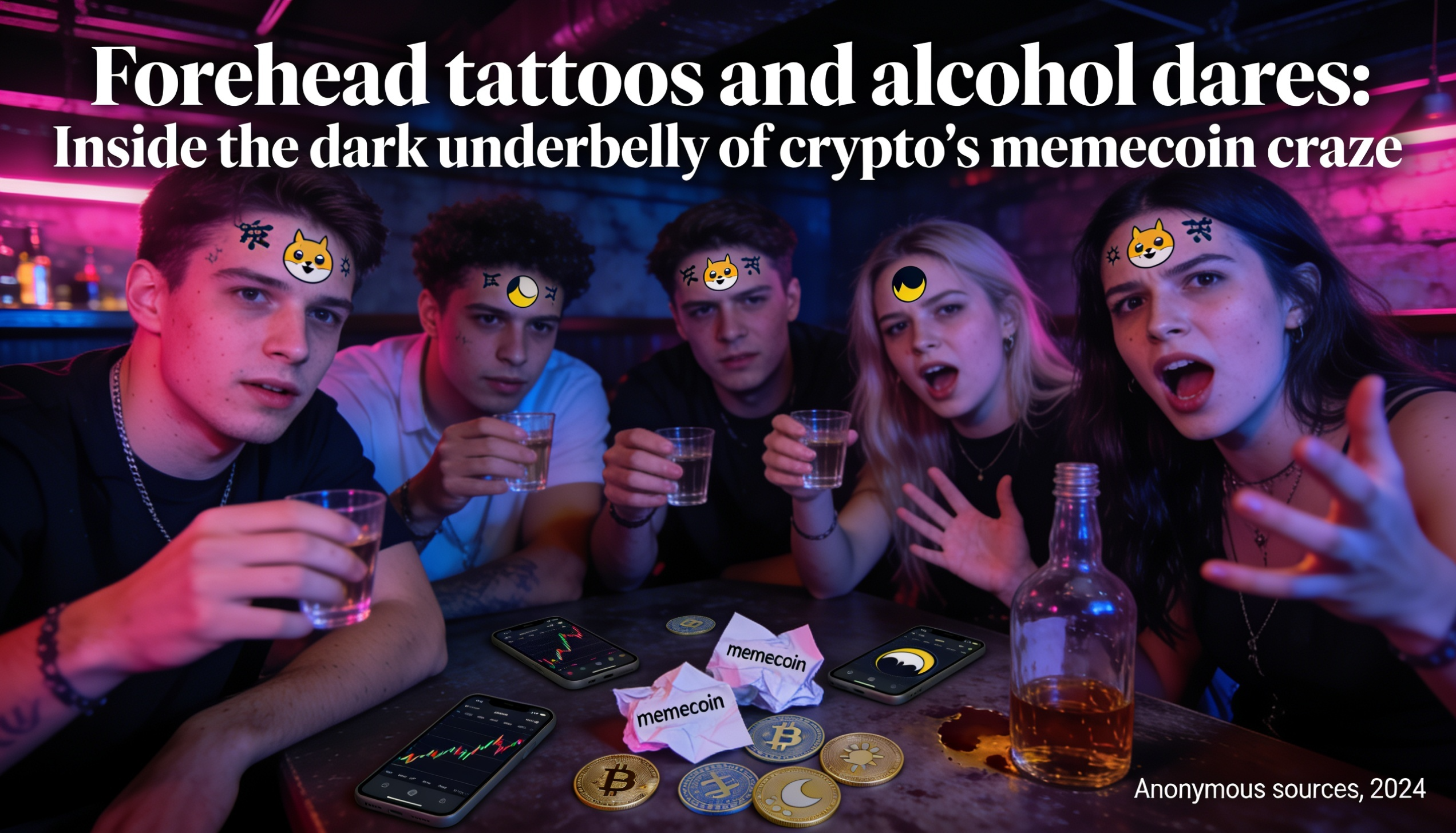
A user known as Arivu on X said he completed a bounty that instructed participants to tattoo the phrase “$boutywork” on their forehead and upload video proof. The task appeared linked to a token called $Bountywork, although the bounty listing itself contained a misspelling, using “$boutywork” instead.
According to Arivu, he followed the instructions exactly as written.
“I have followed everything exactly what the name mentioned in the line,” he posted on X, insisting the error was not his since he replicated the provided wording. He later added, “Please i gave my life,” expressing regret over the outcome.
That typo ultimately became the catalyst for market activity.
A Solana-based token using the ticker BOUTYWORK launched on PumpSwap and quickly surged past a $600,000 market cap. Within 24 hours, it recorded more than $3.5 million in trading volume, attracted roughly 2,630 holders, and built around $43,000 in liquidity.
Arivu later claimed he received $20,000, allegedly sourced from trading fees tied to the token’s trading activity. He shared the contract address and thanked the community, saying the situation had changed his life.
“Pay anyone to do anything”
Introduced last week, Pump.fun GO allows users to create and complete bounties for virtually any task. The platform frames it as a way to “pay anyone to do anything,” which can appear harmless at first, but becomes controversial when tasks involve permanent physical actions or risky behavior.
One X user claimed they contacted the tattoo studio involved and suggested the participant may have been exploited by someone seeking to profit from the token’s price spike. CoinDesk attempted to reach the shop but did not receive a response.
X product lead Nikita Bier criticized the trend directly, stating:
“It’s sad that all the rich people left crypto and it’s now the entire industry is just teenagers in America forcing poor people to do shameful things.”
The tattoo incident is only one example, as several other Pump.fun GO bounties have drawn similar criticism.
Some tasks remain relatively harmless internet challenges, such as eating a watermelon in under 60 seconds for a $93 reward pool. Others are more controversial, including a $663 bounty asking users to visit Los Angeles’ Skid Row and interview homeless individuals about their voting preferences.
More concerning cases have also emerged.
One bounty encouraged participants to drink an entire bottle of alcohol while promoting a token, with multiple videos reportedly showing rapid consumption attempts. Another offered around $266 for shaving one’s head while repeatedly shouting “Jobcoin.”
Incentives, attention, and risk
Critics argue that Pump.fun GO turns attention into monetary rewards, bounties into viral content, and content into token speculation. Participants often receive relatively small payouts, while creators and traders potentially capture far greater gains if the associated token gains traction.
Although Pump.fun says it does not control user-generated content and maintains moderation systems for harmful material, concerns remain about how such incentives shape user behavior on the platform.
The company has not publicly commented on this specific incident, though inquiries have been made.
This is not the first time Pump.fun has faced controversy. Earlier versions of its livestreaming ecosystem also featured extreme behavior as users attempted to boost token visibility and market capitalization.
Past incidents reportedly included disturbing content such as self-harm threats, confinement scenarios, and other harmful acts performed for attention and financial incentive.
The uneasy reality of memecoin culture
On one side, the situation reflects the chaotic, internet-driven nature of memecoins, where small errors, viral moments, and speculative tokens can quickly translate into real financial activity.
On the other, it highlights how rapidly crypto incentive structures can drift into ethically questionable territory, particularly during bearish market conditions, raising broader concerns about reputation and legitimacy as the industry continues seeking mainstream acceptance.
Share this content: