The 7-Day Countdown: CPI Data and the Fed’s Decision Could Make or Break Bitcoin’s Rally
Bitcoin Faces a Critical Macro Test as CPI and Fed Signals Converge
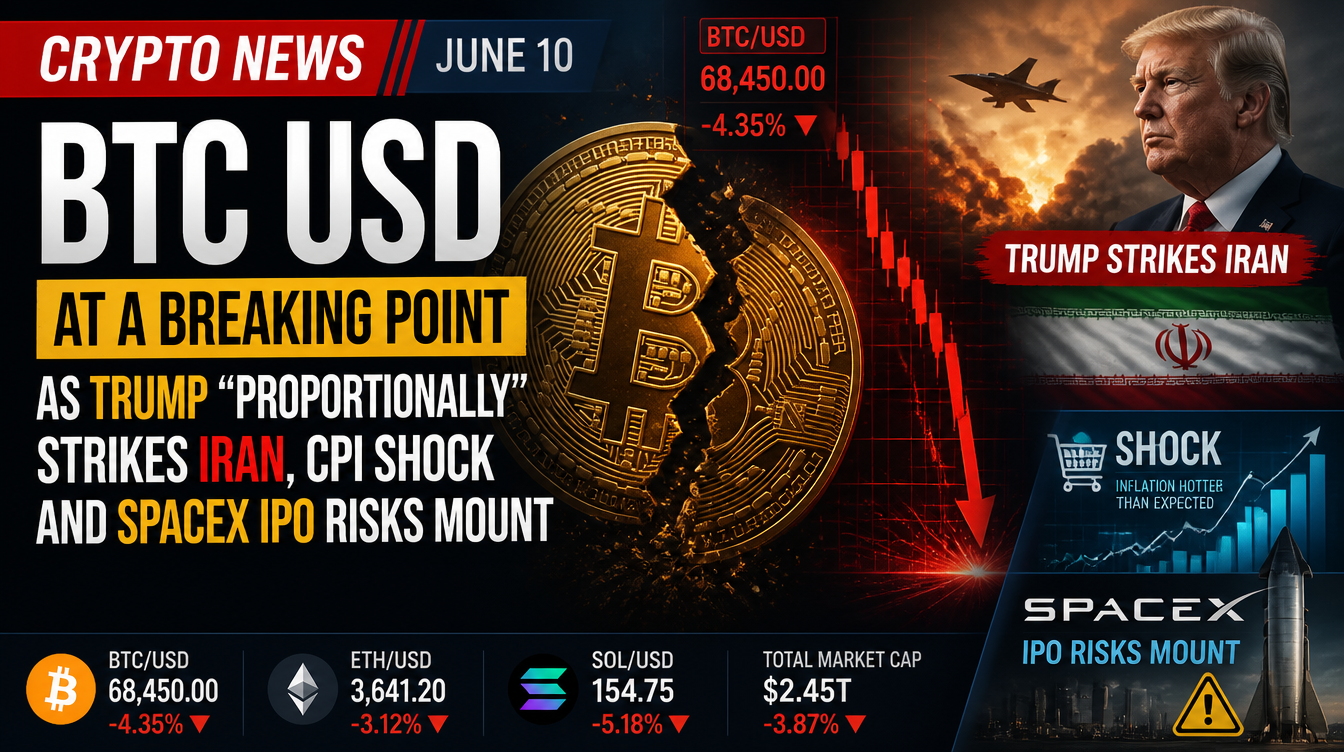
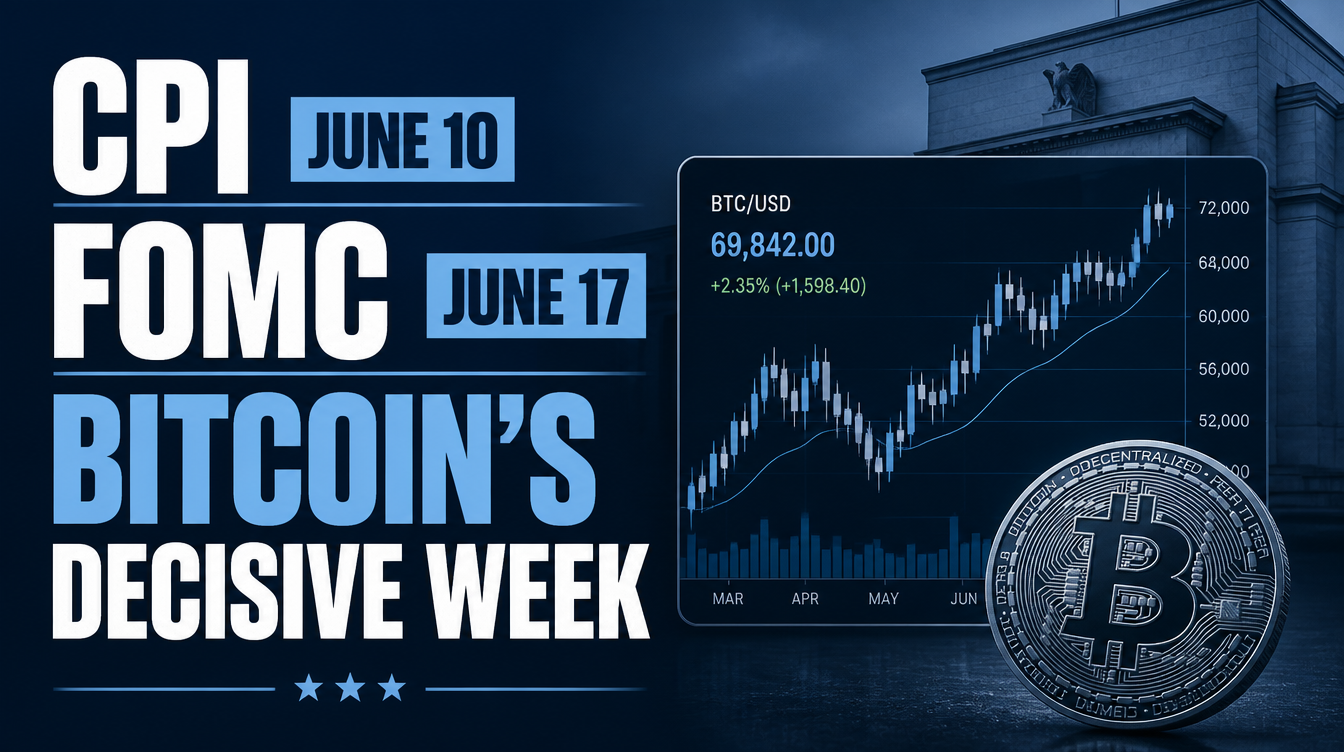
Two major economic events are set to shape Bitcoin’s outlook for the remainder of the year. The May Consumer Price Index (CPI) report is scheduled for June 10, followed by the Federal Reserve’s updated FOMC dot plot on June 17. With only a week separating the two releases, markets are entering a period that could prove decisive for Bitcoin’s next major trend.
April’s inflation reading came in at 3.8% year-over-year, marking the highest level recorded since May 2023. Investors have yet to fully account for the impact that another elevated inflation print could have on the Federal Reserve’s future interest-rate projections. That disconnect between expectations and reality could be the catalyst for a Bitcoin move of roughly 10% in either direction.
The relationship between these variables is straightforward. Inflation data influences expectations for the Fed’s policy outlook. Those expectations affect real yields, which in turn drive movements in the U.S. Dollar Index (DXY). Since Bitcoin is highly sensitive to dollar liquidity conditions, changes in the DXY often translate directly into Bitcoin price action.
All four components of this chain will be active simultaneously between June 10 and June 17, creating a complex environment where conflicting signals may emerge.
How Inflation and Fed Expectations Impact Bitcoin
CPI data affects markets through three interconnected mechanisms. First, inflation readings alter expectations for future Federal Reserve rate cuts. Second, those changing expectations influence Treasury yields. Third, shifts in U.S. yields relative to global markets impact the strength of the dollar.
Because Bitcoin is denominated in dollars and tends to move inversely to dollar strength, fluctuations in the DXY can have a significant effect on crypto markets.
Scenario 1: Inflation Remains Elevated
If CPI exceeds 3.6% year-over-year, the result would be consistent with April’s 3.8% reading and recent producer inflation data, which showed a 6.0% annual increase—the largest monthly jump since March 2022.
Another strong inflation report could force markets to remove expectations for Fed rate cuts in 2026, push the DXY toward 107, tighten global liquidity conditions, and place Bitcoin under pressure, potentially driving prices back toward the mid-$60,000 range.
According to Kraken’s economic outlook, a stronger-than-expected inflation figure could significantly reduce market confidence in future rate reductions.
Scenario 2: Inflation Meets Expectations
If CPI falls between 3.3% and 3.6%, attention would shift to the Fed’s dot plot projections. Should policymakers reduce their expected 2026 rate cuts from two to one, the dollar could remain stable while Bitcoin continues trading within its existing range ahead of the FOMC announcement.
In this case, markets would likely remain volatile but directionless as traders wait for clearer guidance from the Federal Reserve on June 17.
Scenario 3: Inflation Comes in Below Expectations
A CPI reading below 3.0% would represent a meaningful downside surprise. Core CPI currently sits at 2.8% year-over-year and is generally viewed as a more important measure by Federal Reserve officials.
A softer-than-expected result in both headline and core inflation could increase expectations for three rate cuts in 2026, weaken the dollar toward the 99 level on the DXY, and create favorable conditions for risk assets, including Bitcoin.
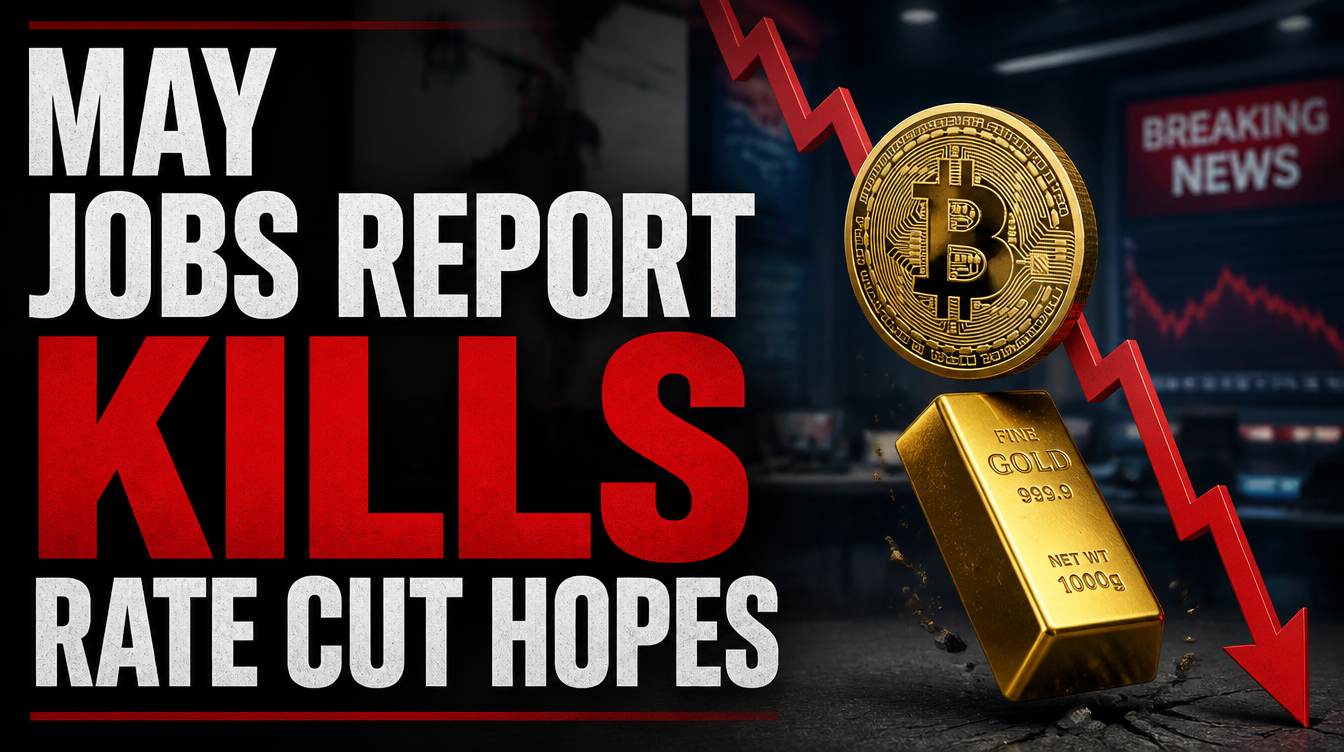
The Federal Reserve has repeatedly emphasized that inflation and labor-market conditions remain the primary factors guiding future policy decisions. Before CPI is released, investors will also receive May’s Nonfarm Payrolls report on June 5. April’s report showed payroll growth of 115,000 jobs while unemployment remained at 4.3%.
These economic releases are closely connected. Employment data influences inflation expectations, inflation shapes monetary policy forecasts, and those forecasts impact financial markets. As Kraken noted, the sequence of NFP, CPI, PPI, and the FOMC meeting creates a clear macroeconomic roadmap where each report helps determine the significance of the next.
Key Bitcoin Levels to Watch
Recent market action has shown that Bitcoin remains highly responsive to broader macroeconomic developments.
As June begins, two critical price levels stand out: resistance near $68,000 and support around $63,500. A weekly close above $68,000 accompanied by stronger trading volume would likely signal a breakout from the current consolidation phase.
Conversely, a daily close below $62,500 could expose the $60,000 level, which represents the next major area of demand.
Another important reference point sits near $65,000, corresponding to the realized price of short-term holders—investors who purchased Bitcoin within the past 155 days.
This level has become a key battleground where bullish and bearish market narratives intersect.
Technical indicators currently remain balanced. The daily RSI is positioned in neutral territory, while funding rates are positive but not excessively stretched. This suggests traders have directional exposure without the market appearing dangerously leveraged.
On the weekly chart, Bitcoin continues to compress within a narrowing range characterized by lower highs since April and higher lows since May. Such consolidation is unlikely to persist through multiple inflation releases and a major Federal Reserve update.
The period between June 10 and June 17 could ultimately determine whether Bitcoin breaks higher or lower.
One thing appears certain: volatility is approaching. The only remaining question is which direction the market chooses next.
Share this content: