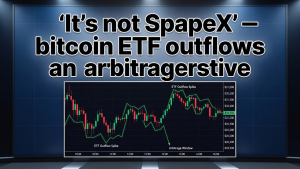
More than $1 billion has poured into bitcoin ETFs, but the price remains stagnant — an analyst explains the disconnect.
Despite a fresh wave of capital flowing into U.S.-listed spot bitcoin exchange-traded funds, bitcoin’s price has yet to show a strong reaction — a dynamic analysts say reflects how ETF mechanics work rather than a lack of demand.
According to analysts at Bitfinex, the roughly $1.4 billion that has entered spot bitcoin ETFs over the past five days does not necessarily translate into immediate buying pressure in the spot market. They argue that inflows are often interpreted as instant demand for bitcoin, even though the ETF creation process can delay when the underlying asset is actually purchased.
In comments shared with CoinDesk, the analysts explained that structural features of ETFs can create a lag between investor inflows and real spot-market purchases of bitcoin, meaning price effects may take time to appear.
An exchange-traded fund pools investor capital and holds underlying assets — in this case bitcoin — while issuing shares that trade on stock exchanges like ordinary stocks. Each share represents a claim on the fund’s holdings, allowing investors to gain exposure without directly owning the asset. Since the launch of 11 spot bitcoin ETFs in the U.S. in January 2024, the products have accumulated more than $55 billion in net inflows.
The process that keeps ETF prices aligned with their underlying assets relies on authorized participants (APs), typically large banks, market makers, or broker-dealers. When investor demand pushes an ETF’s market price above its net asset value, APs step in to create new shares and sell them to the market, helping close the pricing gap.
However, these institutions often sell ETF shares before actually acquiring the underlying bitcoin — a strategy similar to short selling. While most investors must borrow shares before shorting in traditional markets, regulations allow authorized participants to short ETF shares quickly and purchase the corresponding bitcoin later, sometimes hours afterward or even the next business day depending on whether creations are completed in cash or in-kind.
Because of this process, demand for ETF shares can increase even while purchases of bitcoin in the spot market are temporarily delayed. By the time the underlying BTC is eventually bought, that demand may be offset by other selling pressure in the broader market, limiting the immediate upward impact on prices.
Analysts at Bitfinex say this mechanism likely explains why ETF inflows have surged while bitcoin’s price action has remained relatively muted.
“The result is that the ETF grows, but the actual BTC price doesn’t rise because there has been no buying in the spot market,” the analysts said, noting that the situation can make bitcoin appear “stuck” or artificially subdued.
They added that while this mismatch usually has minimal market impact, periods of heightened volatility or market dislocation can temporarily widen the gap between ETF demand and real spot-market activity, creating short-lived pricing distortions.
Share this content: