Even after the price drop, bitcoin ETFs still manage billions — a show of strength that may conceal a harsher reality
Spot bitcoin ETFs in the U.S. continue to hold roughly $85 billion in assets despite bitcoin’s dramatic price slide — but analysts caution that the apparent resilience may not reflect outright bullish conviction.
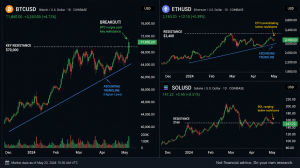
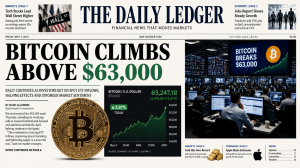
After climbing above $126,000 in early October, bitcoin (BTC) has since fallen to near $60,000, wiping out roughly half its value. Even so, the 11 U.S.-listed spot bitcoin ETFs have recorded cumulative net outflows of only about $8.5 billion. Collectively, the funds still control around $85 billion in assets, representing more than 6% of bitcoin’s circulating supply.
Some market participants interpret the modest outflows as a sign of strong hands. However, others argue that ETF stability is largely driven by the structure of ownership rather than long-term directional bets.
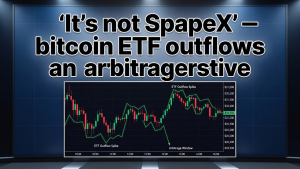
Markus Thielen, founder of 10x Research, said in a client note that a significant share of ETF holdings belongs to market makers and arbitrage-focused hedge funds that typically run hedged, market-neutral strategies.
He cited late-2025 13F filings indicating that between 55% and 75% of BlackRock’s iShares Bitcoin Trust, which manages about $61 billion, is held by such participants. These investors generally offset their ETF exposure with other positions, meaning they are not necessarily making outright bullish calls on bitcoin’s price.
Market makers provide liquidity by continuously quoting bids and offers, profiting from spreads while aiming to minimize directional risk. Arbitrage hedge funds, meanwhile, seek to capture pricing discrepancies between related instruments — such as spot ETFs and futures — by taking opposing positions in each market. In both cases, their activity tends to be neutral rather than a direct vote of confidence in price appreciation.
Thielen added that market makers reduced exposure by an estimated $1.6 billion to $2.4 billion during the fourth quarter, when bitcoin was trading around $88,000, reflecting softer speculative demand and lower arbitrage inventory needs.
In short, while ETF assets have remained substantial through the downturn, much of that stability may be rooted in hedged trading strategies rather than steadfast long-term bullish positioning.
Share this content: