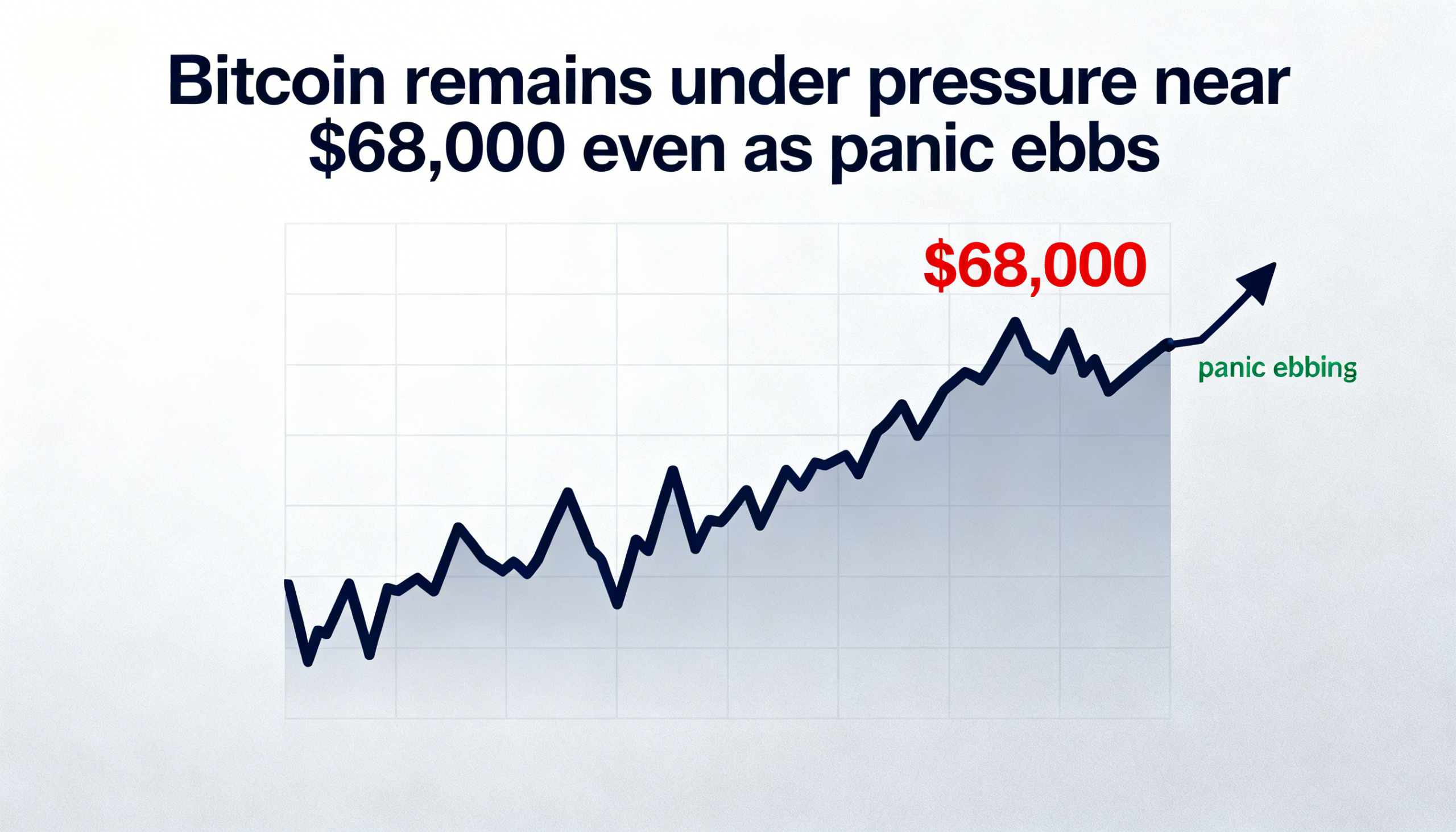
Despite a cooling in panic-driven selling, Bitcoin remains pressured around the $68,000 level.
Bitcoin is stabilizing after a turbulent start to the month, but derivatives positioning and ETF flows indicate that demand remains tepid even as macroeconomic signals turn more supportive.
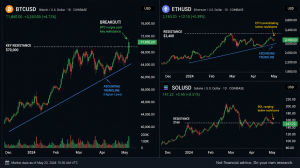
The cryptocurrency was trading just below $68,000 at the time of writing, struggling to generate sustained upside momentum. Although prices rebounded from the early-month slide toward $60,000, they have repeatedly failed to reclaim and hold levels above $70,000, highlighting fragile buying interest.
Market anxiety has cooled notably. Data from Volmex show bitcoin’s 30-day implied volatility has retreated to an annualized 52%, down sharply from nearly 100% during the height of the sell-off. The earlier spike reflected intense demand for options protection as traders braced for large price swings.
Implied volatility rises when investors aggressively purchase options — derivative contracts used to hedge or speculate on price movements. Call options offer exposure to upside moves, while put options provide insurance against declines. The recent drop in implied volatility suggests that the scramble for protection has eased and forced deleveraging is fading.
Analysts at Bitfinex said the decline in volatility points to a more stable market environment. However, they cautioned that stabilization should not be confused with renewed bullish conviction.
That caution is evident in perpetual futures markets. Funding rates — the periodic payments exchanged between long and short traders to keep futures prices aligned with spot — remain only slightly positive. While positive funding implies that bullish traders are paying shorts, current levels signal only modest optimism rather than aggressive re-leveraging.
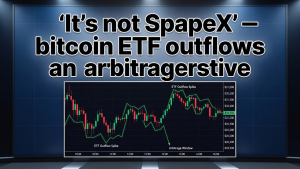
Institutional flows paint a similarly subdued picture. According to data from SoSoValue, U.S.-listed spot bitcoin exchange-traded funds have recorded roughly $678 million in net outflows so far this month, extending a three-month streak of redemptions and underscoring weak institutional appetite.
Still, the macro backdrop may offer support.
Recent data showed U.S. inflation continuing to ease, with the consumer price index rising 2.4% year-on-year in January, down from 2.7% in December. The softer reading has reinforced expectations that the Federal Reserve could deliver at least two 25-basis-point rate cuts this year.
At the same time, the real yield on the U.S. 10-year Treasury note has fallen to around 1.8%, its lowest level since early December. Declining real yields typically enhance the appeal of non-yielding assets like bitcoin by reducing their opportunity cost relative to interest-bearing investments.
Bitfinex analysts noted that lower real yields narrow bitcoin’s carry disadvantage, while a weaker U.S. dollar can improve global liquidity conditions — both factors that could eventually bolster risk assets.
For now, however, derivatives metrics and ETF flows suggest that while panic has receded, strong demand has yet to re-emerge.
Share this content: