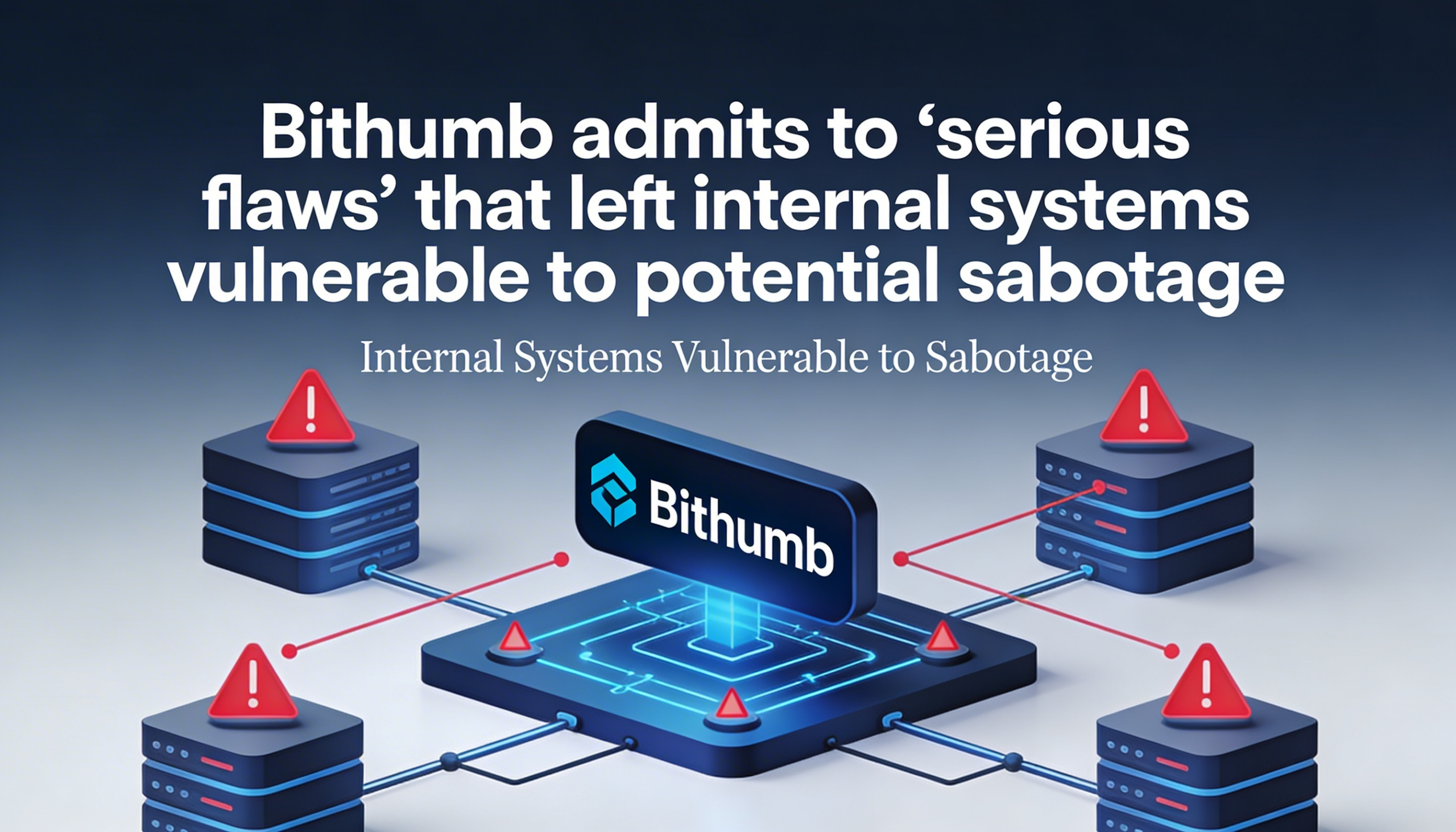
Bithumb admits significant shortcomings that made its internal systems susceptible to sabotage risks.
Bithumb, South Korea’s second-largest cryptocurrency exchange, has acknowledged major internal control breakdowns that led to the mistaken transfer of bitcoin valued at more than $40 billion to customers, an incident that briefly disrupted trading and intensified regulatory scrutiny.
CEO Lee Jae-won admitted during a recent parliamentary hearing that inadequate safeguards within the exchange’s systems allowed the error to occur and left the platform vulnerable to potential sabotage. The majority of the erroneously transferred assets have since been recovered.
According to Reuters, the exchange mistakenly credited users with 620,000 bitcoins instead of 620,000 won (approximately $428). The error — equivalent to roughly 15 times Bithumb’s reported holdings of 42,000 BTC — caused bitcoin’s price on the platform to drop by about 17% before trading activity was frozen.
Lee attributed the failure to a 24-hour delay in transaction processing and lags in updating internal crypto balance records. These operational gaps resulted in a mismatch between actual holdings and the assets released to customers.
“We are acutely aware of the deficiency in internal system control,” Lee told lawmakers, acknowledging that existing policies requiring asset transfers to match verified holdings were not properly enforced. He also conceded that the funds were not segregated into a separate safeguarded account prior to transfer, eliminating an additional layer of risk management.
While Bithumb has retrieved most of the distributed bitcoin, 1,786 BTC remain unrecovered after being sold within minutes before the exchange suspended accounts, Reuters reported. Customers who liquidated those assets are legally obligated to return them.
In response, South Korea’s Financial Supervisory Service (FSS) announced plans to step up oversight of what it described as “high-risk” market practices. These include large-scale price manipulation by major holders, irregular trading linked to halted deposits and withdrawals, and coordinated pump schemes amplified through social media misinformation.
The regulator said it is developing automated surveillance systems capable of detecting suspicious trading patterns at second- and minute-level intervals, along with artificial intelligence-based tools to analyze text data and identify potential market abuse.
Lawmakers expressed concern over weaknesses in both corporate governance and regulatory supervision in one of the world’s most active crypto markets. Cryptocurrency participation in South Korea has grown rapidly, with investor numbers estimated at around 10 million. Major exchanges such as Upbit and Bithumb generate revenues in the trillions of won annually, underscoring the sector’s scale and systemic importance.
Share this content: