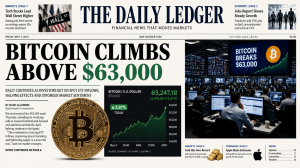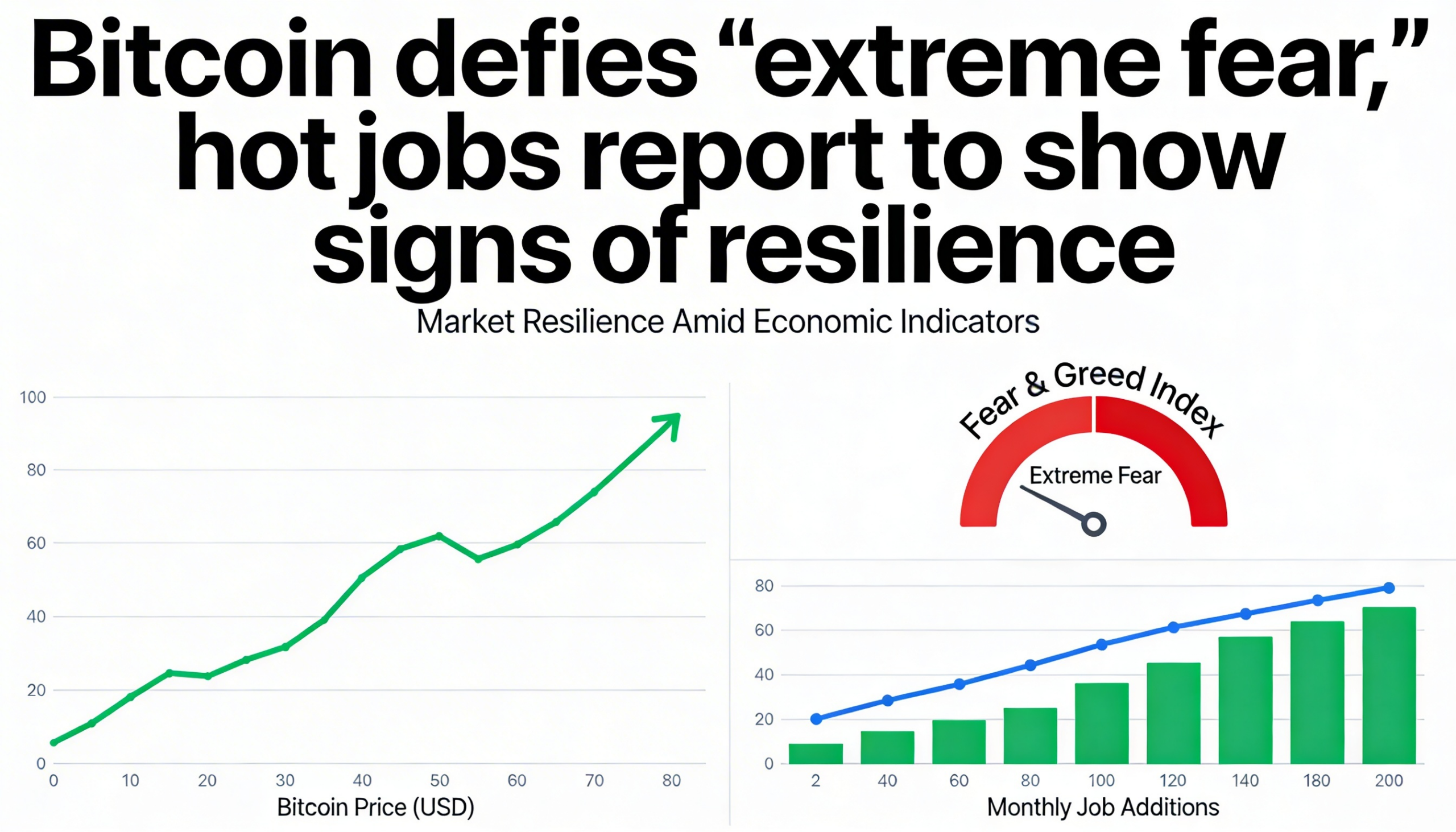
Bitcoin shrugs off “extreme fear” and a scorching jobs report to signal underlying strength.
Bitcoin climbed after January’s U.S. employment report showed hiring strength concentrated in a handful of sectors, even as the headline figure topped forecasts.
The largest cryptocurrency was trading near $67,800, up on the session, as markets absorbed a stronger-than-expected payrolls print without triggering an immediate wave of selling. The muted reaction is fueling a shift in tone across digital assets, with traders interpreting the price action as a potential sign of seller fatigue and a tentative return of risk appetite despite a challenging macro backdrop.
The CoinDesk 20 Index advanced 1.5% since midnight UTC, with all but one constituent posting gains.
The U.S. economy added 130,000 jobs in January, well above consensus estimates of 70,000. The upside surprise sharply reduced expectations for an early interest-rate cut from the Federal Reserve, with market pricing now pushing potential easing toward July.
Ordinarily, diminished prospects for rate cuts would weigh on risk assets such as cryptocurrencies. However, the report also revealed that job growth remained largely concentrated in health care and related industries, while most other sectors were little changed. That dynamic suggests the strong headline number may be obscuring broader cooling across the economy.
Bitcoin’s ability to hold firm comes even as sentiment indicators remain deeply depressed. The Crypto Fear & Greed Index has dropped to 5, its lowest reading since the collapse of FTX in 2022, underscoring the disconnect between positioning and price resilience.
Derivatives positioning
Bearish momentum appears to be stabilizing. Open interest is holding near $15.8 billion, while perpetual futures funding rates have reverted to neutral or slightly positive territory.
Funding trends are notably constructive on Bybit (+9.5%) and Binance (+3.4%), although Hyperliquid stands out as a bearish outlier at -4.5%. Meanwhile, the three-month futures basis remains stuck around 2%, signaling that institutional conviction has yet to fully align with the more retail-driven rebound in funding.
In the options market, defensive positioning is intensifying. The one-week 25-delta skew fell to 19%, with put options accounting for 54% of the past 24 hours’ volume. Implied volatility has shifted into short-term backwardation, reflecting a near-term “panic premium” as traders pay up for downside protection.
According to Coinglass, total liquidations reached $342 million over the past 24 hours, split almost evenly between long and short positions. Bitcoin led with $145 million in liquidations, followed by ether at $84 million and other tokens at $18 million. Binance’s liquidation heatmap highlights $68,800 as a key level to watch in the event of further upside.
Token developments
BlackRock is expanding its footprint in decentralized finance by bringing its $2.2 billion tokenized U.S. Treasury fund, BUIDL, to Uniswap. The move gives DeFi users direct access to Treasury yields via the decentralized exchange.
It marks the first time the world’s largest asset manager has listed a tokenized product on a decentralized exchange. BlackRock also disclosed a strategic investment in Uniswap and purchased an undisclosed amount of UNI, the platform’s governance token.
UNI jumped 25% on the announcement, rising to $4.11 before retreating to $3.35. The investment appears to be the first instance of a major traditional financial institution directly acquiring a governance token tied to a DeFi protocol.
To facilitate the launch, BlackRock partnered with Uniswap Labs and compliance firm Securitize. Trades in BUIDL will route through UniswapX, an offchain quoting system that aggregates prices from approved market makers before settling transactions onchain.
Participation is limited to qualified investors vetted by Securitize to ensure compliance with U.S. securities regulations.
Share this content: