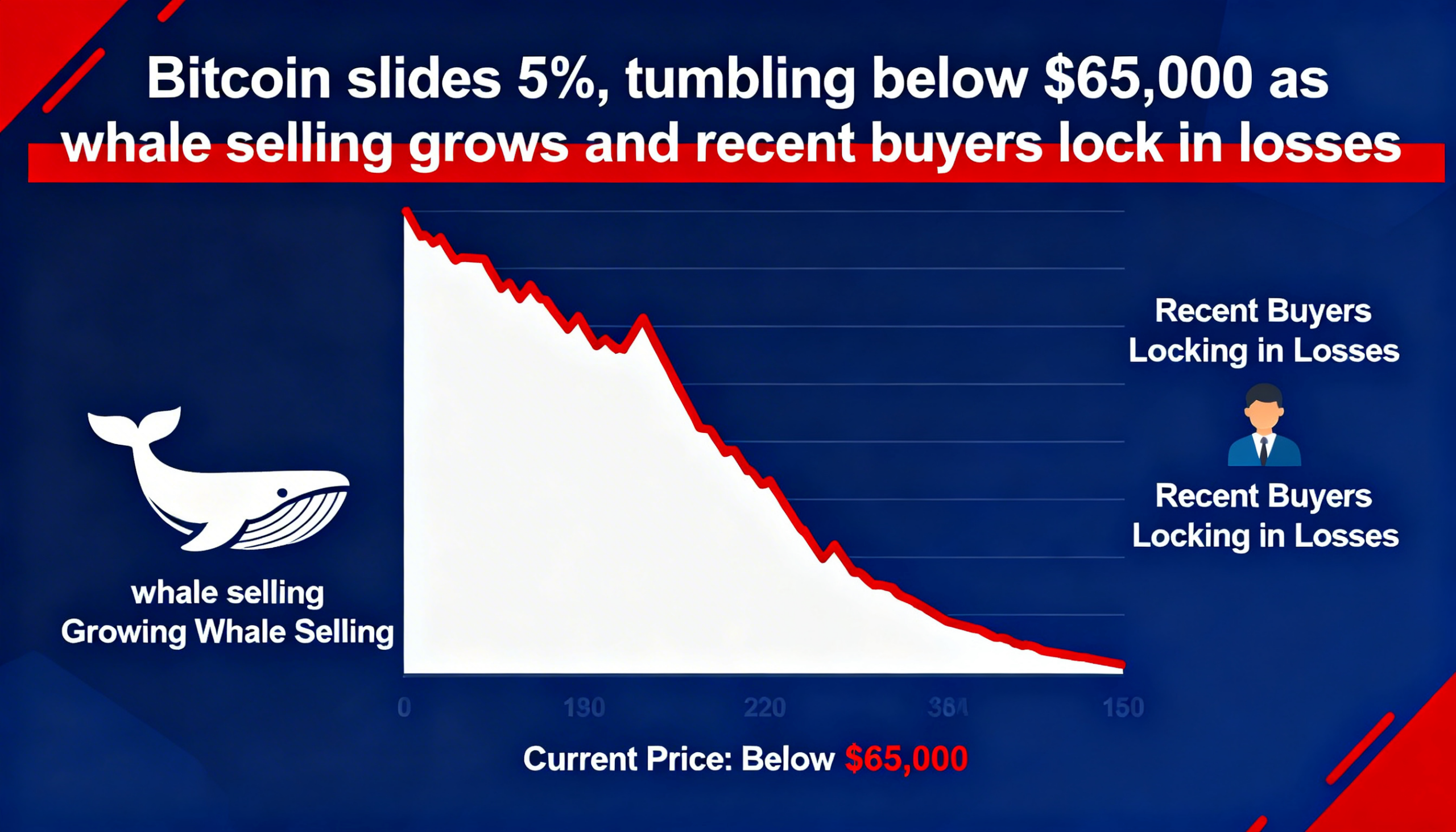
Bitcoin drops 5%, falling under $65,000 as whales offload and new investors capitulate
Bitcoin extended losses at the start of the week, sliding 5% over the past 24 hours to trade near $64,700. The drop comes alongside weakness in traditional markets, with U.S. stock index futures lower — led by a 0.9% decline in Nasdaq 100 contracts — while safe-haven assets rally. Gold is up 2% and silver has jumped 5.6%.
The latest move follows a weekend breakdown from the $67,000 range and unfolds against a backdrop of mixed but fragile on-chain signals from Glassnode and CryptoQuant. While the most intense phase of panic selling may have eased, broader structural pressure remains.
Loss-taking slows, but persists
Glassnode data shows that earlier this month, short-term bitcoin holders were realizing steep losses. A smoothed seven-day measure of their aggregate profit and loss plunged to negative $1.24 billion per day on Feb. 6, indicating newer investors were locking in more than $1 billion in daily losses.
That figure has since improved to roughly negative $480 million per day. The moderation suggests forced selling has cooled, but it has not fully subsided. Short-term holders, on balance, are still exiting at a loss — a pattern more typical of bottom-forming phases than sustained uptrends.
Whales dominate exchange flows
Exchange data from CryptoQuant reflects a similar transition. During the early-February selloff toward $60,000, bitcoin inflows to exchanges surged to around 60,000 BTC per day. That number has since dropped to approximately 23,000 BTC on a seven-day smoothed basis, signaling that immediate liquidation pressure has diminished.
However, the composition of sellers has shifted. CryptoQuant’s exchange whale ratio has climbed to 0.64, the highest level since 2015. Nearly two-thirds of daily exchange inflows are now coming from the 10 largest deposits, indicating that large holders — rather than smaller retail participants — are driving supply to trading venues.
The average size of bitcoin deposits has also risen to levels last seen in mid-2022, reinforcing the view that bigger players are behind the current wave of exchange activity.
Altcoins show signs of broader distribution. Average daily altcoin deposits to exchanges have increased to about 49,000 so far in 2026, up from roughly 40,000 in the fourth quarter of 2025. Historically, rising altcoin inflows have coincided with heightened volatility and softer risk appetite.
Liquidity thins
Liquidity conditions are tightening as well. Net USDT inflows to exchanges have fallen sharply from a one-year high of $616 million in November to just $27 million, and briefly turned negative in late January, according to CryptoQuant. Stablecoin inflows typically expand during bullish phases; their contraction suggests diminished marginal buying power.
Taken together, the data points to a market that has absorbed a capitulation event but has yet to reestablish strong demand. As the new week unfolds, traders are watching whether the $65,000 level can serve as a near-term support pivot — or whether bitcoin remains locked in a drawn-out base-building process.
Share this content: