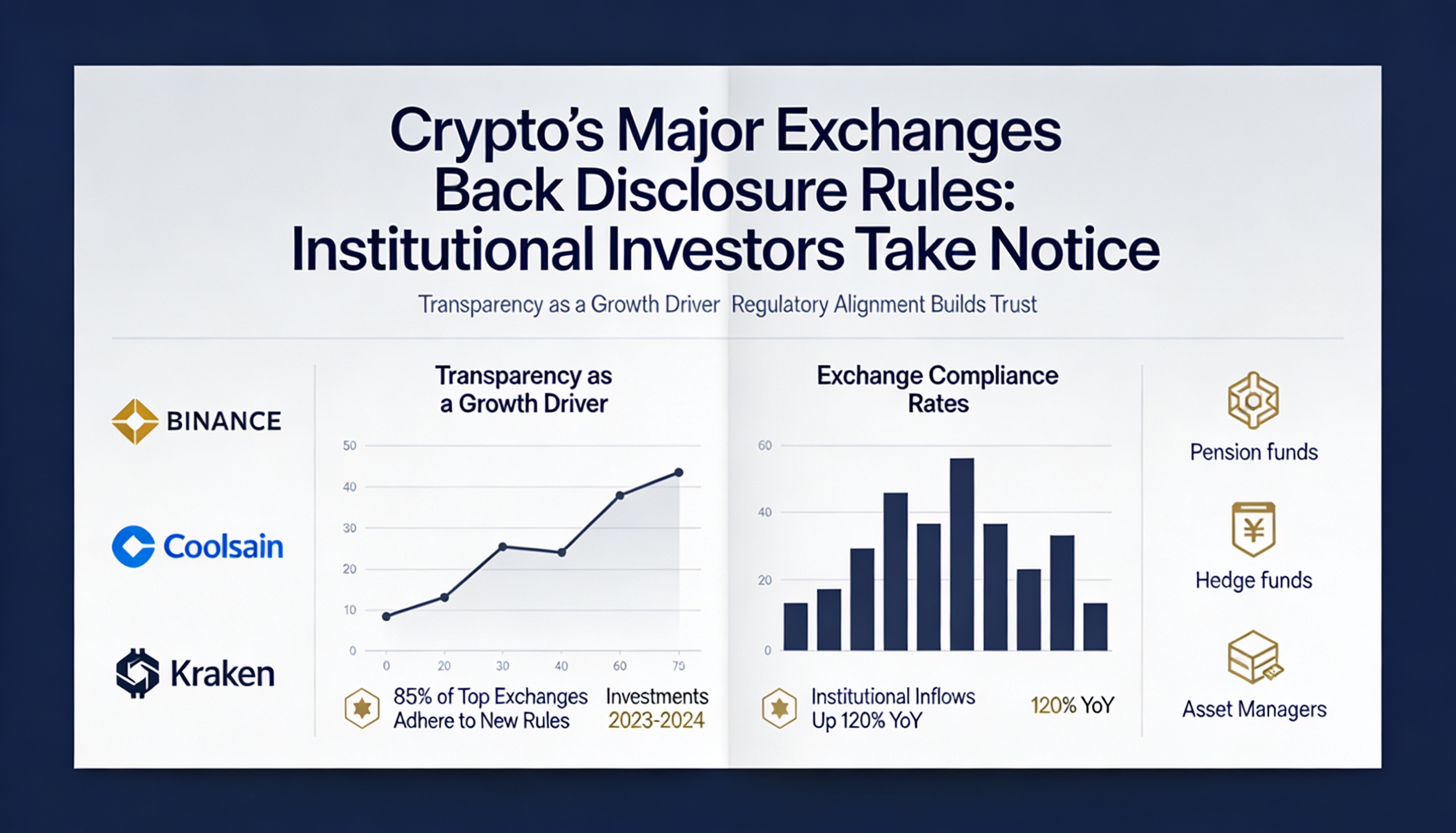
Top crypto exchanges endorse token disclosure frameworks as the sector ramps up its appeal to institutional players.
More than 40 crypto companies, including leading exchanges Coinbase and Kraken, have aligned behind a new initiative to standardize token disclosures, aiming to bring equity market-style transparency to digital assets.
The effort, known as the Transparency Alliance, is spearheaded by Blockworks and centers on its Token Transparency Framework—a proposed industry standard for evaluating token projects. Participants span major exchanges such as Coinbase, Kraken, Binance.US, and MEXC, as well as custodians Anchorage Digital, BitGo, and Copper, and trading firms including GSR, FalconX, and Auros.
The initiative seeks to address a persistent gap in crypto markets, where investors often lack consistent and reliable information about the assets they are purchasing. Blockworks co-founder Jason Yanowitz said that, unlike equities, token markets frequently operate with fragmented or incomplete disclosures.
Since launching in June 2025, the framework has been adopted by 44 protocols, including Morpho, Jupiter, Spark, and dYdX, indicating growing industry uptake.
The structure introduces two forms of disclosure: a one-time filing for new token issuers, loosely modeled on traditional S-1 registration documents, and ongoing reporting requirements for established projects. These disclosures cover key areas such as organizational structure, insider token allocations, market maker agreements, exchange listing terms, and buyback programs.
The push reflects a broader industry shift toward institutionalization. As crypto markets seek to attract larger pools of capital, standardized and transparent information is increasingly viewed as essential infrastructure.
Blockworks has also engaged with regulators, including staff at the U.S. Securities and Exchange Commission and the Commodity Futures Trading Commission, as part of discussions around improving market oversight and disclosure standards.
The framework is offered at no cost to issuers and platforms, with Blockworks planning to monetize through data, research, and software services built on top of the system.
While the initiative aims to improve transparency, it does not attempt to limit speculative activity. Memecoins and experimental assets are expected to remain part of the ecosystem, but the framework is intended to ensure investors have better access to key information.
Ultimately, the success of the Transparency Alliance will depend on adoption. In particular, consistent disclosure of historically opaque areas—such as insider allocations, liquidity arrangements, and exchange listing agreements—will determine whether the initiative can meaningfully improve market transparency.
As Yanowitz noted, markets should decide what they value—but not without access to the information needed to make those decisions.
Share this content: