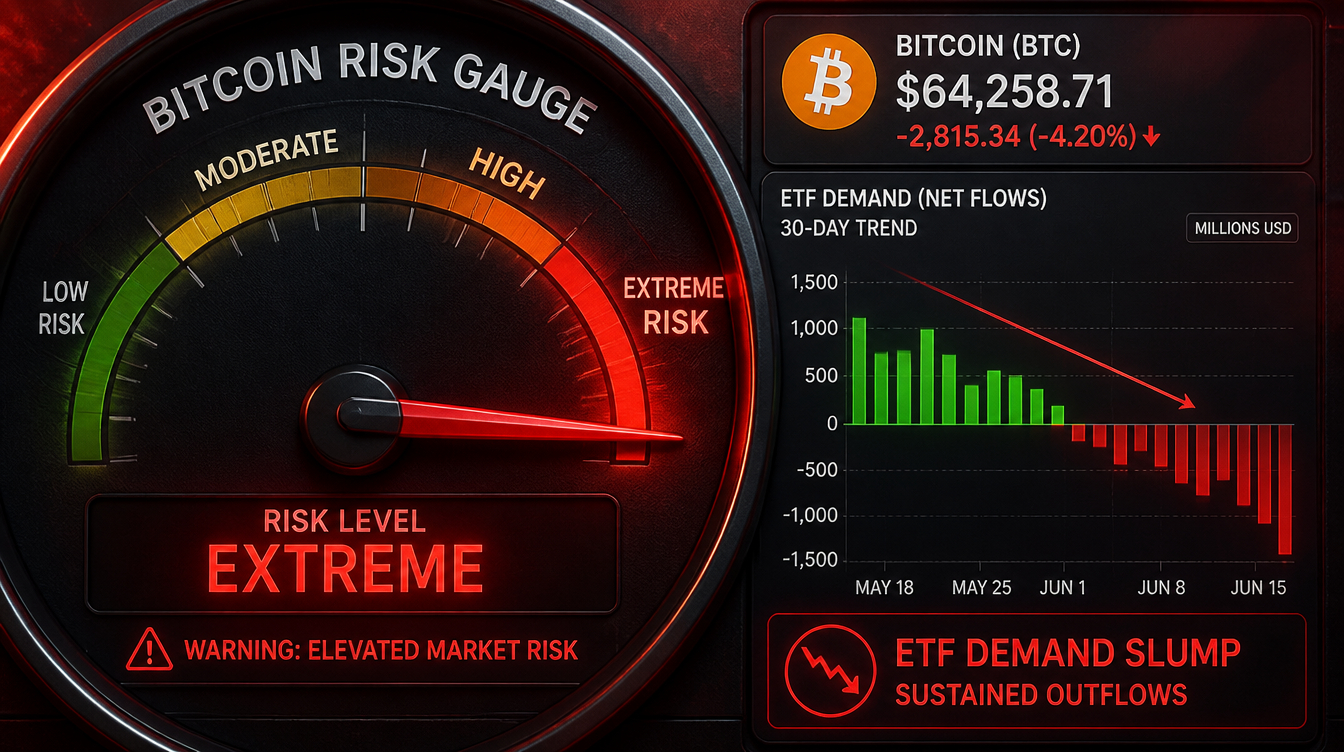
A key Bitcoin metric signals elevated risk levels amid declining ETF demand.
Net inflows into U.S. spot bitcoin ETFs have totaled just 4,500 BTC so far in 2026, signaling a sharp slowdown in institutional demand after stronger accumulation earlier in the year, according to Swissblock.
The moderation follows a solid stretch in March and April, when steady ETF buying helped lift bitcoin from levels around $65,000. That trend has since reversed in May, with flows turning negative as the month nears its end.
Swissblock noted that the shift is pushing its Risk Index—designed to measure the balance between selling pressure and demand—into high-risk territory. The move suggests ETF inflows are no longer sufficient to absorb supply entering the market.
This dynamic is critical because ETFs have been a primary source of demand during bitcoin’s recent rallies, offsetting selling from miners, long-term holders, and traders locking in profits. As that support fades, prices may need to adjust lower or attract alternative buyers to maintain equilibrium.
Bitcoin was trading near $75,800 during Asian hours, down about 2.6% over the past month and close to the lower end of its May trading range. Earlier in the month, the cryptocurrency briefly climbed above $82,000 before retreating amid renewed macroeconomic pressure.
The broader crypto market also showed weakness. Ether, XRP, and solana were all in negative territory, while Zcash led losses with a drop of roughly 9% on the day.
Additional on-chain indicators point in the same direction. Apparent demand—a gauge of how effectively the market is absorbing new bitcoin supply—has fallen to its lowest level since December.
Meanwhile, CryptoOnchain data showed approximately $1.74 billion in outflows from U.S. spot ETFs over the past two weeks. At the same time, retail traders have been increasing leverage in anticipation of a rebound, a setup that has historically heightened the risk of sharp liquidation events if prices move lower.
Despite the weakening signals, it remains unclear whether the current trend represents a temporary slowdown or a more durable shift.
ETF inflows have eased at various points during this cycle without leading to deeper corrections. In parallel, global equity markets remain near record highs, and technical indicators suggest a potential “golden cross” could form as bitcoin’s 50-day moving average approaches a crossover above its 200-day average—typically considered a bullish signal.
Even so, ETF demand has been a key channel for new capital entering the market. If that channel continues to weaken, the structural foundation supporting bitcoin’s rally since April may come under increasing strain.
Share this content: