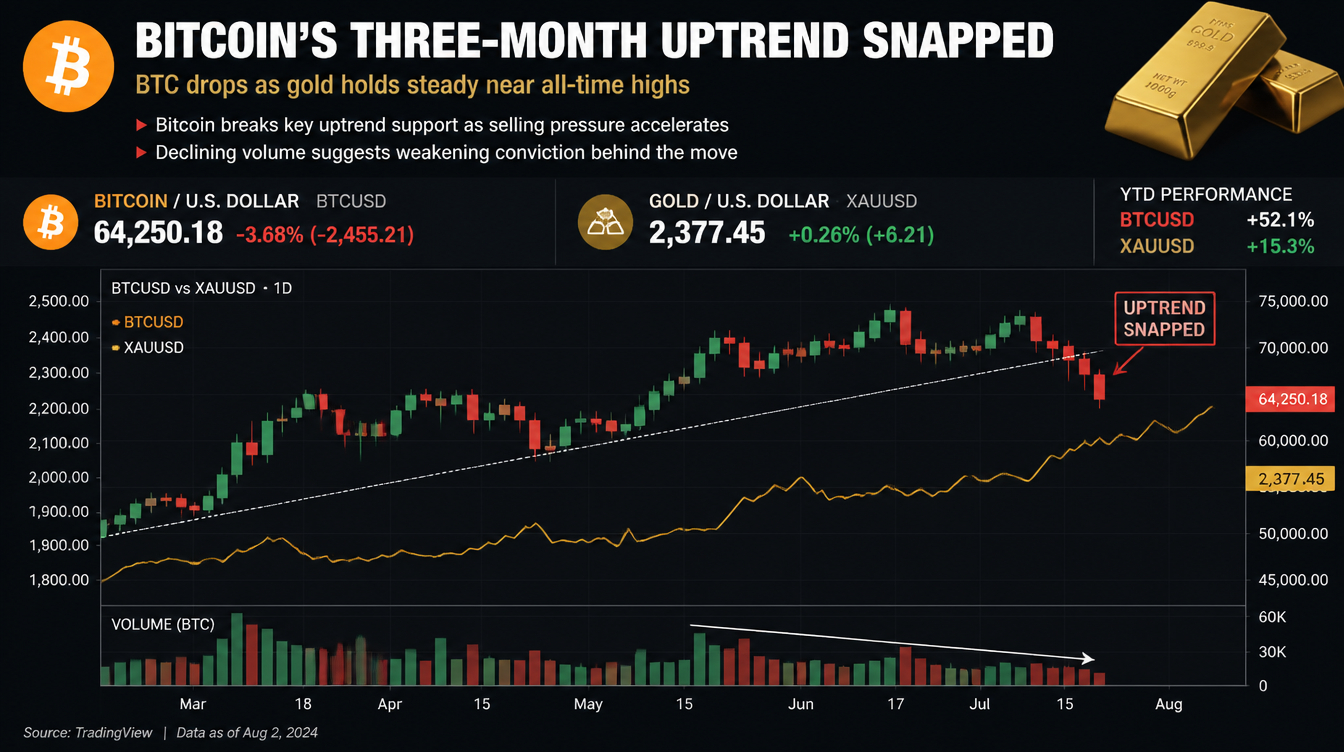
Bitcoin’s three-month outperformance relative to gold has been halted.
Bitcoin’s three-month streak of outperformance versus gold has come to an end, as capital rotates back into precious metals and ETF flows shift accordingly.
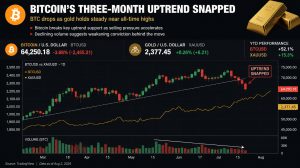
The change is evident in the bitcoin-to-gold ratio, which compares BTC’s price per coin with gold’s price per ounce and serves as a proxy for investor preference between the two assets. From early March, bitcoin led the way, driving the ratio up from roughly 12 to 18 during a sustained period of relative strength.
That trend has now broken down. After stalling in recent sessions, the ratio has moved decisively lower over the past 24 hours, breaching the upward trendline that had supported bitcoin’s gains against gold. In technical terms, such a move signals a shift in momentum, suggesting gold may now regain the upper hand.
The development points to more than just a chart pattern. It reflects a potential repositioning of capital.
Earlier this year, escalating geopolitical tensions, including the onset of the Iran conflict and a surge in oil prices above $100 per barrel, prompted investors to seek safe-haven assets. Bitcoin initially benefited from that environment, as seen in its rising performance relative to gold.
However, the latest breakdown in the ratio indicates that preference may be shifting back toward gold.
While technical signals can sometimes prove temporary, current conditions suggest gold could outperform in the near term.
Fund flow data supports this view. U.S. spot bitcoin ETFs have recorded over $2 billion in outflows in the past two weeks, weighed down by rising Treasury yields and expectations of prolonged higher interest rates.
In contrast, gold and precious metals funds continue to attract investor interest, pulling in $2.34 billion in the week ended May 20, marking a second straight week of inflows, according to LSEG Lipper data cited by Reuters.
At the time of writing, bitcoin was trading near $75,600, down modestly on the day, while gold held steady around $4,500, underscoring the shifting dynamics between the two competing store-of-value assets.
Share this content: