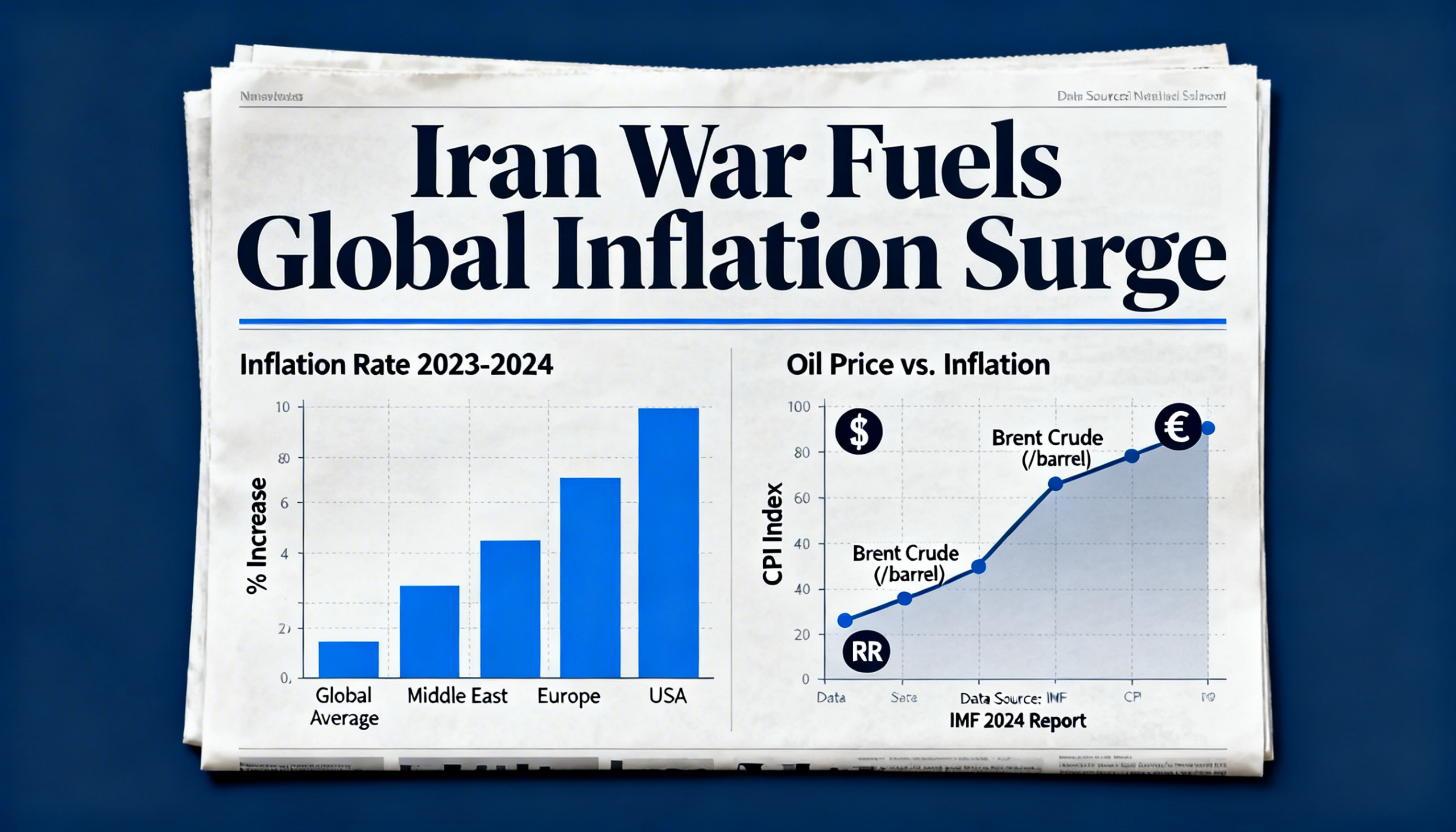
The age of easy money has come to an end as the Iran war establishes a lasting inflation floor.
Iran War May End Era of Cheap Money, Expose Fragility of Global Energy Markets
The ongoing Iran war is creating a lasting inflation floor that could mark the end of the era of cheap money and highlight the vulnerabilities of global energy markets.
Since the conflict began, the prevailing market narrative has been straightforward: the spike in oil prices, inflationary pressures, and broader market volatility would be temporary. Once the fighting subsides, central banks could resume ultra-easy monetary policies, injecting liquidity to stabilize markets, as they have repeatedly done since 2008.
However, some analysts argue the effects of the Iran war will persist, leaving a structurally higher global inflation floor that could influence returns across stocks, crypto, and bonds. The key takeaway is the fragility of energy markets and the exposure of major economies to oil price shocks and supply disruptions.
For decades, many countries relied on global energy supply chains, price-driven markets, and comparative advantage. That model is now under stress. Disruptions in the Strait of Hormuz have caused widespread energy shortages, affecting major economies including India, Japan, and South Korea. If the conflict continues, even nations with reserves, including China and the energy-independent U.S., could face pressure.
As a result, energy independence and security are likely to become central to national strategies worldwide. Energy expert Anas Alhajji predicts this will drive rapid de-globalization of energy markets, prioritizing control over cost and creating sticky inflation.
“Once that mindset takes hold, global energy markets will not return to the old model of open, price-driven trade,” Alhajji explained. “Capitalist economies, historically reliant on market efficiency and global supply chains, may increasingly mirror China: heavy state direction, strategic stockpiling, vertical integration, and prioritization of self-reliance over cost minimization.”
He added that most nations lack China’s centralized industrial base, which could lead to slower innovation, fragmented markets, and higher costs. “Energy will stop being just another commodity; it becomes a geopolitical weapon and a domestic fortress,” he said.
The Iran war’s impact extends beyond short-term oil price swings. Disruptions in the Hormuz Strait are already affecting fertilizers, food production, industrial output, and even semiconductor manufacturing, as supplies of critical materials like helium and sulfur are constrained. The UN has also warned of rising food prices globally.
Implications for Asset Markets
This new environment means central banks may no longer have the freedom to quickly pump liquidity into markets. Between 2008 and 2021, global inflation averaged under 3%, allowing central banks to maintain near-zero interest rates and conduct aggressive quantitative easing, fueling historic gains across equities, bonds, and crypto. Bitcoin, for instance, rose from single digits in 2011 to $126,000 in October 2025.
A structurally higher inflation floor changes the paradigm. Central banks can no longer assume they can always cut rates to stimulate growth. Liquidity may become constrained, potentially capping returns across all asset classes.
The message for investors is clear: prepare for a world where inflation remains sticky, monetary policy is less accommodative, and market volatility becomes the norm.
Share this content:


