Crypto Markets Live: Bitcoin Dips as Saylor Reacts to STRC Market Strain
Here is a further rewritten version with fresh structure and phrasing:
Approximately 20% of Bitcoin miners are currently operating at a loss, while publicly listed mining firms sold more than 32,000 BTC in the first quarter to fund operations—surpassing total sales recorded across all of 2025.
Bitcoin on track for third straight quarterly decline, longest losing streak since 2022
Bitcoin is down around 8% in the second quarter and continues to hover just above $62,000. If prices remain at these levels into month-end, it would mark a third consecutive quarterly loss, the longest negative streak since 2022, when BTC posted four straight down quarters.
So far in June, Bitcoin is already down roughly 15%, matching its weakest monthly performance since February.
UK bond yields climb on political uncertainty after Andy Burnham win
UK government bond yields rose sharply on Friday, with the 10-year gilt reaching 4.8%, up more than 1.2% in a single day. The move reflects heightened political uncertainty following Andy Burnham’s special election victory, which has sparked speculation about pressure within Labour leadership and raised concerns over fiscal stability.
Michael Saylor reacts after STRC volatility
After Strategy’s STRC briefly dropped below $83 on Thursday before rebounding to about $88, market volatility prompted concern among investors. Strategy Executive Chairman Michael Saylor responded on X the following morning, writing:
“Markets are closed today. Volatility is never easy. Bitcoin keeps working. So do we. Thank you for your support.”
It was the company’s only public statement following the move.
Digital credit market hit by liquidation-driven selloff
The digital credit sector saw one of its sharpest selloffs on record Thursday, dragging Strategy’s STRC and Strive’s SATA lower before both recovered. According to Strive CEO Matt Cole, the move was driven by forced liquidation from leveraged traders rather than any deterioration in underlying fundamentals.
Crypto and metals weaken as rate expectations rise
Bitcoin is declining alongside gold and silver as markets price in an additional 50 basis points of Federal Reserve tightening over the next six months. Futures pricing now points to a federal funds rate range of 4.00%–4.25% by January 2027.
BTC is trading below $63,000, down about 1% over the past 24 hours. Gold has slipped to around $4,100 per ounce (down 1.3%), while silver remains above $65, down about 1%.
Tron network activity hits record levels
Tron’s blockchain has seen record usage, with daily transactions surpassing 14.3 million this week, according to TronScan data. That represents a 15% increase over the past month.
Despite rising activity, TRX has moved lower, falling about 10% over the same period to roughly $0.32.
Market snapshot: crypto extends losses into fourth session
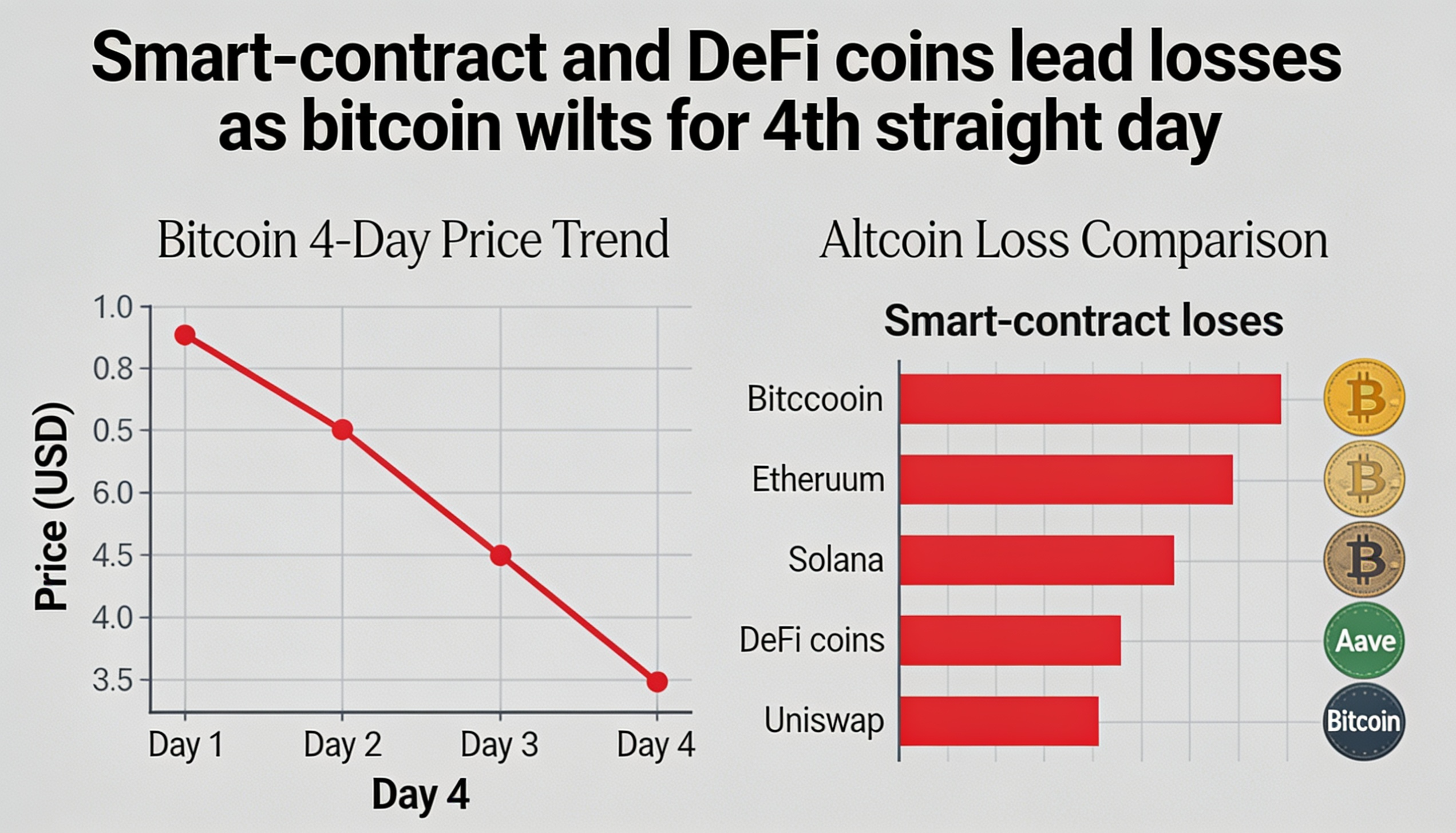
Most major crypto indices remain in negative territory, led by weakness in DeFi and computing sectors. The CoinDesk 20 Index is down 1.2% since midnight UTC and 3.2% over 24 hours, with all constituents trading lower.
Within DeFi, Ethena’s ENA led declines with a 9.2% drop. Bitcoin and Ethereum both fell for a fourth consecutive session, marking their longest losing streak in two weeks.
Bitcoin reacts to US–Iran deal, but outlook remains unclear
Markets initially responded to the US–Iran memorandum signed after the G7 summit, which includes a ceasefire framework, reopening of the Strait of Hormuz, Iran’s pledge to abandon nuclear weapons development, and a 60-day timeline for a full agreement with phased sanctions relief.
However, analysts say the market reaction is more complex than it appears. Mike McCluskey of tx noted that the true impact depends on whether lower oil prices translate into sustained disinflation that could influence central bank policy, which typically takes time to filter through.
He added that for a lasting shift, the deal must hold, the Fed must acknowledge disinflationary pressures, and ETF inflows must remain steady—conditions that currently appear uncertain given a more hawkish Fed stance and weaker crypto fund flows.
Yen weakens toward multi-decade lows as dollar strengthens
Bitcoin is not the only asset under pressure. The Japanese yen has slipped to around 161.80 per dollar, nearing its weakest level in roughly four decades.
The move follows the Federal Reserve’s upward revision of rate expectations for 2026 and 2027, which has strengthened the US dollar across global markets. Although the Bank of Japan raised rates to 1%, the wide interest rate gap continues to pressure the yen.
The BOJ’s pause in reducing bond purchases added a dovish signal, reinforcing dollar strength.
Meanwhile, Bitcoin has fallen from around $67,000 earlier in the week to roughly $62,700 amid tightening financial conditions.
Mining pressure builds as costs exceed Bitcoin price
JPMorgan estimates the cost to mine one Bitcoin at around $78,000, meaning BTC has remained below production cost for five consecutive months.
Roughly 20% of miners are currently unprofitable, while listed mining firms sold more than 32,000 BTC in Q1—more than their total sales across all of 2025.
When Bitcoin trades below production cost, higher-cost miners are forced offline, reducing hashrate and triggering automatic downward adjustments in mining difficulty. A 10% difficulty drop earlier this month marked the second such adjustment this year.
JPMorgan also notes that miners have become more responsive to price fluctuations, frequently switching rigs on and off near breakeven. The bank expects more frequent difficulty adjustments as long as prices remain below production levels.
Despite near-term weakness, the report suggests sentiment may be reaching historically contrarian bullish territory, supported by accumulation trends such as whale buying and declining exchange balances.
Share this content: