Stocks begin to mirror bitcoin’s earlier slide to $60,000 as rising bond yields pressure markets.
Stocks are beginning to echo bitcoin’s earlier slide toward $60,000, signaling that pressure is spreading across risk assets.
Bitcoin started the year on a weak footing, tumbling sharply even as equity markets remained resilient. That divergence is now fading, with stocks showing signs of strain as rising bond yields weigh on valuations.
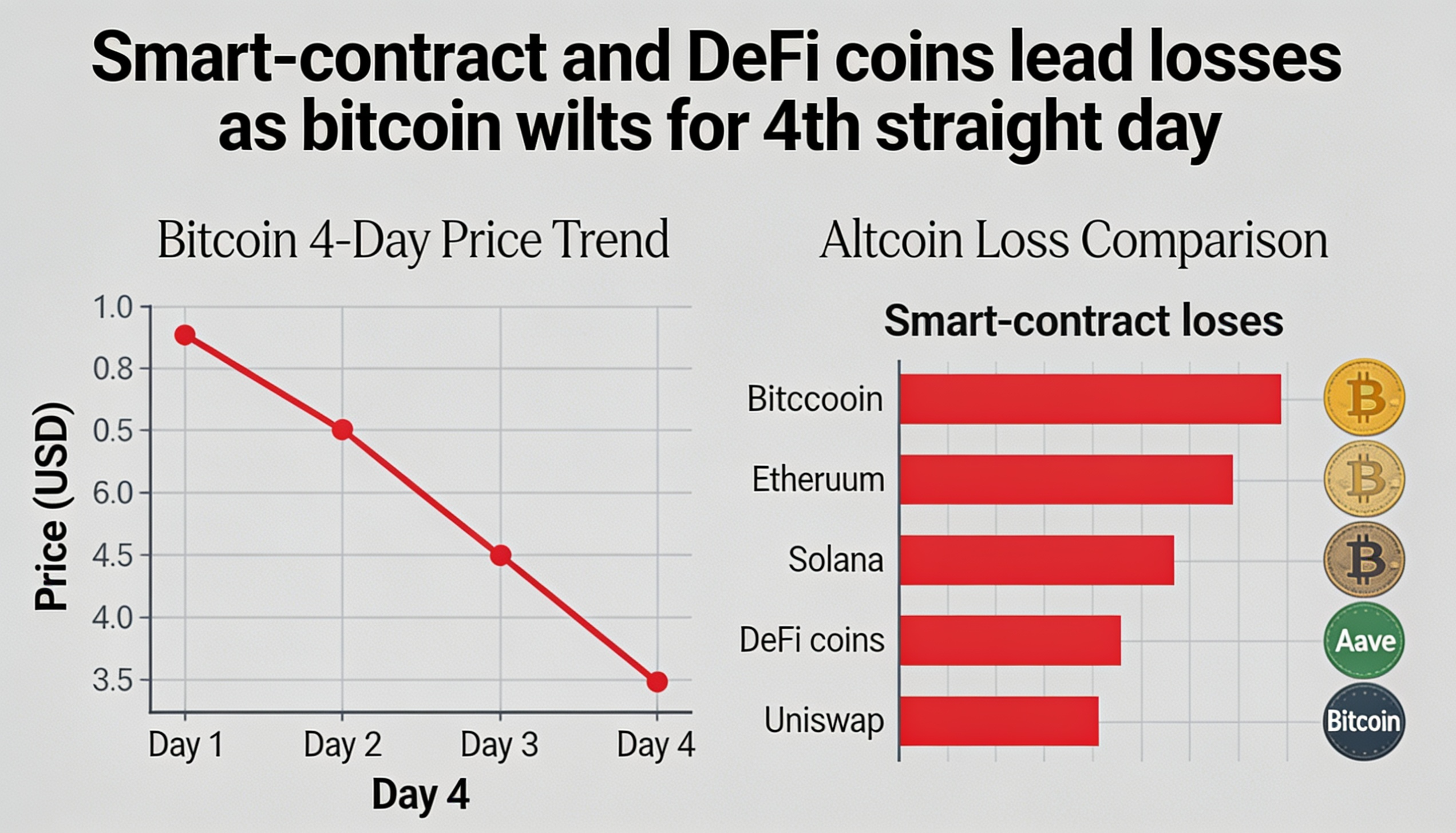
Bitcoin fell from roughly $90,000 to nearly $60,000 within the first five weeks of the year, according to CoinDesk data. During that stretch, major indices like the S&P 500 and the Nasdaq Composite hovered near record highs, creating a notable disconnect between crypto and traditional markets.
At the time, analysts questioned how long the gap would persist—whether bitcoin would rebound quickly or equities would eventually follow its downward path. Increasingly, it appears to be the latter.
Since the onset of the Iran war on Feb. 28, renewed inflation concerns and diminishing expectations for Federal Reserve rate cuts have driven U.S. Treasury yields sharply higher, putting pressure on stocks.
The delayed weakness in equities reinforces bitcoin’s reputation as a leading indicator for broader risk sentiment. Market participants often track BTC for early signals, particularly during weekends or periods when traditional markets are closed.
Yields surge, equities slip
The yield on the 10-year U.S. Treasury note climbed to 4.41% ahead of publication, its highest level since early August, rising 48 basis points since the conflict began. Meanwhile, the two-year yield jumped 57 basis points to 3.94%.
Treasury yields serve as the benchmark for global borrowing costs, influencing rates on everything from corporate debt to mortgages and consumer loans. As yields rise, financing becomes more expensive, tightening financial conditions and dampening appetite for risk assets like equities.
That shift is now showing up in markets. Futures tied to the Nasdaq dropped to 23,890 early Monday, the lowest level since September, while S&P 500 e-mini futures fell to 6,505, also marking multi-month lows.
Recent analysis from CoinDesk noted that major equity indices have begun to mirror bitcoin’s pre-crash price structure, raising the risk of further downside if the pattern continues.
As Mike McGlone, senior commodity strategist at Bloomberg, recently observed, bitcoin may be signaling broader stress ahead.
Bitcoin stabilizes, fear lingers
After its sharp early-year decline, bitcoin has traded in a relatively narrow range between $65,000 and $75,000 in recent weeks. At the time of writing, it was changing hands near $68,790.
Despite the price stability, derivatives markets reflect heightened caution. Options positioning shows a record tilt toward protective put contracts, indicating elevated demand for downside hedging and persistent fear among traders.
Share this content: