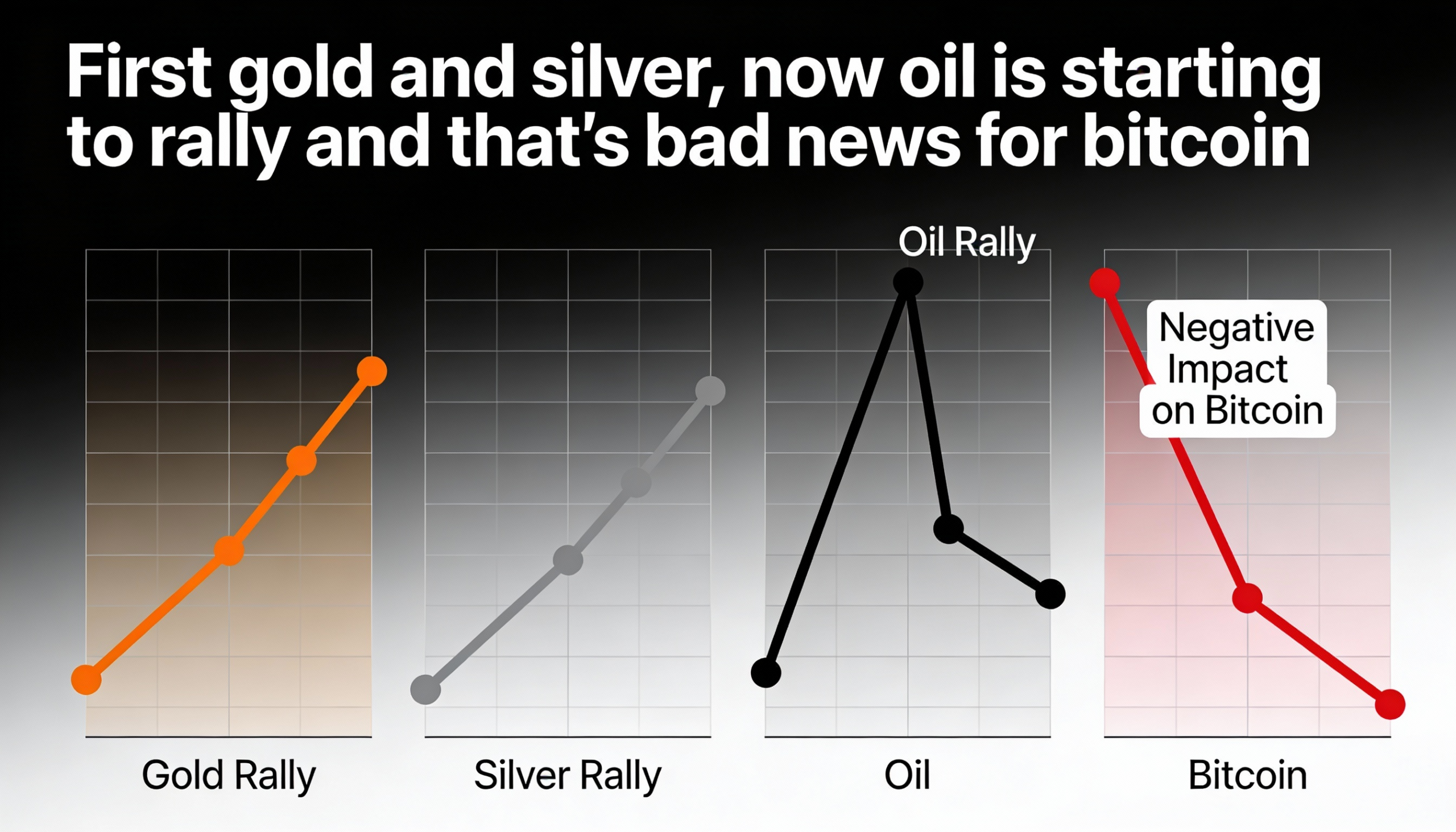
Oil is the latest asset to rally after gold and silver, adding fresh headwinds for bitcoin.
Rising oil prices are injecting fresh inflation risks into the global economy, potentially delaying interest-rate cuts and creating additional headwinds for bitcoin.
For bitcoin bulls, macro conditions continue to worsen. After gold and silver surged to record highs and diverted capital away from crypto markets, oil prices are now climbing as well, reinforcing forces that favor bitcoin bears.
West Texas Intermediate crude, the benchmark for North American oil pricing, has jumped around 12% this month to $64.30 per barrel, the highest level since September. Brent crude, the global benchmark, has also moved higher, trading near $68.22.
The oil rally complicates expectations for monetary easing that many investors believe is necessary to revive bitcoin’s advance. After topping $126,000 in early October, the cryptocurrency has since fallen below $90,000 as financial conditions tightened.
Oil’s role in inflation
Oil prices feed directly into inflation across the economy. Higher crude pushes up gasoline and transportation costs, raising prices for goods ranging from food and clothing to electronics. These increases are typically passed on to consumers, lifting the overall price level.
As prices rise, workers often seek higher wages to protect purchasing power, creating a feedback loop in which higher labor costs lead companies to raise prices further.
The Federal Reserve has warned that oil price pass-through to inflation is significant and occurs both directly and through second-round effects, including higher inflation expectations that can push up core prices.
Central banks typically respond to persistent inflation by maintaining higher borrowing costs. That dynamic weighed heavily on bitcoin in 2022, when aggressive Fed tightening contributed to a roughly 64% annual decline.
The latest upswing in oil comes as the Federal Reserve faces renewed inflation pressures. On Wednesday, policymakers left rates unchanged in a 4.5% to 4.75% range, noting that inflation remains “somewhat elevated,” partly due to tariffs imposed by President Donald Trump on imported goods.
ING said the Fed’s latest communications suggested officials are increasingly confident that the policy-easing cycle is nearing its end.
That signals little urgency to cut rates, a stance that rising oil prices could further reinforce.
What’s driving oil higher
Geopolitical risks and tightening supply conditions are supporting crude prices.
Markets are responding to escalating tensions involving Iran, a major oil producer, alongside falling U.S. inventories. In a Truth Social post this week, Trump warned that a large U.S. naval force was moving toward Iran and urged Tehran to reach a nuclear deal or face a “far worse” U.S. response.
Iran answered by vowing a strong retaliation, underscoring the potential economic and humanitarian consequences of a broader conflict.
At the same time, data from the U.S. Energy Information Administration showed crude inventories declined by 2.3 million barrels in the week ended Jan. 24. Falling inventories typically indicate demand is outpacing supply, prompting refiners to draw down stockpiles.
Together, geopolitical tensions and tightening supply are pushing oil prices higher, adding another macroeconomic obstacle for bitcoin.
Share this content: