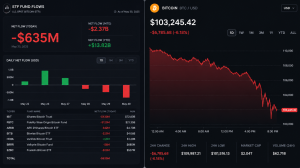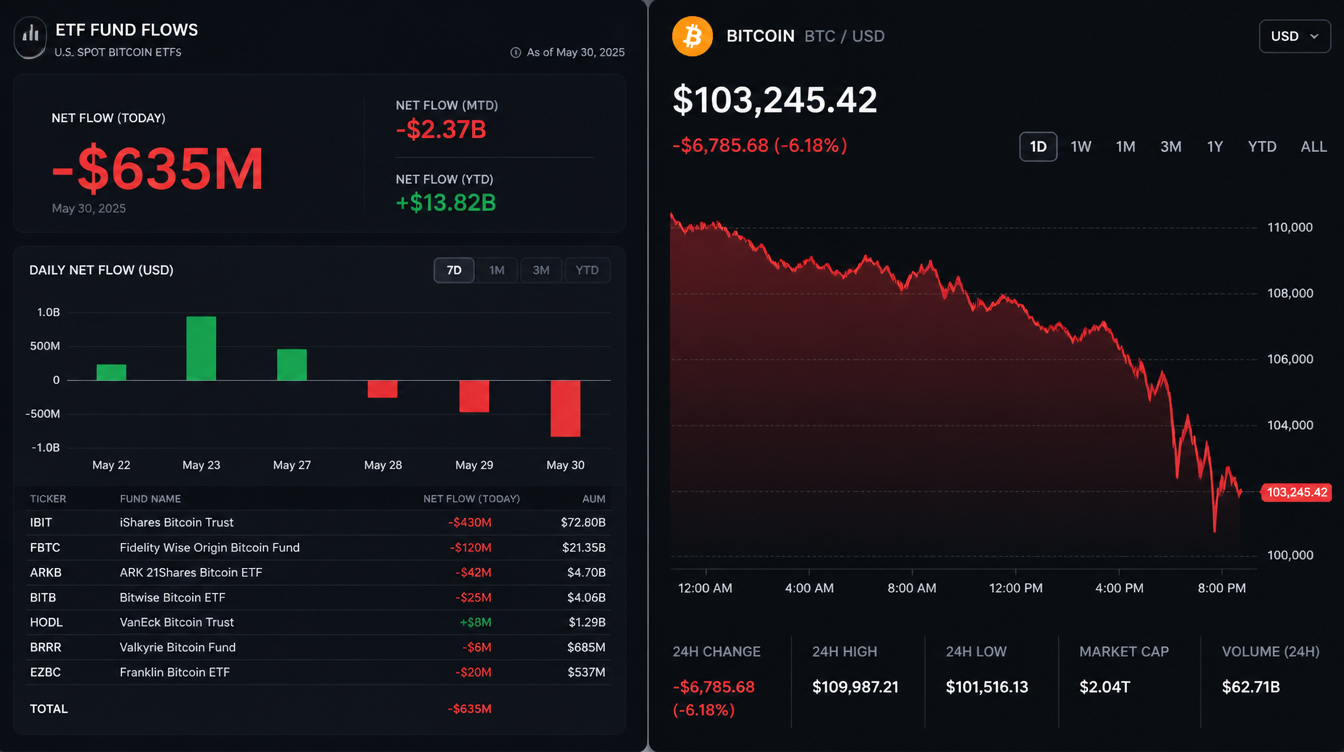
Investors withdrew $635 million from spot bitcoin ETFs in one day, pointing to potential shifts in market sentiment.
Bitcoin is showing signs of fatigue as heavy outflows from spot ETFs coincide with a failure to break above a key resistance level.
The 11 U.S.-listed spot bitcoin exchange-traded funds (ETFs), which collectively attracted $3.29 billion in inflows during March and April, have now flipped into outflow mode. On Wednesday, investors withdrew $635 million—the largest single-day outflow since Jan. 29, according to SoSoValue data.
The move extends a broader pullback in flows. Over the past five trading sessions, total outflows have reached $1.26 billion, reducing cumulative net inflows since the ETFs’ launch in January 2024 to $58.5 billion, down from $59.76 billion just a week earlier.
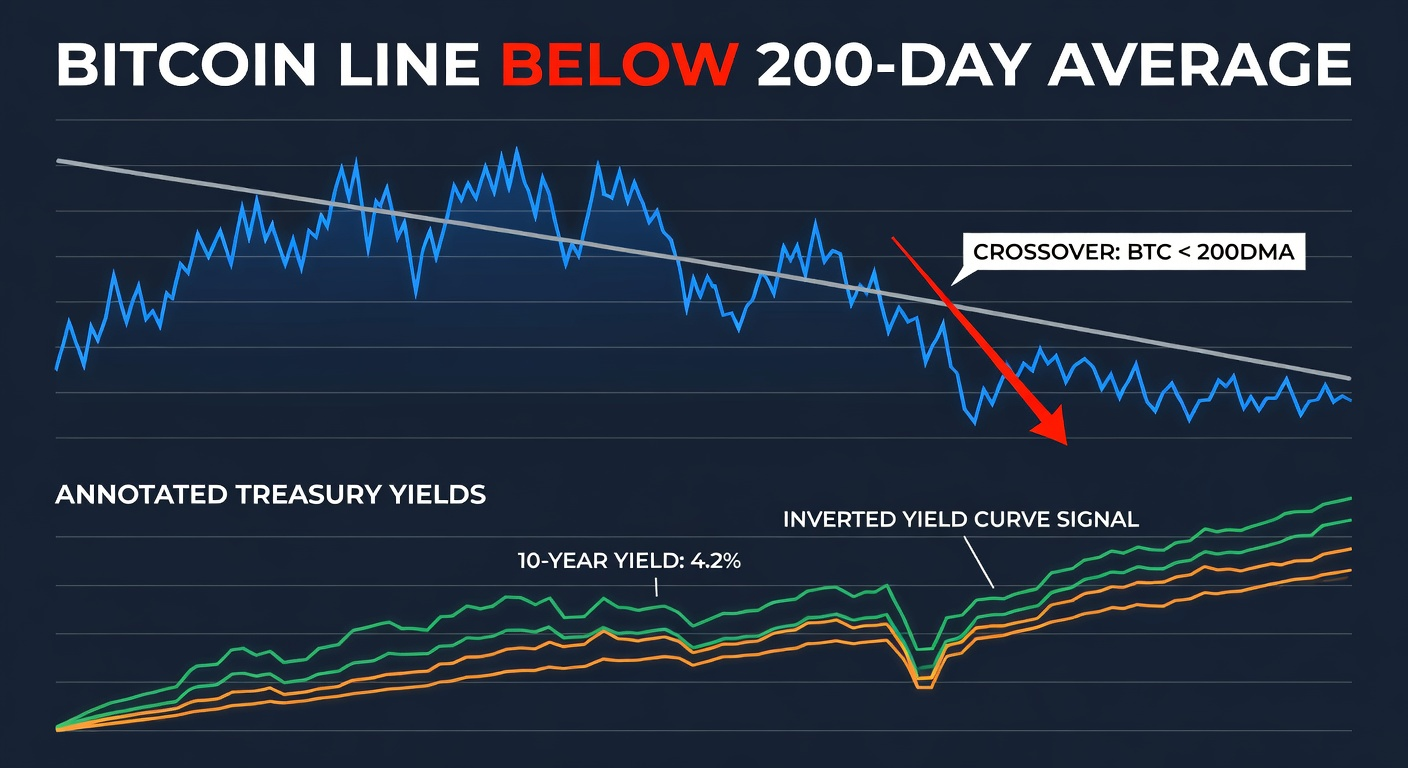
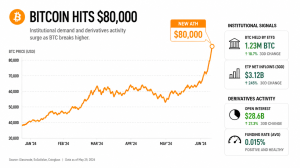
Meanwhile, bitcoin’s rally has stalled. After climbing from $65,000 to above $80,000, the price has struggled to push past the 200-day simple moving average near $82,000. In the last 24 hours, bitcoin has dropped more than 2% to around $79,400.
The weakness is being linked to renewed concerns over U.S. inflation, even as traditional markets continue to climb. Both the Nasdaq and S&P 500 posted record highs on Wednesday, highlighting a divergence between crypto and equities.
The scale of Wednesday’s outflow is significant, particularly as ETF inflows were widely seen as a key driver of bitcoin’s recent strength. At the same time, the macro backdrop is becoming less supportive, with inflation risks resurfacing.
“A persistently strong CPI, a more hawkish Fed outlook, or another oil shock could pressure bitcoin even if flows remain positive,” said Adam Haeems, head of asset management at Tesseract Group. “The real question is whether macro conditions stay loose enough for flows to continue supporting the market.”
However, the link between ETF flows and bitcoin price action appears to be weakening. The 90-day rolling correlation between bitcoin’s daily returns and changes in cumulative ETF inflows has dropped to 0.16, down sharply from 0.68 in February.
This suggests that ETF flow direction alone no longer offers a reliable signal for short-term price moves. Even so, large outflows like Wednesday’s remain important—especially when they occur alongside fading momentum and a shifting macro environment.
Share this content: