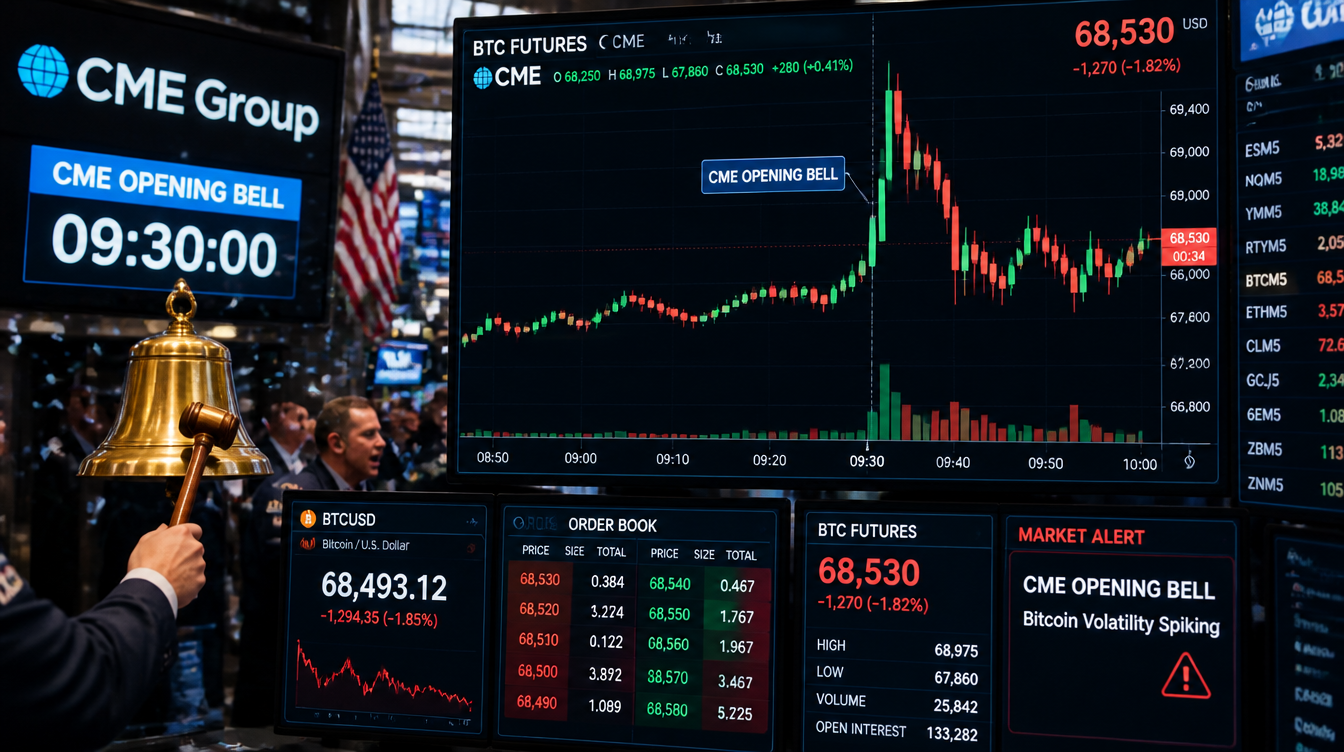
BTC whipsaws during CME open as geopolitical tensions with Iran pressure markets
Bitcoin began the week with heightened volatility, briefly rallying above $82,400 before slipping back below $81,000 as traders adjusted positions around the CME futures open and macro tensions unsettled markets.
The move unfolded late Sunday, with BTC climbing from around $80,670 at 23:00 UTC to an intraday peak near $82,400 within the next hour. The advance quickly faded, however, with prices pulling back and consolidating just under the $81,000 level.
The price swings aligned with the reopening of CME bitcoin futures and U.S. equity futures, a period that often brings aggressive repositioning and the emergence of “CME gaps,” where prices reopen at levels different from the prior Friday’s close.
Broader crypto markets followed with a softer tone. The CoinDesk 100 index declined roughly 1.5%, while the bitcoin-heavy CoinDesk 5 slipped about 0.6%.
Geopolitical developments also weighed on sentiment. U.S. President Donald Trump criticized Iran’s response to a peace proposal as “totally unacceptable,” lifting oil prices and the U.S. dollar while pressuring risk assets, including cryptocurrencies.
In derivatives markets, activity has remained relatively flat. Total crypto futures open interest has stayed just above $130 billion for four straight days, indicating limited new leverage entering the market and a lack of strong directional momentum.
Liquidations have picked up, with more than $400 million in leveraged positions wiped out across centralized exchanges, largely driven by short positions.
Altcoins, however, showed mixed strength beneath the surface. SUI stood out, with open interest rising 29%, supporting its recent price gains and signaling increased demand for bullish positioning, alongside positive funding rates and strong volume trends.
DOGE and HBAR also posted notable increases in open interest, while BTC and ETH derivatives positioning remained mostly unchanged. Meanwhile, ZEC saw a 6% drop in open interest, pointing to capital outflows from the privacy-focused token.
Despite upcoming U.S. inflation data releases, including CPI and PPI, market expectations for volatility remain subdued. Bitcoin’s 30-day implied volatility continues to hover near three-month lows, reflecting relatively calm conditions in the options market.
On Deribit, call options between $81,000 and $86,000 dominate trading volumes, indicating a bullish tilt. At the same time, traders are deploying long call condor strategies, suggesting expectations for limited price movement in the near term.
Beyond bitcoin, Venice’s VVV token has been a standout, more than doubling over the past month as traders responded to a combination of supply cuts, token burns, and growing demand tied to AI applications.
The rally was initially driven by increased burn rates tied to subscription tiers introduced in late April, followed by a reduction in annual token emissions from 6 million to 5 million on May 1, with further cuts planned.
Momentum accelerated after StrikeRobot announced plans to use Venice as a primary inference API backend for its robotics platforms, adding a new source of demand.
At the same time, platform revenue has been strengthening. Co-founder Jesse Proudman said subscription and credit purchases recently reached a new record, exceeding the previous high by 10%.
Despite the strong recovery, VVV remains below its January 2025 peak of $22.5, after initially dropping as much as 50% post-launch amid concerns over insider-related activity tied to early buyers.
Share this content: