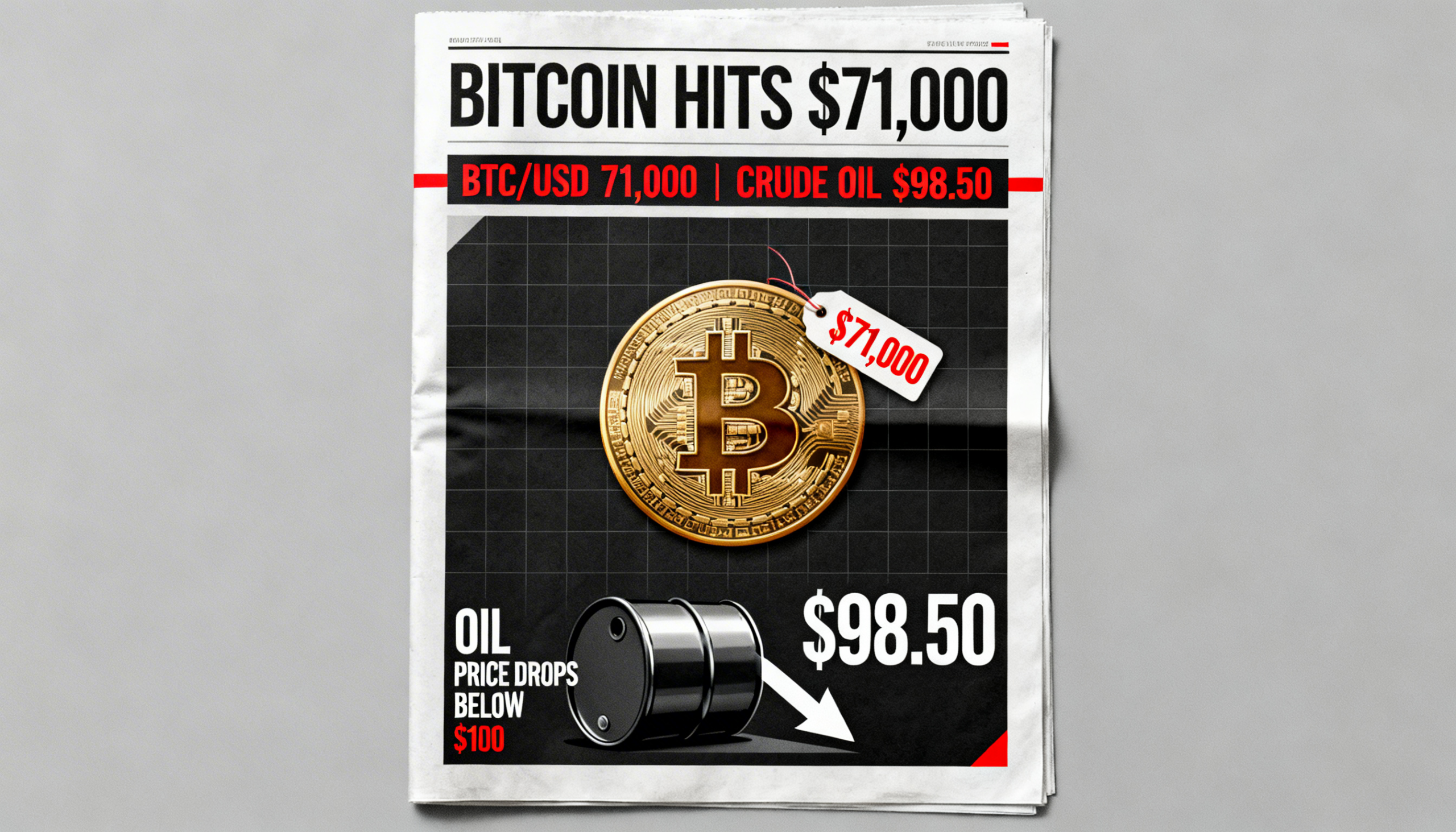
Bitcoin stabilizes above $71,000 as oil retreats under $100 after U.S. unveils Iran peace framework.
Brent crude tumbled 4.7% while Asian equities climbed 1.9% after Washington reportedly sent a ceasefire proposal to Tehran via Pakistan, sparking the strongest wave of optimism since the conflict began a month ago.
A 15-point peace framework is now under discussion, and bitcoin (BTC) is hovering around $71,000 as if markets are beginning to price in a potential end to the U.S.-Israel-Iran war.
Oil prices dropped sharply on Wednesday, with Brent falling 4.7% to $99.55 and slipping below the $100 threshold for the first time since mid-March. The move followed reports that the U.S. had drafted a comprehensive plan to resolve the Iran conflict. Separately, Israeli media indicated Washington is also pursuing a one-month ceasefire. The risk-on mood extended across markets, with Asian stocks advancing, the dollar weakening, and U.S. and European futures pointing higher.
Bitcoin traded near $71,019, up 0.9% over the past 24 hours, though still down 6.4% on the week. The decline reflects last week’s volatility, which saw prices spike to $75,000 before reversing sharply amid geopolitical headlines and a wave of liquidations.
In contrast, recent price action has been more stable, with bitcoin holding above $70,000 for a third straight session—an indication of resilience.
Market participants see this consolidation as constructive. FxPro chief market analyst Alex Kuptsikevich noted that even without extending gains, bitcoin’s ability to sustain elevated levels signals continued confidence among bullish investors.
Among major altcoins, ether (ETH) rose 1.7% to $2,164 but remains down 9.2% over the week, making it the weakest performer in that span. XRP added 0.2% to $1.42, down 8.5% weekly, while solana gained 2.5% to $91.69 but is still lower by 3.8% on the week. BNB edged down 0.5% to $638, and dogecoin climbed 1.7% to $0.094, though both remain significantly lower over the past seven days. Tron (TRX) stood out as the only major token posting gains across both daily and weekly timeframes.
The proposed 15-point plan marks the most detailed diplomatic effort since the war began on February 28. While former President Donald Trump has publicly advocated for negotiations, specifics around the structure and terms had remained unclear until now. Reports suggest the proposal includes strict limits on Iran’s nuclear ambitions, though full details have yet to be disclosed.
Meanwhile, the Strait of Hormuz remains largely restricted, with only minimal vessel traffic moving through the critical shipping route.
The drop in oil prices below $100 could ease inflationary pressures that have weighed on risk assets for weeks. Lower energy costs may reduce the likelihood of further monetary tightening, supporting liquidity conditions.
Bitcoin’s correlation with the S&P 500 remains elevated, though its reaction to macro developments has been uneven throughout the conflict. While bitcoin has held roughly flat since the war began, most altcoins have posted weekly losses ranging from 4% to 9%.
After weeks of absorbing geopolitical shocks, liquidation events, and oil-driven volatility, crypto markets remain range-bound—neither breaking out decisively nor collapsing—suggesting a period of consolidation as investors await clearer direction.
Share this content: