Bitcoin Reserve Battle Inside Government Delays Trump’s Crypto Agenda
Rewritten Version:
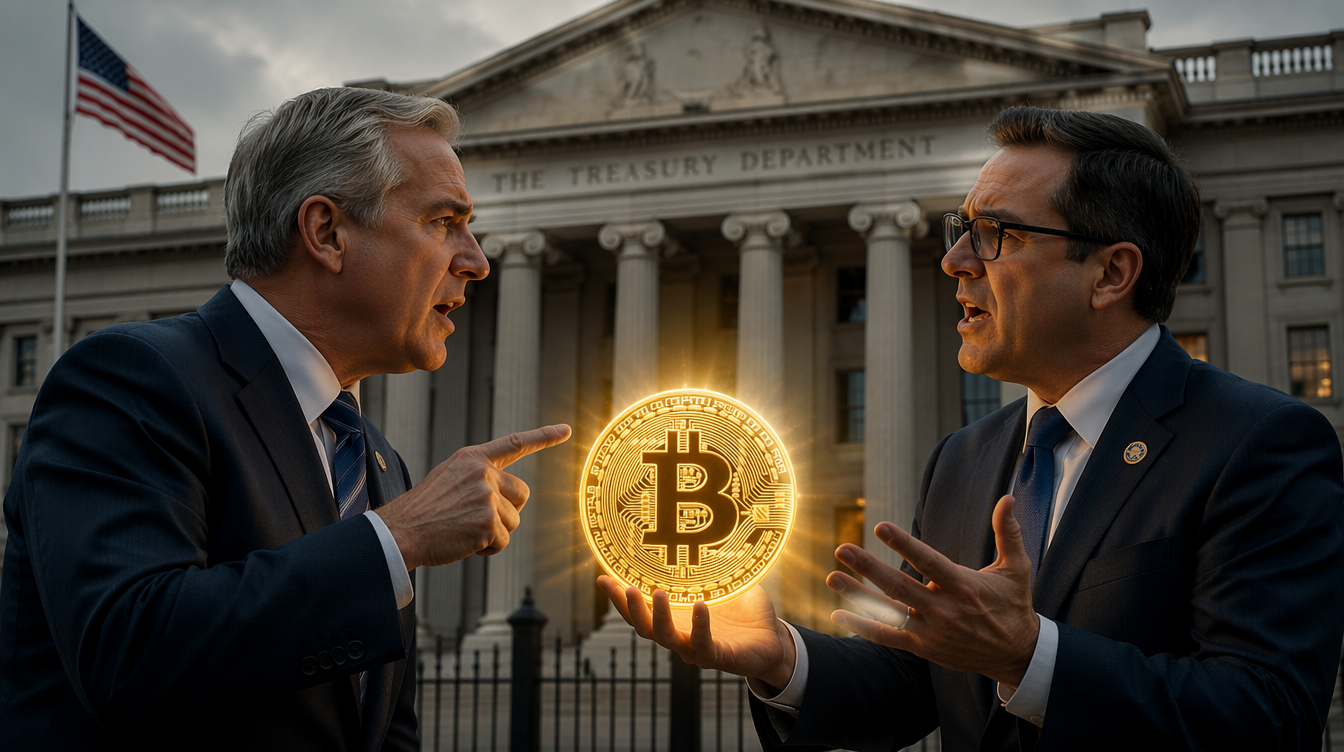
Bitcoin News: More than 16 months after Donald Trump signed an executive order creating a Strategic Bitcoin Reserve, the U.S. government still hasn’t named a lead agency, disclosed its total holdings, or purchased any additional Bitcoin. The holdup is tied to an ongoing turf battle between the Treasury Department and the Commerce Department over who should oversee roughly 328,372 BTC—valued at about $25 billion.
The DOJ Office of Legal Counsel has stepped in to mediate, signaling the dispute has escalated from routine bureaucratic friction into a more serious legal standoff.
The March 6, 2025 executive order set up two separate structures: a Strategic Bitcoin Reserve made up of seized BTC, and a broader U.S. Digital Asset Stockpile for other confiscated crypto assets.
It also directed Treasury and Commerce to find budget-neutral ways to expand Bitcoin holdings. However, that requirement—combined with the unresolved question of oversight—has effectively stalled any new accumulation.
Why the deadlock continues
At the heart of the issue is a legal mismatch. Existing federal asset management frameworks were built around traditional reserves like gold and government securities—not a volatile digital asset like Bitcoin.
Treasury’s authority is rooted in fiscal management, making long-term Bitcoin custody an awkward fit, especially since seized assets are typically liquidated. Commerce has been floated as an alternative, based on the idea that Bitcoin represents a strategic technology asset, but that approach would require new legal authority.
According to Bloomberg and KuCoin, this has resulted in a bureaucratic vacuum, with neither department willing to take on responsibility without clear legal backing.
The proposed BITCOIN Act—which would formally authorize the reserve under Treasury with congressional approval—remains unpassed. Without it, agencies are reluctant to move forward.
This legislative gap may ultimately be a bigger barrier than the interagency dispute itself. Analysts noted in early July that the reserve’s long-term legal foundation will likely depend on congressional action, regardless of how the current conflict is resolved.
Meanwhile, broader questions around crypto policy authority continue to play out across Washington.
The executive order originally required agencies to report their holdings within 30 days and tasked Treasury with delivering a full legal and operational review within 60 days. Both deadlines passed without public disclosure—the latter expiring on May 5, 2025. As of July 2026, no report has been released and no agency has been officially designated.
Mixed messaging from Treasury
Treasury Secretary Scott Bessent added to the uncertainty by first saying the U.S. would not buy more Bitcoin in the near term, then later indicating that “budget-neutral” strategies are still under consideration.
This contradiction highlights a core tension in the policy: while there is political interest in growing Bitcoin reserves, fiscal constraints make it difficult without new funding or market-neutral mechanisms.
White House digital assets adviser Patrick Witt has said an announcement on the reserve’s structure is “coming soon,” suggesting the initiative is still active.
That aligns with the ongoing mediation process, indicating efforts are focused on resolving the dispute rather than abandoning the plan. Still, repeated delays have drawn criticism from the crypto community, particularly over the lack of a clear framework and the absence of any new Bitcoin purchases.
One directive remains unchanged: Bitcoin held by the Treasury must not be sold and should be maintained as a reserve asset. This no-sell policy continues to define the government’s long-term approach, regardless of the unresolved oversight battle.
Share this content: