Bitcoin Remains Stable Despite $800B AI Sector Wipeout Across Markets
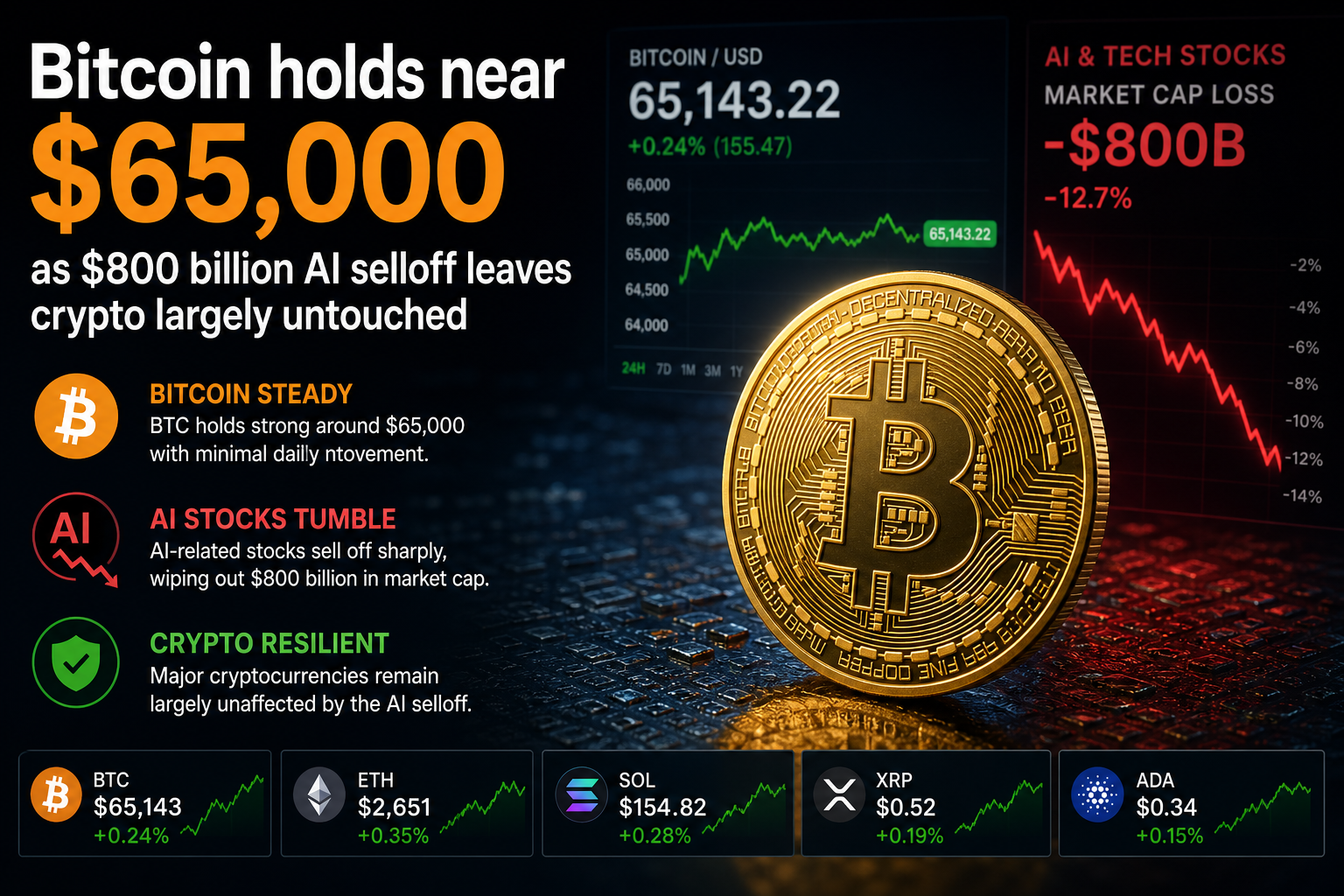
The “Magnificent Seven” technology stocks suffered their biggest drop since April 2025 after Alphabet and Tesla reignited concerns over massive AI spending. Bitcoin, however, remained largely steady, declining less than 1%, while dogecoin recorded the steepest fall among major crypto assets.
Bitcoin traded around the $65,000 mark during Friday’s Asian session, showing little movement even as nearly $800 billion was wiped from the market value of leading U.S. technology companies. The divergence marked a notable break from the AI-driven trend that had influenced crypto prices throughout the month.
BTC was hovering near $65,400, down slightly over the previous day but still up roughly 3% for the week. Ether dropped 3% to $1,879, while most major cryptocurrencies posted losses. Dogecoin was the biggest decliner among large-cap tokens, falling 5% to $0.069 and slipping 4% over the week. XRP declined 2% to $1.11, Solana dropped 3% to $76, and Hyperliquid’s HYPE token fell 4% over seven days to $58.
Despite the negative moves, crypto’s declines were relatively small compared with the damage seen across stock markets.
The Magnificent Seven, the group of mega-cap technology companies that have powered much of the U.S. equity rally in recent years, dropped 4.8% on Thursday. The selloff erased about $797 billion in combined market value, marking their worst session since the tariff-driven market downturn in April 2025.
The broader impact pushed the S&P 500 down 1.2% and the Nasdaq 100 lower by 1.9%. The group now sits about 11% below its late-May record high, representing nearly $2 trillion in lost value.
The market decline was driven largely by worries over AI investment levels. Alphabet increased its projected capital spending for the year to as much as $205 billion, while Tesla CEO Elon Musk called 2026 a “massive capex year” after the company reported weaker-than-expected earnings.
The developments strengthened concerns that major technology firms are spending hundreds of billions of dollars on AI infrastructure before proving that the returns will justify the investment.
That uncertainty has also shaped crypto trading in recent weeks. Bitcoin had been closely tracking the AI cycle, rising when semiconductor stocks rallied and declining when technology shares weakened.
Whether Bitcoin’s recent strength signals a lasting separation from AI-related assets remains unclear. The link could still emerge over time, especially as many Bitcoin mining companies continue shifting toward AI-focused data-center operations.
However, after weeks of crypto moving almost in lockstep with AI and chip stocks, Bitcoin’s ability to hold steady during a major technology selloff suggests the relationship between the two markets may not be as strong as recent trends implied.
Share this content: