Bitcoin remains in a deep bear market versus gold, with historical trends suggesting further downside
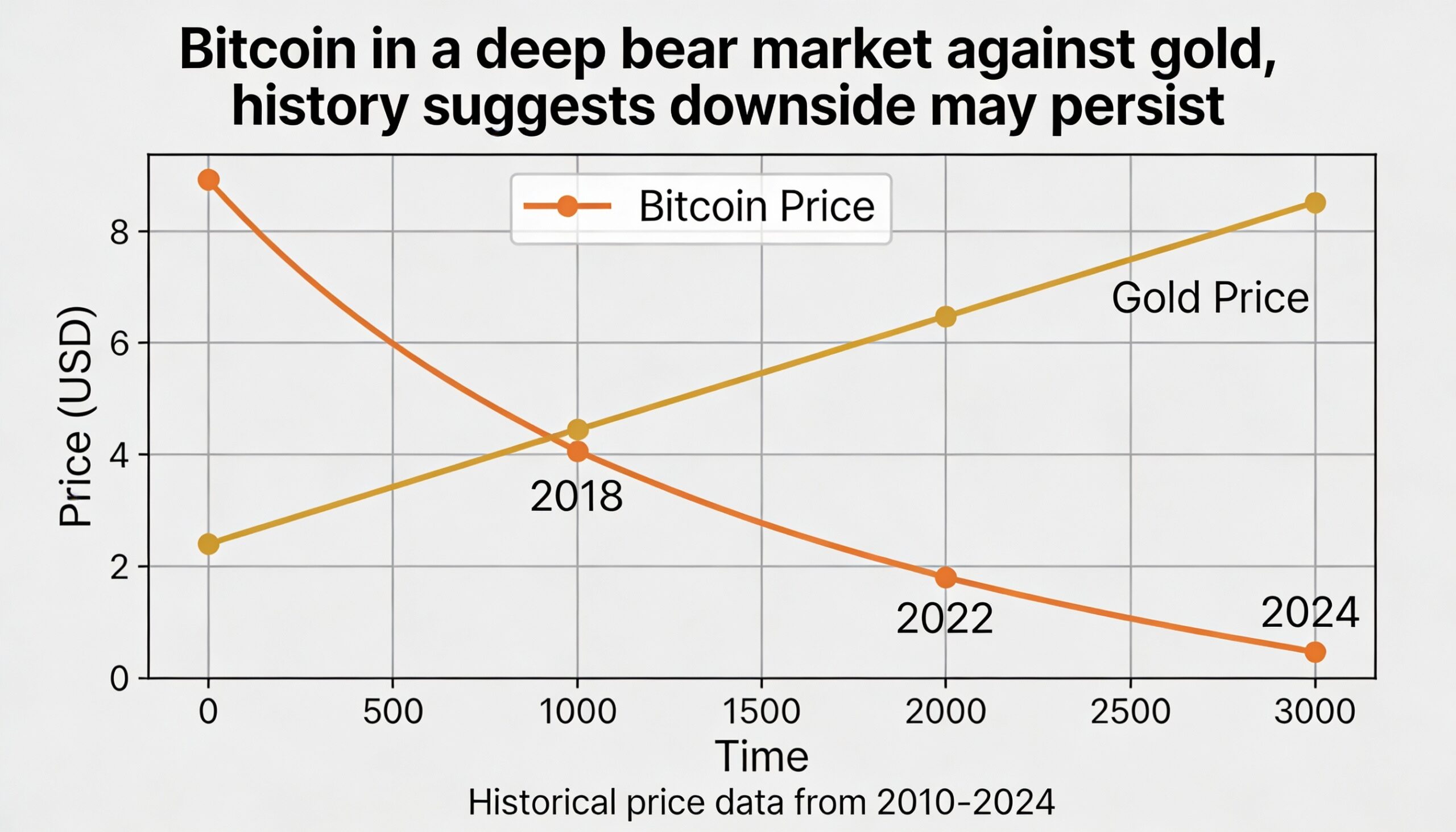
Bitcoin has fallen 55% against gold from its December 2024 peak, highlighting continued weakness in its positioning relative to the traditional safe-haven asset. The decline challenges the long-held narrative of bitcoin as “digital gold.”
Gold continues to push toward fresh record highs just below $4,900 per ounce, up roughly 12% year-to-date, while bitcoin remains below $89,000 and is only marginally positive for the year.
The divergence between the two assets is also apparent over longer time frames. Across one- and five-year periods, gold has outperformed bitcoin. Over five years, bitcoin has gained roughly 150%, while gold has risen about 160%.
The BTC-to-gold ratio currently sits near 18.46, significantly below its 200-week moving average (WMA), which tracks the long-term trend based on nearly four years of data. The 200WMA stands around 21.90, placing the ratio roughly 17% below this key trendline.
During the last major bear market in 2022, the ratio fell more than 30% below the 200WMA and remained beneath it for over a year. The current decline began in November, suggesting that if historical patterns hold, the ratio could stay well below the 200WMA until late 2026.
The ratio peaked near 40.9 in December 2024, with bitcoin subsequently losing roughly 55% of its value relative to gold. Previous cycles saw even deeper drawdowns, including a 77% decline during the 2022 bear market and an 84% drop in the 2017–2018 cycle.
Share this content: