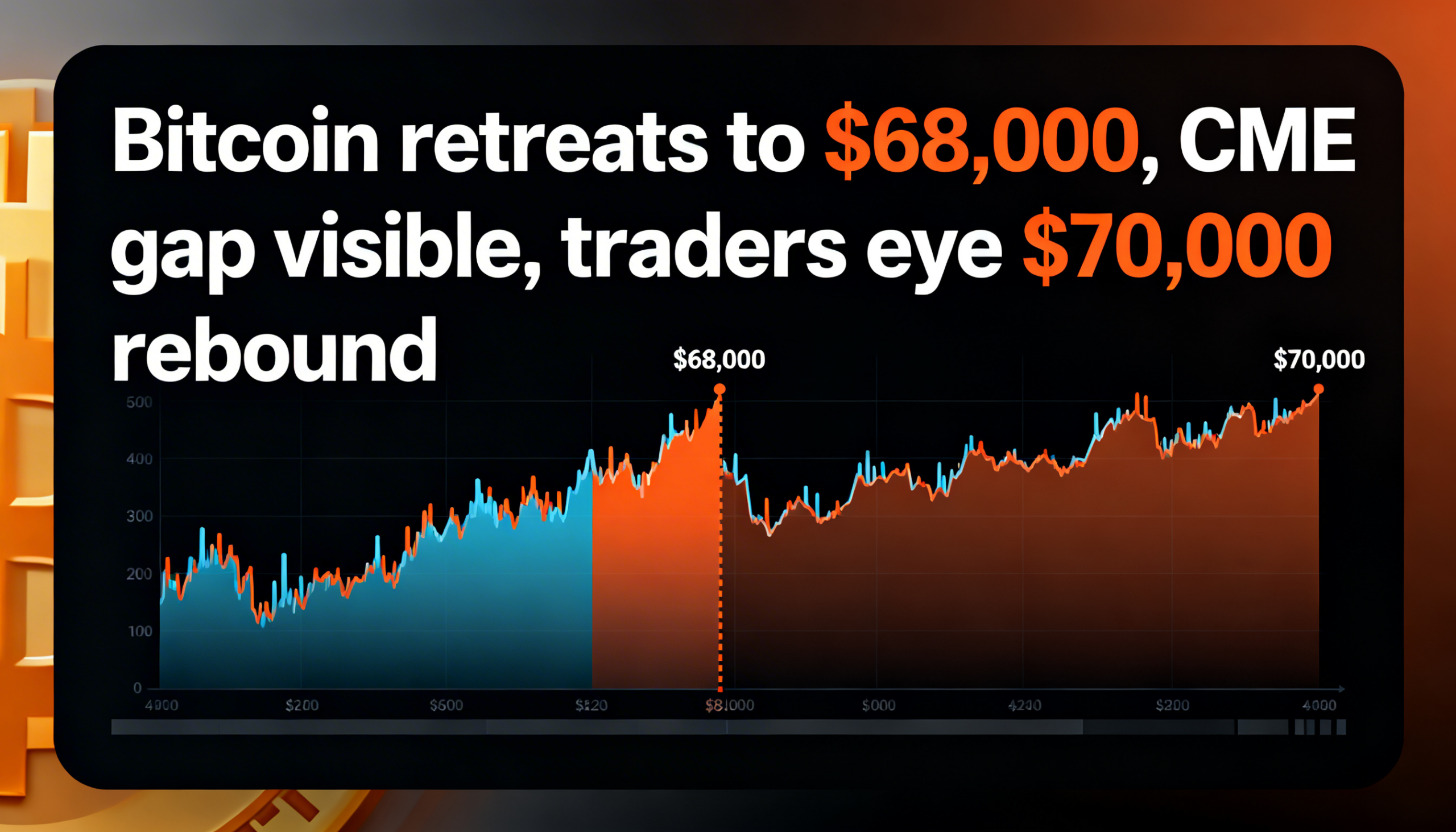
Bitcoin pulls back to $68,000, filling CME gap as traders target a move back to $70,000
Bitcoin has slipped back toward $68,000, re-entering its February trading range after geopolitical tensions triggered a fresh wave of selling and redirected flows into commodities.
BTC is currently trading near $68,250, retreating to levels last seen in early February after repeated failures to break convincingly above $75,000.
The latest pullback was sparked over the weekend after Donald Trump warned he could “obliterate” Iran’s power infrastructure unless the Strait of Hormuz was reopened within 48 hours, escalating tensions tied to the Iran war.
CME gap and macro shifts
The weekend selloff created a CME gap—formed when bitcoin futures close on Friday and reopen Sunday at a different price. A recovery toward $70,000 would fill that gap, making it a key level for traders to watch early in the week.
Meanwhile, traditional markets are undergoing a shift. Gold and silver extended their declines on Monday, reinforcing the view that January’s highs were driven more by speculative excess than sustained safe-haven demand.
At the same time, the US Dollar Index has pushed back above 100, supported by rising inflation concerns and fading expectations for Federal Reserve rate cuts.
Altcoins lag, liquidations spike
Altcoins have underperformed bitcoin since midnight UTC, with DeFi tokens like ETHFI, HYPE and SKY falling around 3%, even as BTC stabilized after its weekend drop.
In derivatives markets, more than $400 million in leveraged crypto positions were liquidated over the past 24 hours, including over $280 million in long positions—the highest since late February—highlighting the impact of bitcoin’s recent decline on bullish traders.
Open interest in futures tied to tokenized gold, such as PAXG, has risen 4%, indicating a rotation of capital toward commodities. In contrast, Ethereum futures open interest rose by less than 1%.
On decentralized exchange Hyperliquid, commodity-linked perpetuals tied to crude oil, gold and silver are now among the most active contracts, overtaking major crypto assets like XRP—underscoring the shift in market focus.
Mixed sentiment, rising volatility
Funding rates present a mixed picture. Bearish positioning is building across several altcoins—including XRP, BNB, SOL, TRX, DOGE and ADA—while BTC and select assets like BCH and LINK continue to see positive funding, indicating pockets of strength.
Bitcoin’s 30-day implied volatility index has climbed to 60% from 53% last week, reflecting rising uncertainty as geopolitical tensions persist. Ether’s volatility has surged even higher, with its index reaching 84%—the highest level since early February.
Options markets are also signaling caution. On Deribit, bitcoin put options are trading at a notable premium to calls, pointing to strong demand for downside protection. Block trades have shown increased interest in bearish put spreads and volatility-focused strategies.
Token trends and outlook
In the spot market, DeFi tokens are leading losses, with CoinDesk’s DeFi Select Index down 0.75% on the day. Meme and broader altcoin indices are also modestly lower.
However, privacy-focused tokens such as DASH, NIGHT and XMR have bucked the trend, posting gains of 3% to 5% over the past 24 hours, supported by improving sentiment around anonymity and clearer regulatory signals.
CoinMarketCap’s Altcoin Season Index currently sits at 49, slightly below last week’s reading but well above last month’s lows, suggesting a more balanced market environment.
One potential tailwind for altcoins is the average relative strength index (RSI), which has moved into oversold territory—hinting that a short-term rebound could be on the horizon.
For now, bitcoin remains range-bound, with traders closely watching whether it can reclaim $70,000 and fill the CME gap, or if macro pressures will continue to weigh on prices.
Share this content: