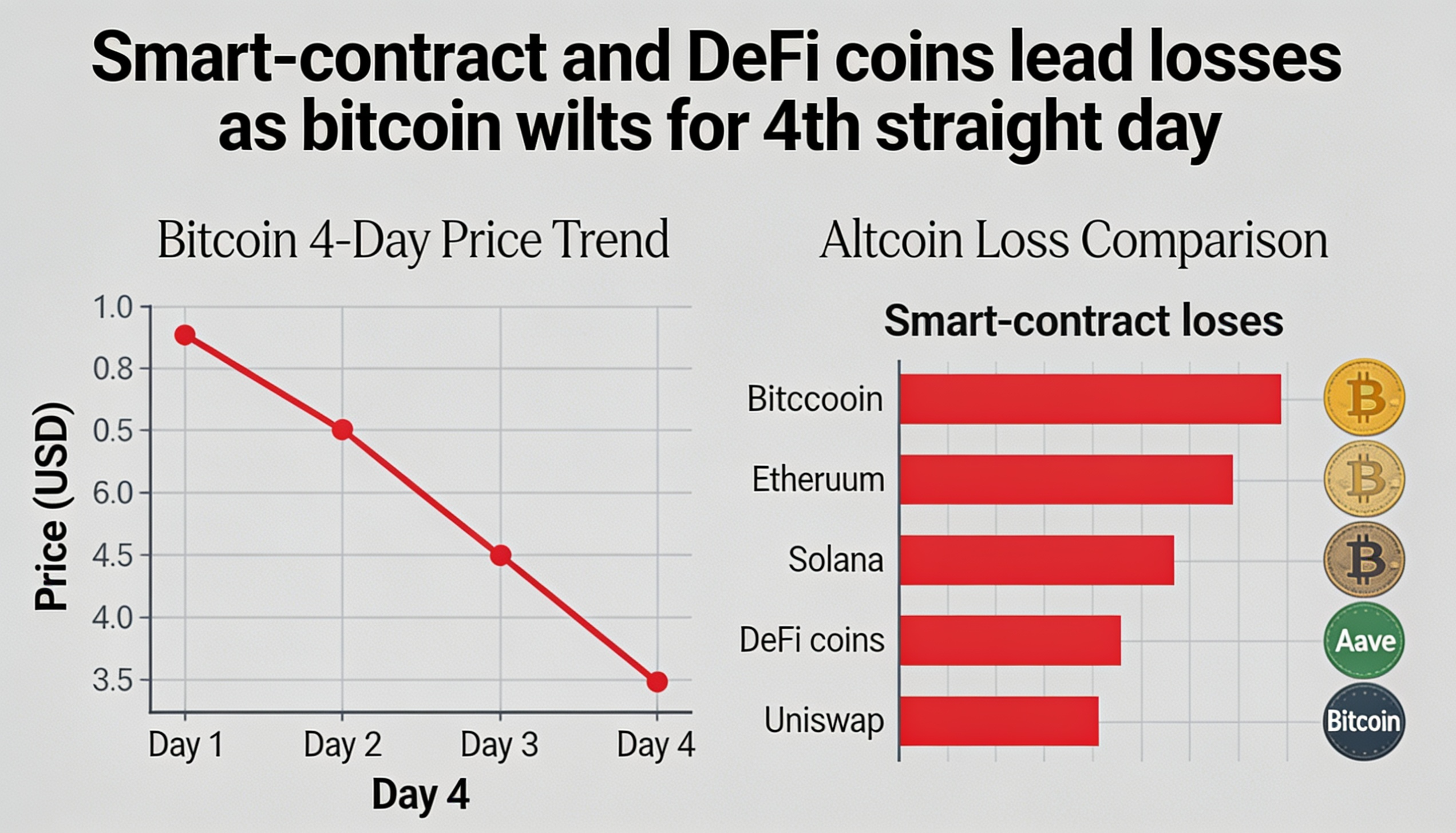
A BlackRock private credit fund is the latest to show cracks, pressuring crypto prices and DeFi markets.
Bitcoin Fails to Hold $74K as Macro Forces Override Institutional Momentum
Institutional participation in crypto continues to deepen, but broader economic pressures — including a stronger U.S. dollar and shifting expectations for interest rates — are limiting the strength of the latest bitcoin rally.
Bitcoin briefly surged toward $74,000 earlier this week, supported by several developments that further connected the cryptocurrency sector with traditional financial institutions. The move prompted some analysts to suggest the market could be entering a new bullish phase, with one strategist arguing the rally “has legs.”
However, the optimism quickly faded. By the end of the week, bitcoin had slipped back below $69,000, erasing much of its gains and wiping roughly $110 billion from its total market value.
The decline came despite what many viewed as one of the most constructive periods for institutional crypto adoption in months.
Several major announcements highlighted the growing integration between digital assets and traditional finance. Morgan Stanley designated Bank of New York Mellon as a custodian for its exposure to spot bitcoin ETFs, further embedding Wall Street infrastructure into the crypto ecosystem. Meanwhile, crypto exchange Kraken secured access to the Federal Reserve’s payment network — a major step toward linking crypto firms with the U.S. banking system.
Elsewhere, Intercontinental Exchange (ICE), the parent company of the New York Stock Exchange, invested in the cryptocurrency exchange OKX at a valuation of roughly $25 billion. At the same time, U.S. President Donald Trump publicly suggested that traditional banks should find a practical way to work with the crypto industry.
In previous crypto cycles, announcements like these might have sparked a strong market rally, as institutional adoption was widely viewed as the trigger for a massive bull run. Now that institutional involvement has largely arrived, however, macroeconomic factors appear to be exerting far greater influence on price movements.
The latest selloff was largely driven by strength in the U.S. dollar, which intensified as geopolitical tensions escalated in the Middle East. After President Trump dismissed the possibility of negotiations with Iran — stating, “There will be no deal with Iran” — oil prices jumped, reigniting concerns about inflation.
Those developments pushed investors to reassess interest rate expectations, even as recent labor market data pointed to signs of economic weakness. As the dollar strengthened, risk assets came under pressure across global markets. Equity markets fell alongside the dollar’s rise, and cryptocurrencies — which increasingly trade in line with technology stocks and other risk assets — followed the same downward trajectory.
Adding to investor unease were emerging cracks in the global private credit market. Reports surfaced that BlackRock had begun restricting withdrawals from its $26 billion private credit fund amid rising redemption requests. The move followed similar stress at Blue Owl, which sold $1.4 billion in loans last month to meet investor withdrawals.
Together, these developments unsettled investors and contributed to the broader risk-off mood.
The episode underscores a growing reality in crypto markets: macroeconomic forces are now often more influential than crypto-specific news.
Over the past few years, bitcoin’s correlation with the Nasdaq and other risk assets has strengthened significantly. As hedge funds, asset managers, and exchange-traded funds entered the market, bitcoin increasingly became part of diversified macro portfolios. As a result, its price now responds more directly to factors such as liquidity conditions, interest rates, and the strength of the dollar.
Ironically, the institutional adoption that the crypto industry long sought may be contributing to this dynamic. As bitcoin becomes embedded in traditional investment portfolios, it is increasingly subject to the same forces that influence stocks, commodities, and currencies. When the dollar rallies or expectations for higher interest rates grow, liquidity tightens across markets — and cryptocurrencies rarely escape the impact.
That said, the steady pace of institutional developments still matters for the long-term structure of the market. The expansion of custody services, improved banking access, and increased investment in crypto exchanges all point to a more mature financial infrastructure gradually forming around digital assets.
In the near term, however, macro uncertainty appears to have shaken primarily short-term bitcoin holders, many of whom rushed to take profits when the price briefly approached $74,000.
According to CryptoQuant analyst Darkfost, short-term investors transferred more than 27,000 BTC — worth roughly $1.8 billion — to exchanges in profit within a 24-hour period, marking one of the largest such spikes in recent months.
Short-term holders tend to be the most reactive participants in the market, often trading in and out of positions to capture quick gains rather than maintaining long-term exposure. With bitcoin’s relatively thin liquidity, large waves of selling from this group can quickly influence price movements.
Blockchain data supports this trend. Currently, the only short-term investors still in profit are those who accumulated bitcoin between one week and one month ago, at an average realized price near $68,000. This suggests that many recent buyers who entered the market above that level may be choosing to secure gains instead of increasing their exposure.
For now, with crypto markets still navigating a broader downturn that began in early October and macro uncertainty remaining elevated, price action remains the primary focus for investors.
A Potential Silver Lining
Despite the volatility, there are signs of renewed institutional interest.
A recent report from Binance Research showed that U.S. spot bitcoin ETFs recorded approximately $787 million in net inflows last week — the first positive weekly flow since mid-January. The data suggests some institutional investors may be cautiously returning to the market after several weeks of persistent outflows.
At a recent investment conference, large university endowment funds — typically long-term investors — indicated they have begun exploring alternative investments beyond traditional equities, including ETFs tied to digital assets. With stock market valuations remaining historically high, some institutions are looking to diversify their portfolios.
The Binance report also noted that speculative excess in the crypto market may already have been flushed out. Bitcoin funding rates have dropped to their lowest levels since 2023, signaling that heavily leveraged long positions have largely been unwound.
Historically, such conditions tend to create a healthier environment for more sustainable rallies driven by genuine spot demand rather than short-term speculative activity.
Still, conviction among investors remains fragile.
Some traders described the sharp rally earlier in the week as a classic “bull trap” — a brief breakout that attracts buyers before reversing sharply lower. While institutional participation continues to expand, thin liquidity, cautious sentiment, macroeconomic headwinds, and a lack of clear catalysts suggest the market may remain volatile in the near term.
Share this content: