BTC’s Relief Rally Meets Fresh Challenge From Japan’s Monetary Tightening
Rewritten Version:
Rising Japanese bond yields are beginning to weigh on Bitcoin, which had recently advanced about 8% in less than a week as expectations for global interest rates shifted.
Japan’s 10-year government bond yield has climbed to a 30-year high of 2.85%, up 18 basis points this month, pushing borrowing costs higher across developed markets.
In the U.S., the 10-year Treasury yield is approaching 4.5%, while Germany’s 10-year bund is nearing 3% and the U.K.’s 10-year gilt stands around 4.8%. Inflation-adjusted yields are also trending upward, signaling tighter global financial conditions.
For years, Japan’s ultra-loose monetary policy—featuring near-zero interest rates and aggressive easing—helped anchor global yields. This environment supported carry trades, where investors borrowed yen at low cost to invest in higher-yielding assets abroad, effectively suppressing borrowing costs worldwide.
That dynamic is now shifting, and it has implications for bitcoin. Higher bond yields increase the opportunity cost of holding non-yielding assets like BTC, making fixed-income investments more attractive by comparison.
The latest rise in yields could undermine the momentum bitcoin gained earlier this month, when markets began dialing back expectations for further U.S. rate hikes.
That shift followed comments on July 1 from Federal Reserve Chair Kevin Warsh, who suggested inflation risks were easing, along with a weaker-than-expected U.S. jobs report showing slower hiring and a drop in labor force participation to a more than five-year low of 61.5%.
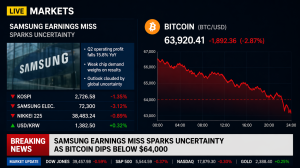
Bitcoin found support near $58,000 at the start of the month and climbed toward $64,000 on the back of those developments. However, the renewed increase in global yields—led by Japan—could limit further upside.
Still, not all analysts are concerned. Goldman Sachs expects the yen to continue weakening and maintains a preference for yen-funded carry trades.
Share this content: