Wall Street, White House Concerns Push SEC Tokenization Exemption Toward Further Delay
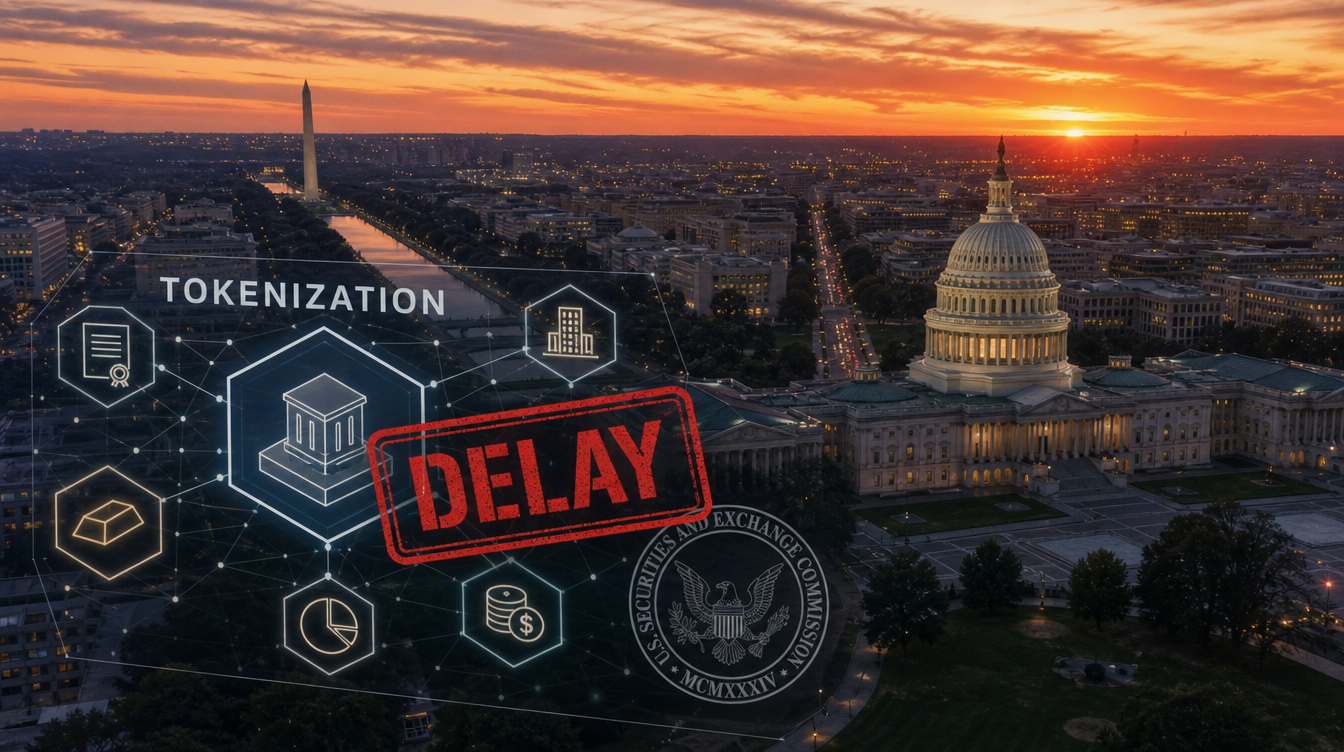
The U.S. Securities and Exchange Commission is likely to delay its proposed “innovation exemption” for tokenized securities once again, with concerns from the White House and Wall Street reportedly slowing the initiative.
Three industry sources familiar with the matter said the SEC had planned to release at least part of the exemption alongside a Friday meeting focused on its separate “Reg Crypto” proposal. The agency canceled the meeting late Thursday.
The exemption had been expected as soon as Friday and was intended to lower some of the regulatory hurdles facing companies that want to issue and trade tokenized securities on blockchain networks under existing securities laws.
The canceled meeting was scheduled to address “Reg Crypto,” a separate SEC rulemaking effort aimed at establishing a framework for crypto projects seeking to raise capital through token offerings. Officials had also been expected to discuss the innovation exemption, although it was not expected to immediately enter the formal notice-and-comment process.
One source said White House officials were concerned that moving forward could “kick a hornet’s nest” while Congress negotiates the Digital Asset Market Clarity Act. The concern is that the exemption could make efforts to advance broader crypto legislation more complicated.
SEC staff are also reportedly examining the legal basis for the proposal, including whether the agency has enough authority to provide such broad relief. Officials are reviewing whether adequate economic analysis has been completed and whether the required procedural steps have been followed. Industry participants have reportedly been told that the initiative could remain on hold until the Clarity Act progresses.
Wall Street Pushes Back
The proposal has also drawn resistance from traditional financial institutions.
SIFMA, which represents major investment banks and broker-dealers, has reportedly raised significant concerns about the SEC’s approach to tokenized markets.
One major issue is how blockchain-based trading venues would fit into existing equity-market rules, particularly brokers’ responsibility to obtain the best execution available for clients.
Regulation NMS currently connects pricing across traditional exchanges and generally requires brokers to execute orders at the best protected quotation. Applying those rules to decentralized exchanges and automated market makers could be more difficult because prices and transaction costs can vary from those on traditional exchanges.
The SEC proposed eliminating Rule 611 of Regulation NMS, known as the Order Protection Rule, in June. The proposal was viewed as potentially removing a major regulatory barrier to tokenized securities trading.
SIFMA has argued that significant changes to market structure should be addressed through formal rulemaking rather than exemptions or no-action relief.
In a June 30 letter, the trade group urged the SEC to use an open process that would allow industry participants and the public to review and comment on major structural changes.
The SEC has not immediately commented on the latest delay.
SEC Has Previously Postponed the Exemption
The initiative has already faced several delays. The SEC appeared ready to release the exemption in May after repeatedly extending its target date.
At the time, reports suggested the framework could potentially allow security-token issuers to offer digital assets without directly controlling the underlying securities. That possibility prompted concerns among traditional securities issuers over the creation of synthetic versions of existing financial assets.
The SEC ultimately held back the proposal. Commissioner Hester Peirce later said she did not expect synthetic securities to fall under the exemption. Instead, she indicated that it would likely cover tokens serving as digital representations of the same underlying equities that investors can already purchase.
Tokenization Gains Traction
The latest delay comes as tokenization continues to attract significant interest from Wall Street. Financial institutions are exploring blockchain-based systems for issuing and trading stocks, bonds and funds.
Nasdaq and the New York Stock Exchange have both announced plans to develop tokenized securities infrastructure. The Depository Trust & Clearing Corporation has also completed its first live production transactions involving tokenized securities as part of a testing program.
The market could become substantial. Citi analysts estimate that tokenized assets could reach $5.5 trillion by 2030.
Under Chairman Paul Atkins, the SEC has increasingly supported tokenization as a potential way to modernize financial markets. However, questions remain over how traditional securities should be brought onto blockchain networks and how tokenized trading venues can operate within existing U.S. securities and market-structure regulations.
Share this content: