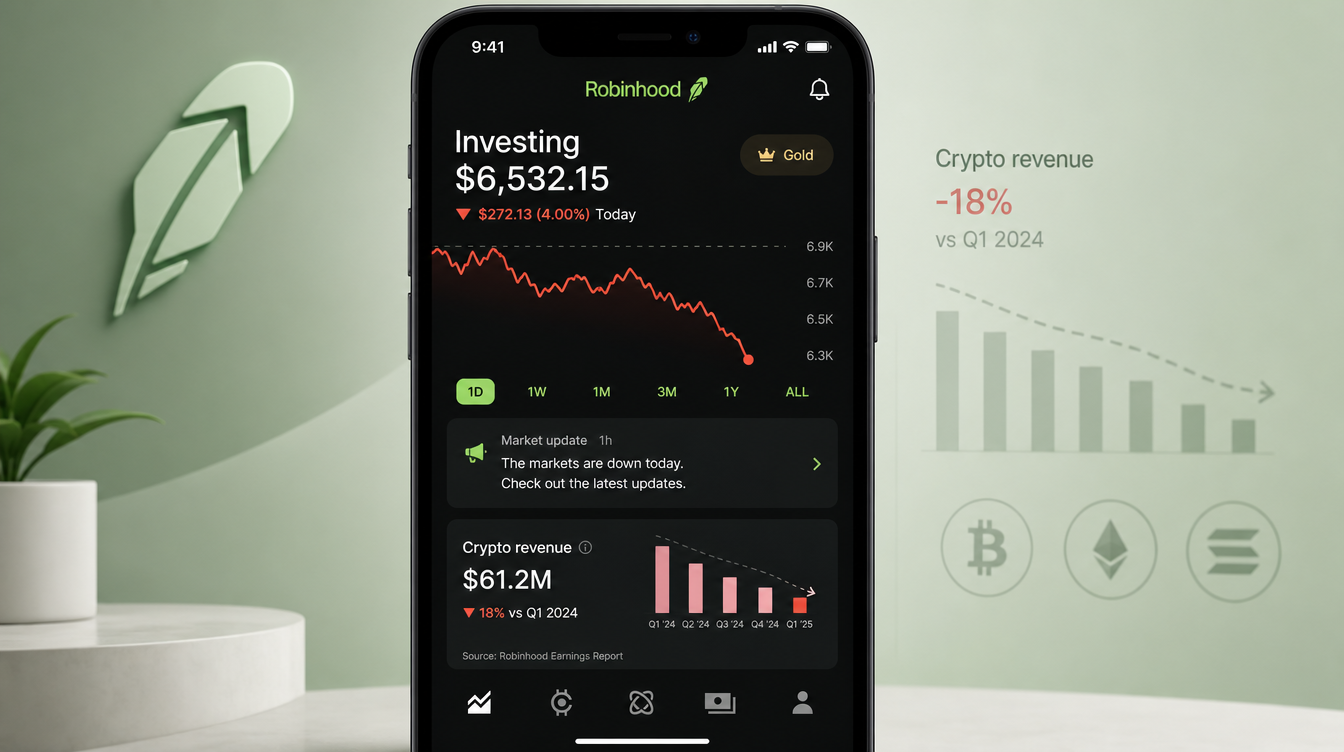
Robinhood Rally Fades as Crypto Boom Shows Signs of Cooling After Earnings
Robinhood generated $100 million in crypto trading revenue during the second quarter, a 38% decrease from the prior year. The decline in digital asset activity was balanced by stronger growth in options, equities, and prediction market trading.
Shares of Robinhood (HOOD) fell around 4% in after-hours trading despite the company reporting second-quarter results above analyst expectations. The move extended a 3.1% decline recorded during Wednesday’s regular market session.
The brokerage reported adjusted earnings of $0.62 per share, beating Wall Street’s forecast of $0.43. Revenue reached a record $1.31 billion, up 32% from a year earlier and slightly ahead of analysts’ projection of $1.29 billion.
The quarter highlighted continued expansion across Robinhood’s growing range of products, although crypto activity slowed. Cryptocurrency transaction revenue declined to $100 million from $160 million a year earlier, while increased engagement in options, stock trading, and prediction markets supported overall transaction growth.
CEO and Chairman Vlad Tenev said Robinhood’s latest initiatives, including Robinhood Chain, Robinhood Ventures, and Trump Accounts, are designed around a broader goal of helping more users participate in ownership opportunities.
The company’s second-quarter performance followed one of its strongest product rollout periods in recent years. Robinhood introduced Robinhood Chain, a blockchain network built to enable tokenized versions of U.S. stocks as part of its effort to integrate traditional assets with blockchain technology.
The platform has seen rapid growth since launch, with daily decentralized exchange volumes reaching hundreds of millions of dollars. Tokenized assets connected to GameStop, Nvidia, and SpaceX have become some of the most actively traded real-world assets on the network. Although memecoins and stablecoins remain major sources of activity, interest in tokenized equities has continued to rise.
Robinhood also launched Agentic Trading, an AI-based suite that allows customers to connect third-party AI assistants with their brokerage accounts. The feature enables automated market monitoring and trade execution based on user preferences, while controls such as separate accounts, spending limits, and manual approvals help maintain oversight.
The results may provide an early signal ahead of Coinbase’s second-quarter earnings release. While Robinhood and Coinbase follow different business models, both are closely tied to retail trading trends and cryptocurrency market sentiment. Investors will be looking to see whether stronger crypto prices and higher trading volumes during the quarter translated into increased transaction revenue for Coinbase.
Robinhood is scheduled to hold its earnings call with investors at 5 p.m. ET.
Share this content: