Political Clash Over Crypto Taxes Grows in South Korea as Lawmakers Review New Rules
South Korea plans to introduce a cryptocurrency tax on January 1, 2027, indicating that the government intends to proceed with the measure rather than delay it for a fourth time.
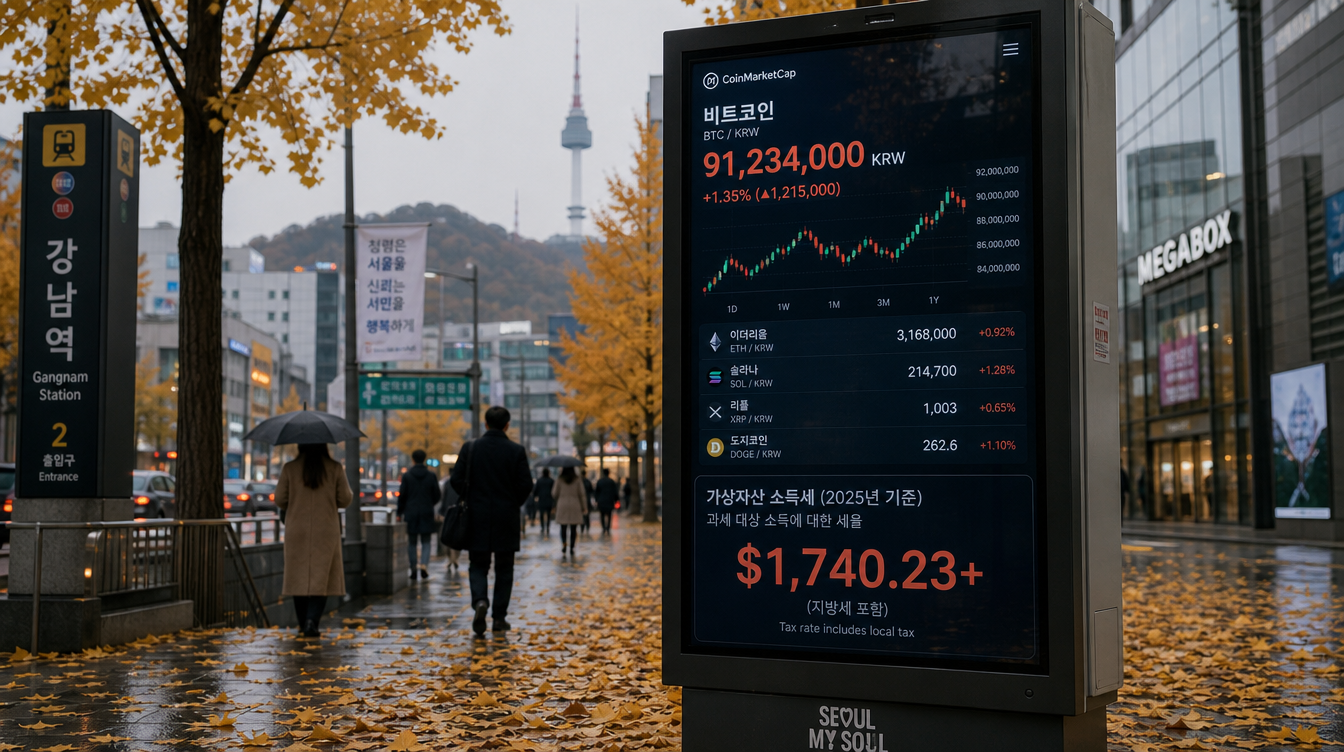
The proposed policy would impose a combined tax rate of up to 22% on annual crypto profits exceeding 2.5 million won, or roughly $1,740.
The tax was originally set to begin in January 2022 but was postponed until 2025. A legislative change approved in December 2024 pushed the timeline back by another two years, moving implementation to the start of 2027.
Deputy Prime Minister Koo Yun-cheol confirmed the government’s plan during a July 29 meeting of the National Assembly’s Finance and Economy Planning Committee, saying the country would move forward with crypto taxation as scheduled.
Under the current proposal, income from cryptocurrency sales and lending would be taxed separately as “other income.” Investors would receive an annual deduction of 2.5 million won, while gains above that threshold would face a 20% national tax rate, increasing to 22% after local income tax is included, according to the National Tax Service.
The policy has faced criticism from opposition lawmakers. Kim Sang-hoon of the People Power Party argued that the absence of loss carryforward provisions could encourage investors to shift trading activity to overseas exchanges, decentralized platforms, and peer-to-peer markets.
Kim also said the tax should be delayed until the OECD’s Crypto-Asset Reporting Framework is fully implemented, allowing for a more coordinated international reporting system.
Despite the government’s commitment, the tax could still be scrapped. A bill introduced in March seeks to remove cryptocurrency income from the Income Tax Act, effectively eliminating the proposed levy.
The measure was reviewed by the National Assembly committee on July 29 and moved to a subcommittee for further consideration. Unless lawmakers repeal or postpone the rules, the tax will come into effect on January 1, 2027.
Koo said any decision to abandon the tax would require a wider review of South Korea’s capital markets taxation framework and a determination on whether crypto profits should be treated as capital gains.
Share this content: