Charles Hoskinson Under Pressure to Reveal Paper Trail Behind $70M BTC Transaction
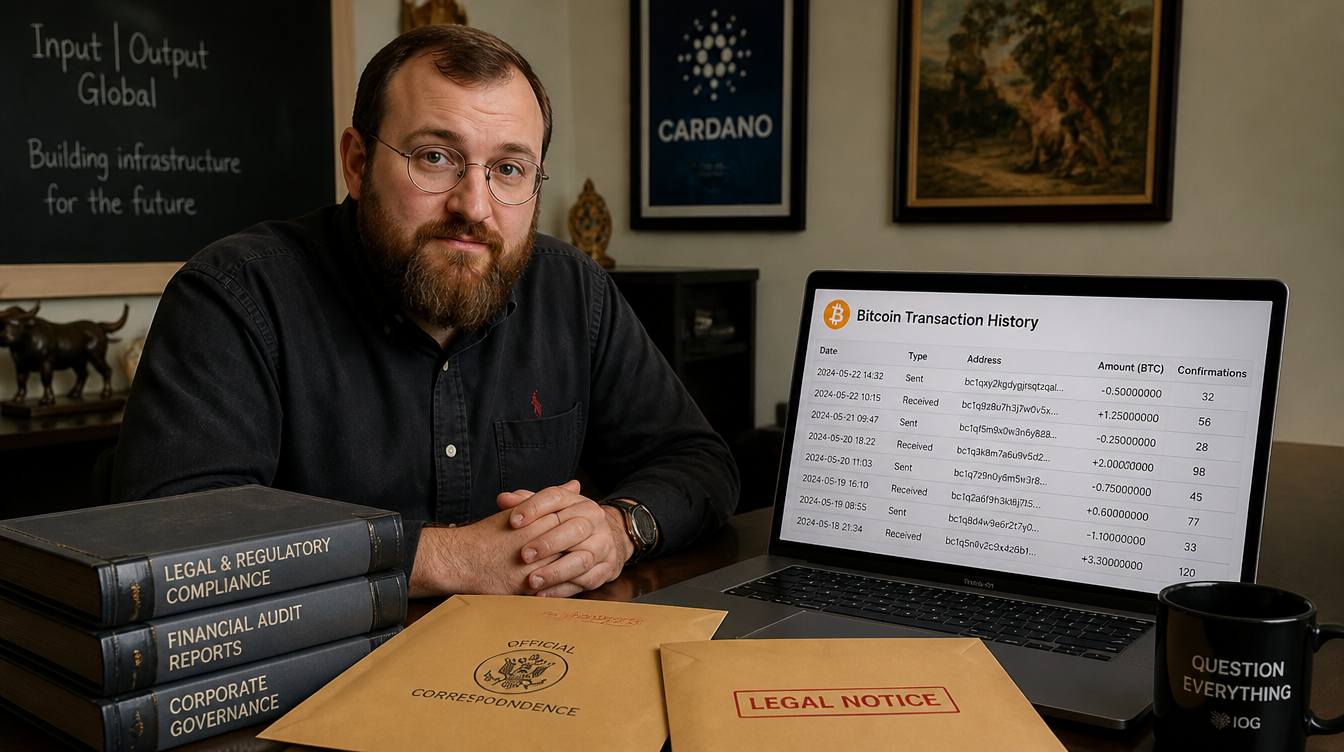
Cardano News: Charles Hoskinson is defending a 1,096 BTC transfer tied to Cardano’s early foundation structure—valued at roughly $454,000 in March 2016 and close to $70 million today.
During a recent AMA on governance and treasury oversight, Hoskinson described the allocation as a legitimate audit expense related to the ADA crowdsale. But Bitcoin’s surge in value has turned what may have been a routine cost into a high-stakes transaction with no publicly available documentation.
Thomas Braziel, founder and managing partner of 117 Partners, is pushing back, calling for a full paper trail. He is seeking invoices, contracts, board approvals, payment records, and a clear custody path showing who ultimately received the funds.
Braziel’s argument is simple: the issue is not whether audits cost money, but where the 1,096 BTC went, who received it, and why. The gap between explanation and evidence is now fueling one of the most visible governance disputes in crypto in 2026.
Hoskinson’s Version: A 2016 Audit Payment
Hoskinson links the transaction to a March 2016 request from Michael Parsons, then chairman of the Cardano Foundation’s Isle of Man entity, to fund a comprehensive audit of the ADA crowdsale.
The crowdsale ran from October 2015 to January 2017, raising approximately 108,844.5 BTC across four rounds, largely from Japanese investors.
At the time, Bitcoin traded near $414, putting the value of 1,096 BTC at around $454,000. Hoskinson says the funds were split among three reviewers: Parsons, John Maguire, and Bruce Milligan.
In context, a mid-six-figure audit fee for a complex, cross-border token sale is not unreasonable. But what may have made sense in 2016 does not answer today’s demand for verifiable records.
Braziel’s Demand: Show the Records
Braziel, known for tracing financial flows through incomplete data, intensified his inquiry after the Isle of Man Foundation was dissolved in December 2025, removing a key source of documentation.
He is calling for specific proof: invoices and agreements from the named reviewers, board-level approvals, and on-chain or ledger data identifying recipient wallets and transaction timing.
He has also questioned whether a $454,000 audit fee—paid entirely in Bitcoin and split three ways—fits standard audit practices of the time.
While Braziel says he is not alleging fraud, but seeking transparency, reports that former insiders have contacted him suggest deeper concerns may exist.
Governance Risk: A Missing Paper Trail
The Isle of Man Foundation held part of Cardano’s early crowdsale proceeds, including the disputed 1,096 BTC, while the Swiss-based Cardano Foundation managed a separate allocation of roughly 7,168 BTC.
The dissolution of the Isle of Man entity in December 2025 has created a clear accountability gap, as the entity responsible for maintaining records no longer exists.
Blockchain data remains permanent, but without documented record transfers, transparency concerns persist. Responsibility is now shifting to the Swiss Cardano Foundation to provide any remaining documentation.
This dispute follows earlier scrutiny, including a 318 million ADA transaction in 2021 that led to an independent audit by McDermott Will & Emery and BDO, clearing Hoskinson but setting a higher bar for disclosure.
Hoskinson has criticized governance debates on social media and called for more structured discussions. Critics, however, argue that without primary documentation, the core issue remains unresolved.
At its core, the debate is no longer about whether the payment was justified—it is about whether it can be proven.
Share this content: