Bitcoin, Stocks Enter Uncertain Phase as Analysts Flag Heightened Volatility Ahead
After AI-driven strength lifted equities while Bitcoin lagged, investors now expect macro policy and shifting market structure to dominate the next phase of trading.
The first half of the year was defined by the AI trade, but the second half may center on a more difficult question: which companies and assets are actually positioned to benefit from it.
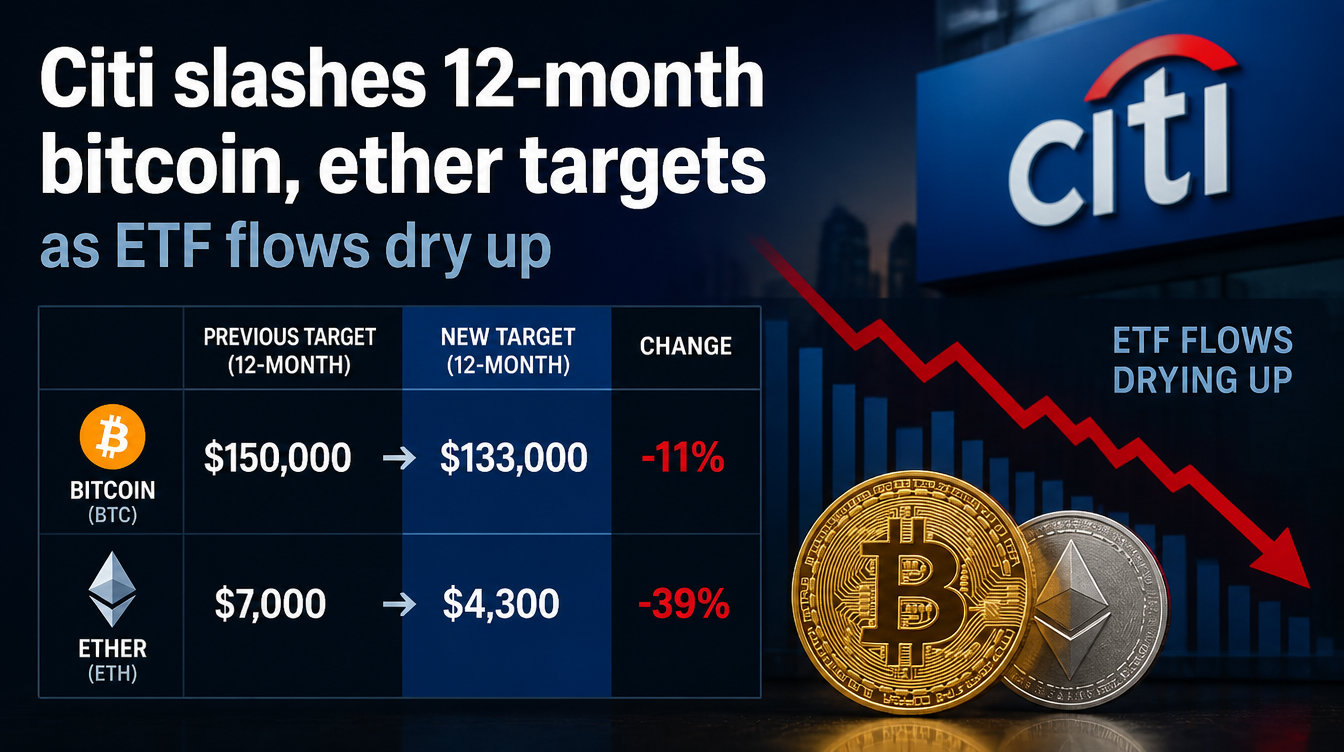
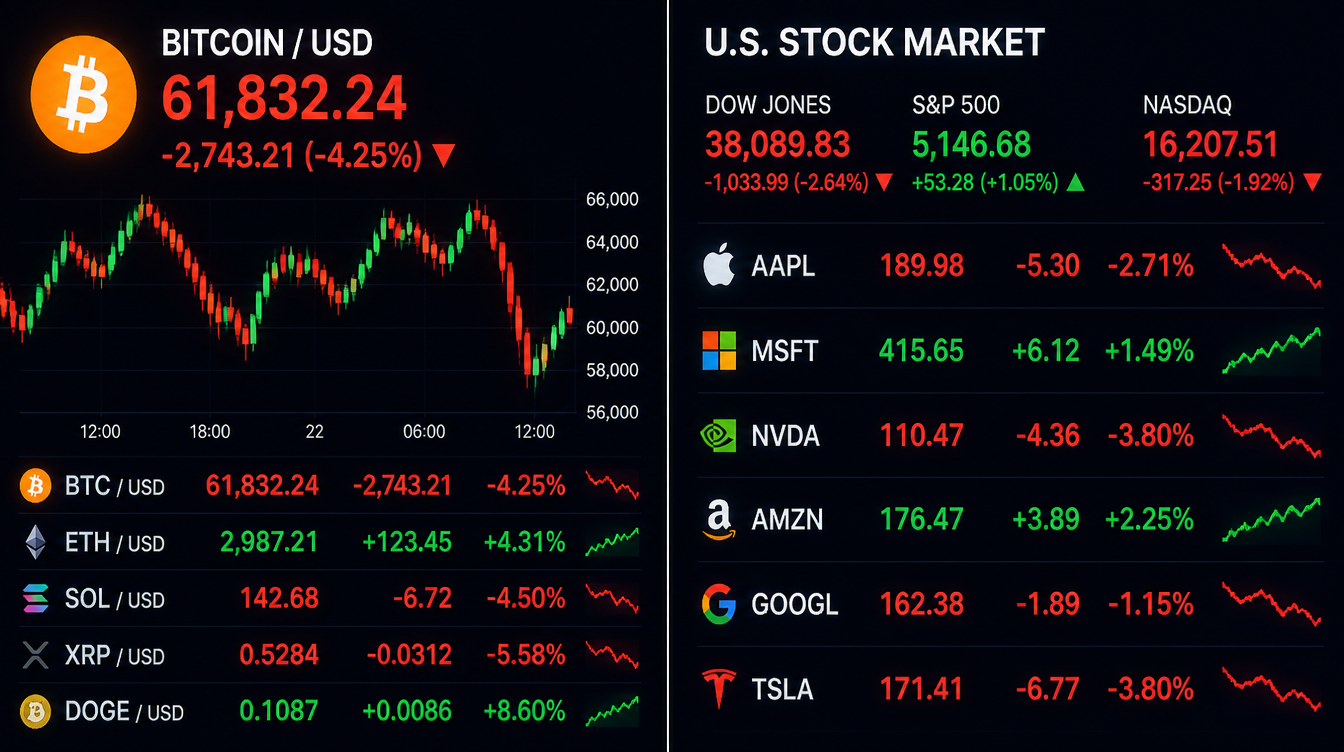
The divergence between crypto and equities has been one of the year’s standout market themes. AI optimism helped drive technology stocks to record highs, while Bitcoin (BTC) fell roughly 46%, trading near $58,300 on Tuesday.
Market participants say the coming months could bring sharper volatility across both asset classes as AI developments, central bank policy, and evolving market mechanics interact, even if the broader economy remains relatively stable.
Former Credit Suisse global head of portfolio strategy and Kestrel CIO Mark Connors said AI is no longer broadly lifting the tech sector. Instead, it is splitting it into winners and losers—between companies building AI infrastructure and those more exposed to disruption from large language models and AI agents.
He said “the market is being split in two,” pointing to recent weakness in firms like Accenture as evidence that investors are reassessing consulting groups as AI automates more knowledge work. He also flagged pressure in software companies such as Autodesk and Intuit, suggesting continued downside risk for legacy software models.
At the same time, he expects macro uncertainty to remain the primary driver of markets. Rising correlations across stocks, bonds, commodities, and crypto indicate investors are increasingly trading on policy signals rather than fundamentals.
He warned that “the rest of the year is going to be messy,” citing uncertainty around Federal Reserve policy and U.S. Treasury financing as key sources of continued volatility before conditions eventually stabilize.
Hyperion Decimus co-founder and portfolio manager Chris Sullivan echoed concerns about elevated uncertainty but argued that investors are overemphasizing narratives and underappreciating structural market changes.
He said the launch of U.S. spot Bitcoin ETFs, combined with institutional hedging activity in derivatives markets, has reshaped Bitcoin’s behavior and weakened its historical relationship with macro indicators.
Bitcoin’s recent decline has also revived debate over whether its traditional four-year cycle is still intact. While some expected ETFs to reduce volatility and smooth out boom-bust patterns, Sullivan said the current downturn remains consistent with historical cycle dynamics.
He added that he is waiting for a clearer bottoming pattern before calling an end to the bear phase, noting that sentiment is approaching levels where “it’s so bearish it’s bullish” from a risk-reward perspective.
Sullivan expects Bitcoin to bottom in the $54,000–$58,000 range, pointing to improving on-chain signals and deeply negative sentiment as potential ingredients for a longer-term recovery once current uncertainty fades.
Share this content: