Bitcoin Shows Strength Amid Iran Conflict Fallout as Traditional Assets Take a Hit
Gold, crude oil, stocks, and bonds all saw significant volatility after the latest U.S. strikes on Iran, while bitcoin remained resilient and showed minimal movement.
Bitcoin traded near $63,800 on Monday, holding steady despite the fourth wave of U.S. strikes against Iran in a week. The largest cryptocurrency slipped only 0.3% over the previous 24 hours and remained up about 2% over the week.
Traditional markets reacted sharply after the weekend pause ended. Spot gold declined as much as 1.6% to around $4,050 per ounce, while Brent crude gained roughly 4%, moving above $79 a barrel as uncertainty around the Strait of Hormuz increased fears of possible oil supply disruptions.
Bond markets also came under pressure, with Treasury yields rising across maturities. The two-year Treasury yield climbed to its highest level since February 2025, while the MSCI Asia Pacific equity index dropped 1.6%.
U.S. Central Command said the military action followed an attack on a container ship. The situation around the Strait of Hormuz remained uncertain after Iran suggested the key shipping route could be shut down, a claim rejected by U.S. officials. The waterway typically handles about 20% of the world’s seaborne oil shipments.
Investors were focused on the possibility that a prolonged conflict could keep energy prices elevated and force the Federal Reserve to maintain restrictive monetary policy for an extended period. Minutes from the Fed’s June meeting showed that some policymakers had considered additional rate increases before ultimately supporting a pause.
Higher real yields weighed on gold by reducing the appeal of an asset that generates no income, while bonds also declined as markets adjusted to expectations of higher rates lasting longer.
Bitcoin largely avoided the selloff affecting traditional markets. Ether remained near $1,800 and gained around 2% during the week, while other major cryptocurrencies posted only modest moves. Solana was among the weaker performers, trading near $76 and falling about 5% over seven days. XRP held around $1.09, and Dogecoin remained close to $0.07.
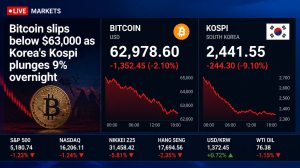
The strongest link between crypto and broader markets came through South Korea’s semiconductor sector. SK Hynix shares dropped 12% in Seoul after the company’s U.S.-listed shares jumped 13% during Friday’s debut. The decline contributed to a 7% fall in South Korea’s Kospi index.
Although the chip rally had helped support bitcoin’s recent upside, the sharp reversal in semiconductor stocks failed to create meaningful pressure on crypto markets.
Bitcoin has now maintained a relatively narrow range despite escalating geopolitical tensions, a broad selloff across traditional assets, and a more cautious outlook on future Fed policy.
The market’s reaction highlights a changing dynamic for bitcoin. Rather than responding immediately to every geopolitical event, the cryptocurrency appears increasingly driven by liquidity conditions, dollar trends, and technology-sector momentum, while oil, gold, and interest rates continue to reflect the direct impact of global risks.
Share this content: