Bitcoin mining slows as harsh winter storm hits U.S., yet markets largely ignore impact.
Bitcoin Hashrate Dips During U.S. Winter Storm, Spotlighting Mining Concentration Risks
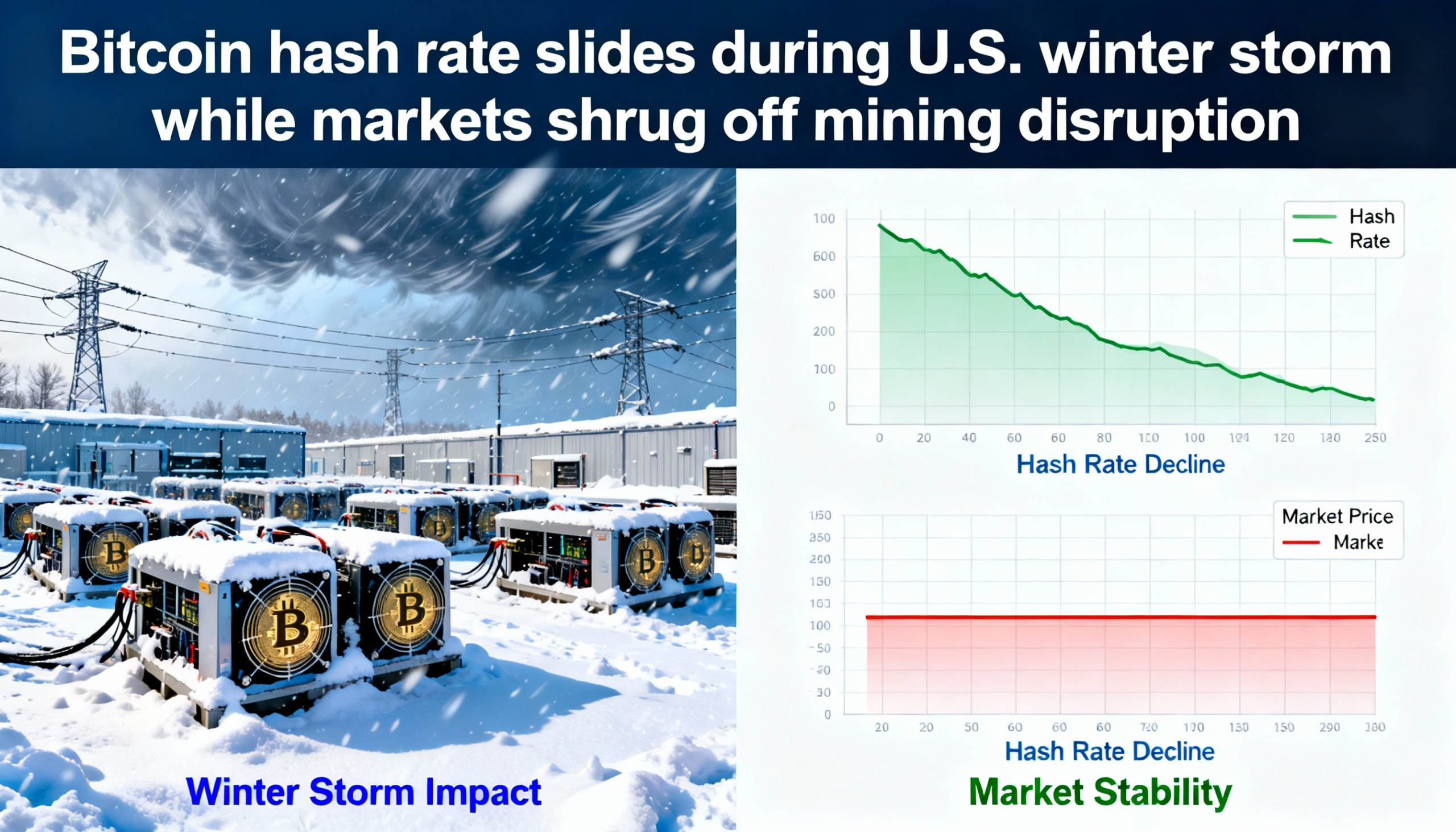
Bitcoin’s hashrate fell roughly 10% on Sunday amid a U.S. winter storm, highlighting long-standing concerns about mining centralization—even as markets showed little immediate reaction. The drop provides a real-world test of a risk researchers have warned about: when mining is concentrated, local infrastructure failures can create network-wide stress.
Hashrate represents the computing power securing the Bitcoin blockchain. Sudden declines reduce transaction-processing capacity until difficulty adjusts. While only about 10% of the network went offline, the episode underscores how concentrated mining increases systemic vulnerability.
Research shows the potential impact. In the 2021 study Bitcoin Blackout: Proof-of-Work and the Risks of Mining Centralization, a regional mining outage in China caused longer block times, higher fees, and weaker market quality.
Concentration has grown: the top two mining pools often control more than 50% of hashrate, and the top six account for roughly 80–90% of blocks. The winter storm highlights how a few dominant operators can turn localized disruptions into broader network stress—without immediately affecting BTC’s price
Share this content: