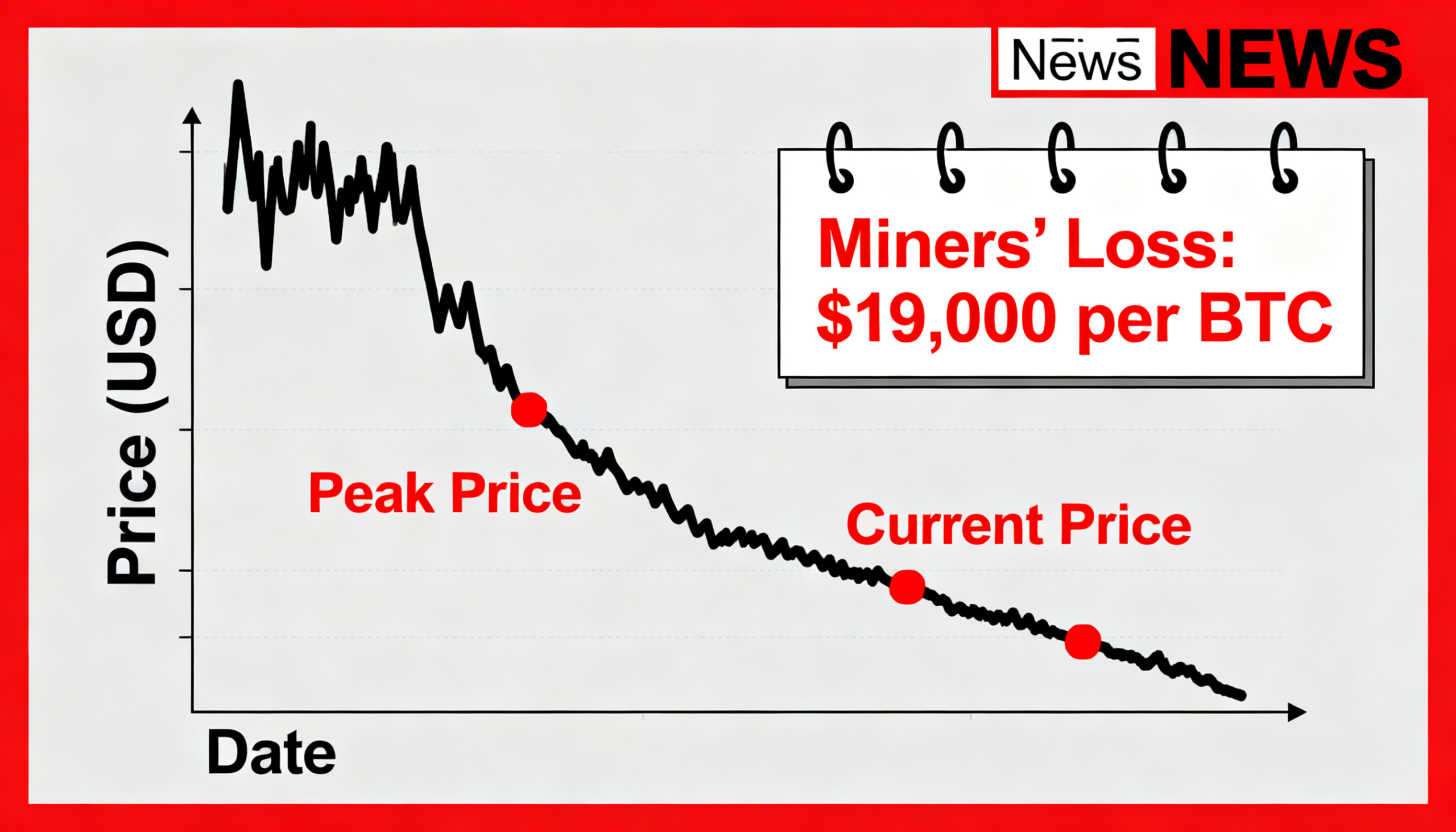
Bitcoin miners face $19,000 losses per BTC even as mining difficulty falls 7.8%
Bitcoin miners are facing mounting pressure as production costs climb far above market prices, with geopolitical tensions adding further strain to an already challenged sector.
According to Checkonchain’s difficulty regression model, the average cost to produce one bitcoin stood at around $88,000 as of March 13. With BTC trading near $69,200, miners are effectively losing close to $19,000 per coin—translating to an average loss of roughly 21% per block.
The profitability squeeze has been building since bitcoin’s sharp decline from its October peak of $126,000 to below $70,000. However, the ongoing Iran conflict has intensified the situation. Oil prices above $100 are pushing up electricity costs, particularly for the estimated 8–10% of global hashrate exposed to energy markets tied to Middle Eastern supply.
The situation is compounded by disruptions in the Strait of Hormuz, which handles about 20% of global oil and gas flows and remains largely closed to commercial traffic. Adding to the uncertainty, U.S. President Donald Trump issued a 48-hour ultimatum threatening strikes on Iran’s power infrastructure—raising fresh concerns for energy-dependent mining operations.
Signs of stress are already emerging across the network. Mining difficulty dropped 7.76% to 133.79 trillion, marking the second-largest downward adjustment of 2026 after February’s steep decline during Winter Storm Fern. Difficulty is now nearly 10% below its level at the start of the year and well under its November 2025 peak near 155 trillion.
Network hashrate has also declined, falling to around 920 EH/s—significantly below the record 1 zetahash reached in 2025. At the same time, average block times have stretched to 12 minutes and 36 seconds, exceeding the network’s 10-minute target.
Profitability metrics paint a similar picture. Hashprice—measuring expected miner revenue per unit of computing power—is hovering near $33.30 per petahash per second per day, according to Luxor Hashrate Index. That level is close to breakeven for many operations and not far from the all-time low of $28 recorded in February.
As margins compress, miners are increasingly forced to sell bitcoin to cover operating costs, adding supply pressure to a market already weighed down by weak positioning. Roughly 43% of total bitcoin supply is currently held at a loss, while large holders continue distributing into rallies and leveraged trading dominates price action.
Publicly listed mining firms are responding by diversifying revenue streams. Companies like Marathon Digital and Cipher Mining are expanding into AI and high-performance computing, aiming to generate more stable income alongside their core mining operations.
Looking ahead, the next difficulty adjustment—expected in early April based on CoinWarz data—is projected to decline further. If bitcoin remains below the $88,000 production threshold, miners may continue exiting the network, driving difficulty lower.
While the bitcoin network is designed to self-correct by reducing difficulty as participants leave, the lag between rising costs and falling difficulty creates a painful adjustment period—impacting both miners and the broader market as forced selling intensifies.
Share this content:


