
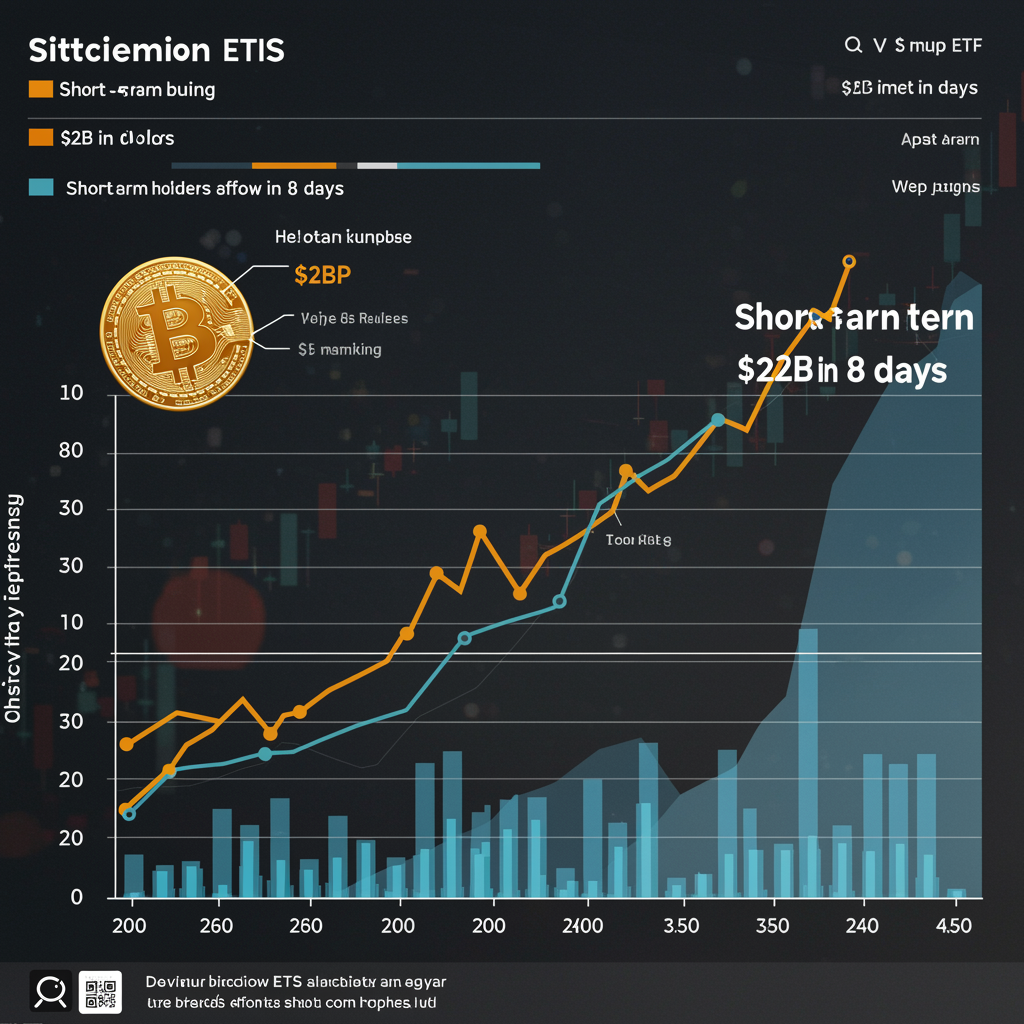
Spot bitcoin ETFs are posting their longest inflow streak in months, but on-chain data suggests the rally is already being met with elevated profit-taking—levels that have historically aligned with local tops.
U.S. spot ETFs tied to Bitcoin BTC have attracted $2.1 billion over eight consecutive days through April 23, according to SoSoValue. It’s the strongest run since October 2025, when a similar streak helped drive prices to a $126,000 peak.
On April 23 alone, inflows totaled about $223 million. BlackRock’s IBIT accounted for the bulk of demand with roughly $167 million, while Fidelity Investments’s FBTC recorded the only notable outflow at around $17 million.
Bitcoin has risen from roughly $68,000 to $77,000 during this stretch—a gain of about 12% that closely mirrors the resurgence in ETF demand. Since launch, total net inflows into spot ETFs have reached approximately $58 billion, with assets under management climbing to $102 billion, or about 6.5% of bitcoin’s market capitalization.
However, ETF flows don’t tell the whole story.
Glassnode data shows bitcoin has reclaimed its “True Market Mean” near $78,100, a key on-chain level reflecting the average cost basis of actively circulating supply. This marks the first reclaim since mid-January and has historically indicated a shift toward more constructive market conditions.
The next hurdle lies just above. The short-term holder cost basis, currently around $80,100, represents the average entry price for investors who bought within the past 155 days. A move above this level would push more than half of these holders into profit.
In prior instances this cycle, that threshold has coincided with local tops, as short-term holders used strength to exit positions. The same setup is now re-emerging after failing once earlier in the cycle.
Profit-taking metrics reinforce the risk. Short-term holder realized gains have surged to roughly $4.4 million per hour, according to Glassnode. For comparison, levels near $1.5 million per hour have preceded every local top so far this year—placing current readings at roughly three times that benchmark.
Derivatives positioning adds further context. Funding rates in perpetual futures remain negative, indicating short sellers are paying longs to maintain exposure—a sign that bearish positioning is still dominant. A recent short squeeze briefly lifted bitcoin toward $78,000 before geopolitical tensions tied to the Strait of Hormuz triggered a pullback.
Another squeeze, combined with sustained ETF inflows and improving spot demand on offshore exchanges, could open a path toward the $80,000 level. The key question is whether price can hold above it—or if it once again becomes a trigger for distribution by short-term holders.
A similar dynamic played out in March, when a seven-day inflow streak coincided with a local top. This time, inflows have been heavily concentrated in IBIT, while other ETF issuers have shown mixed participation. The structure isn’t identical, but the pattern is familiar.
ETF demand remains strong—but it may also be providing liquidity for exiting investors. How bitcoin behaves around $80,000 is likely to determine which force ultimately takes control.
Share this content: