Europe Revisits MiCA as Digital Asset Rules Enter New Phase
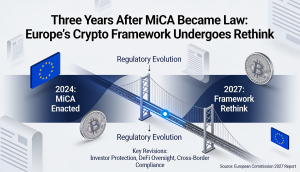
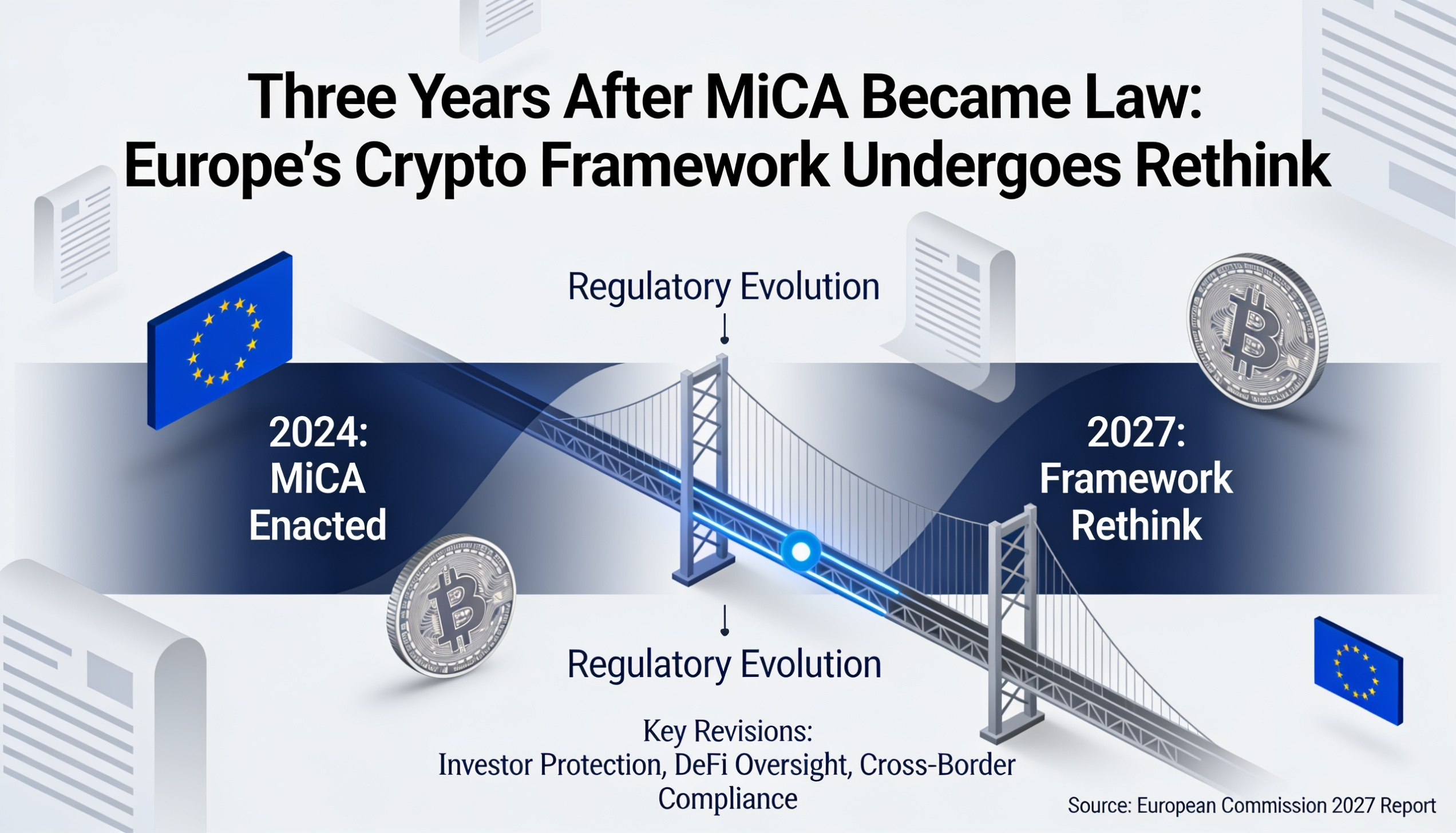
Europe’s Markets in Crypto-Assets (MiCA) regime is moving into a new review phase—widely referred to as “MiCA 2.0”—with a consultation period expected to close around September.
Six years have passed since MiCA was first proposed and three since it was implemented. During that time, the crypto landscape has shifted markedly, driven in part by increasing adoption of stablecoins for cross-border transactions.
That shift has placed fiat-pegged tokens at the center of the review, even though MiCA was originally designed בעיקר for spot crypto activity.
The European Central Bank has consistently warned that the growing influence of dollar-backed stablecoins could weaken its control over monetary conditions across the eurozone. While the ECB still favors a central bank digital currency over privately issued euro stablecoins, some policymakers appear to be softening their stance, according to OMFIF’s John Orchard.
Orchard said opinions within the ECB vary, but there is growing openness to limited use cases, such as holding stablecoins on bank balance sheets or using them for remittances. However, resistance remains strong when it comes to wholesale settlement—an area where U.S. regulators have shown greater willingness to experiment.
In contrast, the U.S. has advanced regulatory clarity through measures like the GENIUS Act, which defines stablecoin payments and assigns oversight responsibilities to key authorities. Dollar-pegged tokens dominate the market, while non-dollar alternatives remain marginal.
Regulators are also grappling with risks such as deposit flight—the movement of funds from traditional banking systems into crypto wallets—as well as debates over whether stablecoins should offer yield. Banking lobbies on both sides of the Atlantic have opposed yield-bearing stablecoins, and while the European Commission is reviewing the issue, significant changes appear unlikely.
Another key divergence lies in reserve requirements. MiCA mandates that stablecoin reserves be largely held within the banking system, whereas U.S. frameworks allow reserves to be invested in government securities. This distinction has led to initiatives like Qivalis, a consortium of financial institutions working to develop a euro-denominated stablecoin that aligns with EU rules while supporting financial stability and reducing reliance on the dollar.
Europe also faces structural constraints, notably the absence of a unified sovereign bond market comparable to U.S. Treasuries. One proposal under consideration is a synthetic “safe asset” model, where stablecoin reserves would be invested in European money market instruments.
Regulators are further examining how to handle multi-issuer stablecoins such as USDC, which can be issued by different legal entities across jurisdictions but function as a single, fungible asset. Although MiCA initially aimed to support such models, concerns raised during implementation—particularly by the ECB—have complicated that approach.
Industry participants argue that stablecoins derive much of their value from their global nature, warning that imposing geographic restrictions could fragment their utility.
Beyond stablecoins, the MiCA review is also considering whether to centralize oversight under the European Securities and Markets Authority (ESMA). While this could reduce inconsistencies across member states, it also raises concerns about increased bureaucracy that could hinder innovation.
Currently, supervision remains with national regulators, and any move toward centralization would require legislative updates. Authorities are also reviewing how MiCA interacts with other frameworks such as MiFID.
From a business perspective, firms emphasize the importance of preserving a regulatory environment that supports growth and cross-border expansion. Financial hubs like Luxembourg remain key players, and companies are keen to see their advantages maintained as the framework evolves.
Ultimately, the success of MiCA 2.0 will depend not only on refining the rules but on ensuring that Europe remains a competitive and innovation-friendly environment for digital assets.
Share this content: