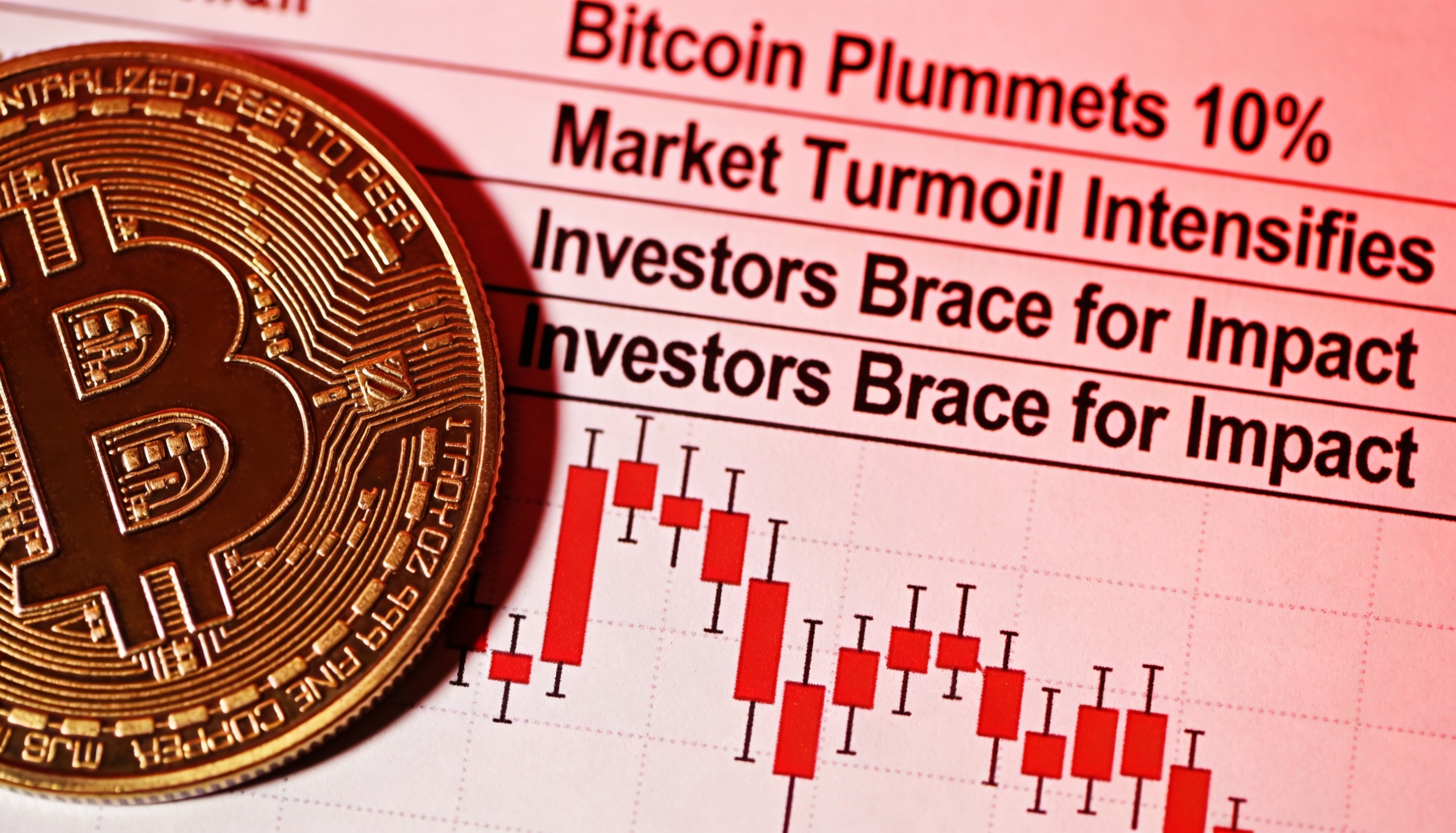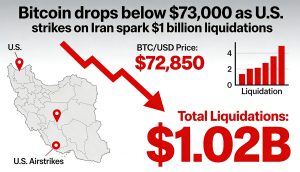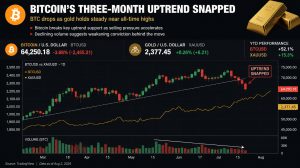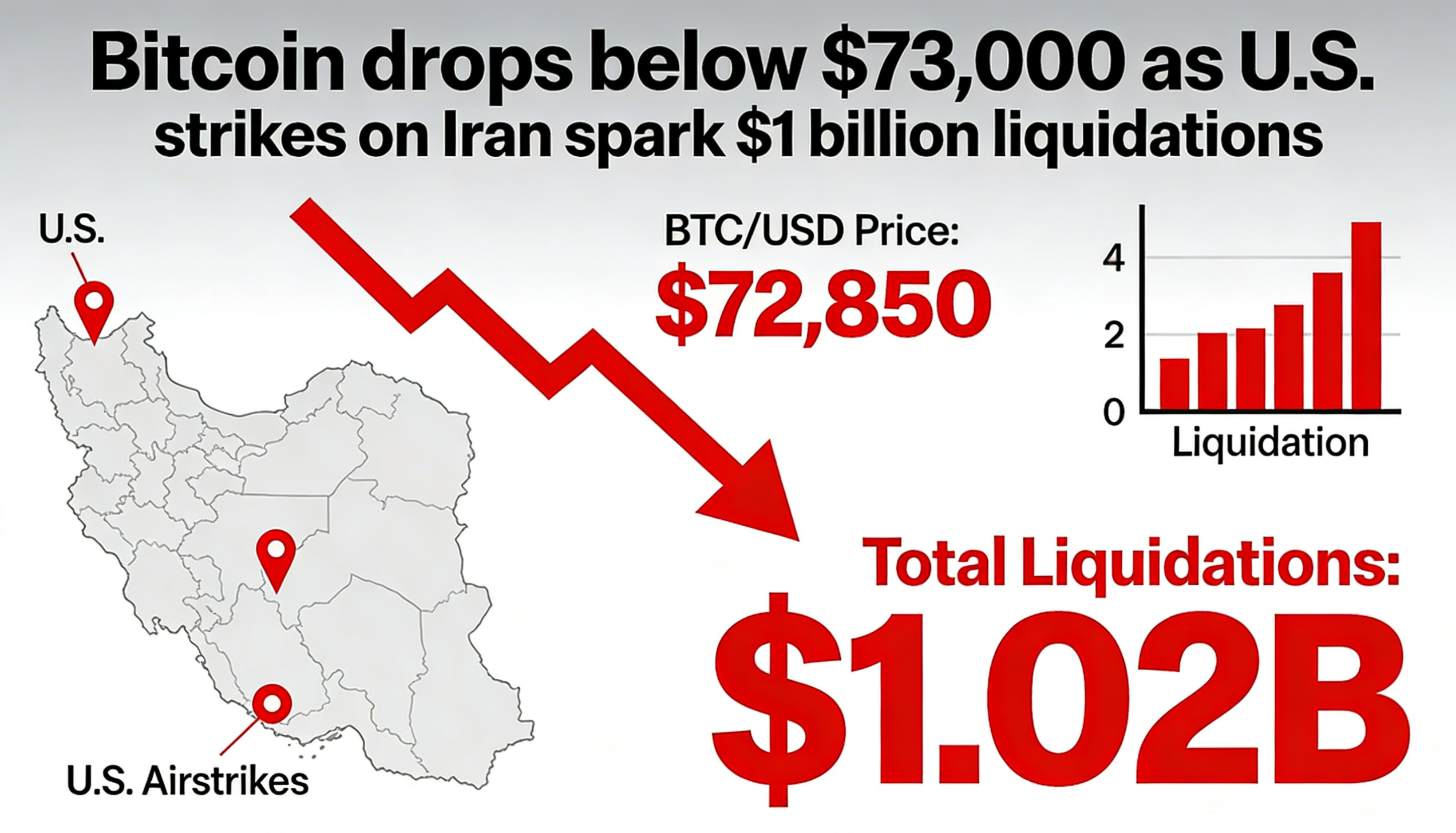
Bitcoin falls below $73K amid U.S.-Iran strikes, sparking nearly $1 billion in forced liquidations.
Crypto Slides as Middle East Tensions Trigger $1B Liquidation Wave
Cryptocurrency markets moved lower after escalating tensions between the U.S. and Iran sparked a sharp risk-off reaction, erasing nearly $1 billion in leveraged positions. The sell-off followed U.S. airstrikes on an Iranian military target near the Strait of Hormuz, reviving geopolitical risks that investors had largely faded in recent weeks.
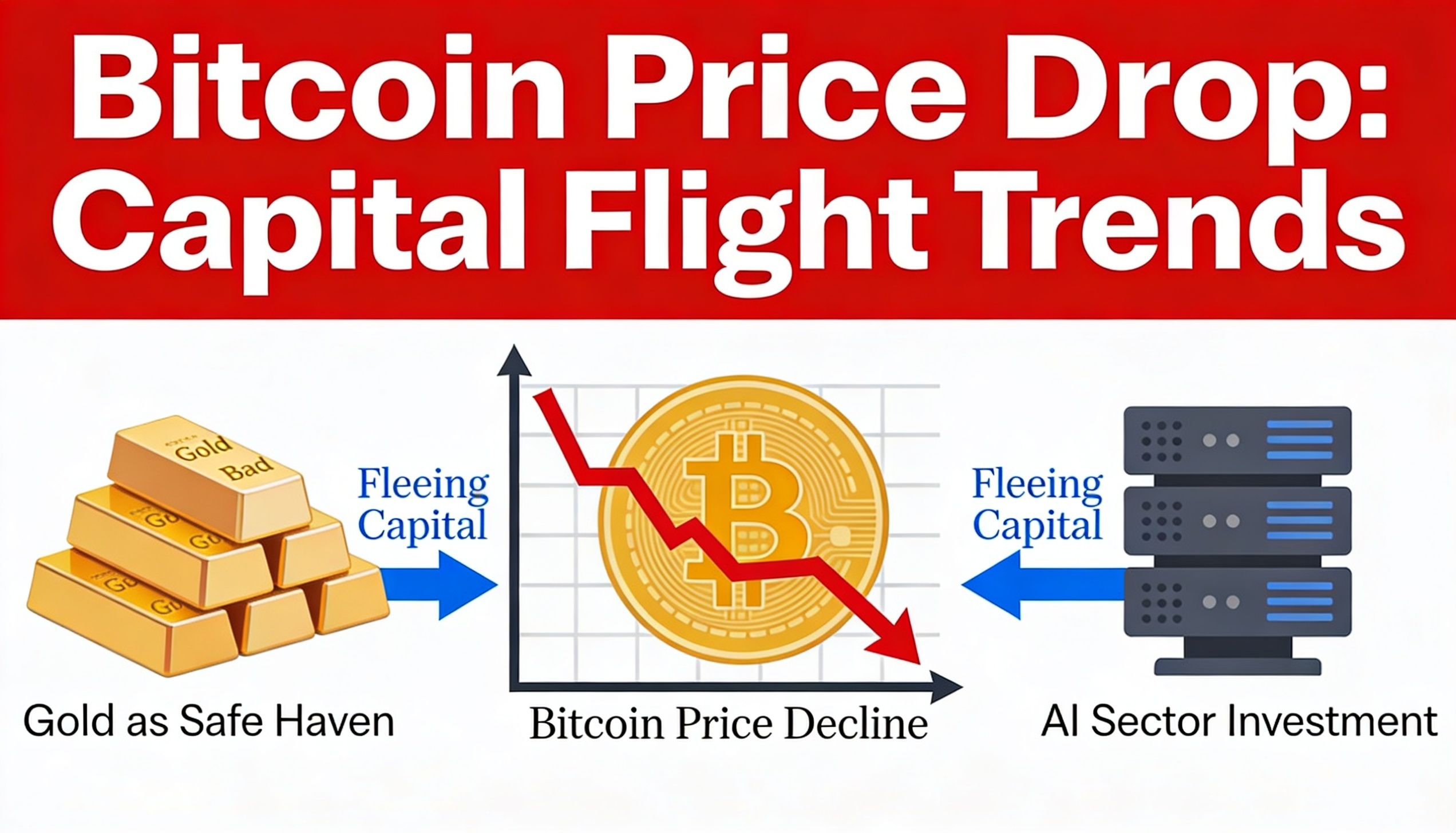
Bitcoin fell below $73,000 for the first time in months, leading a broad pullback across digital assets as the renewed conflict pressured global markets and triggered one of the largest liquidation events this year.
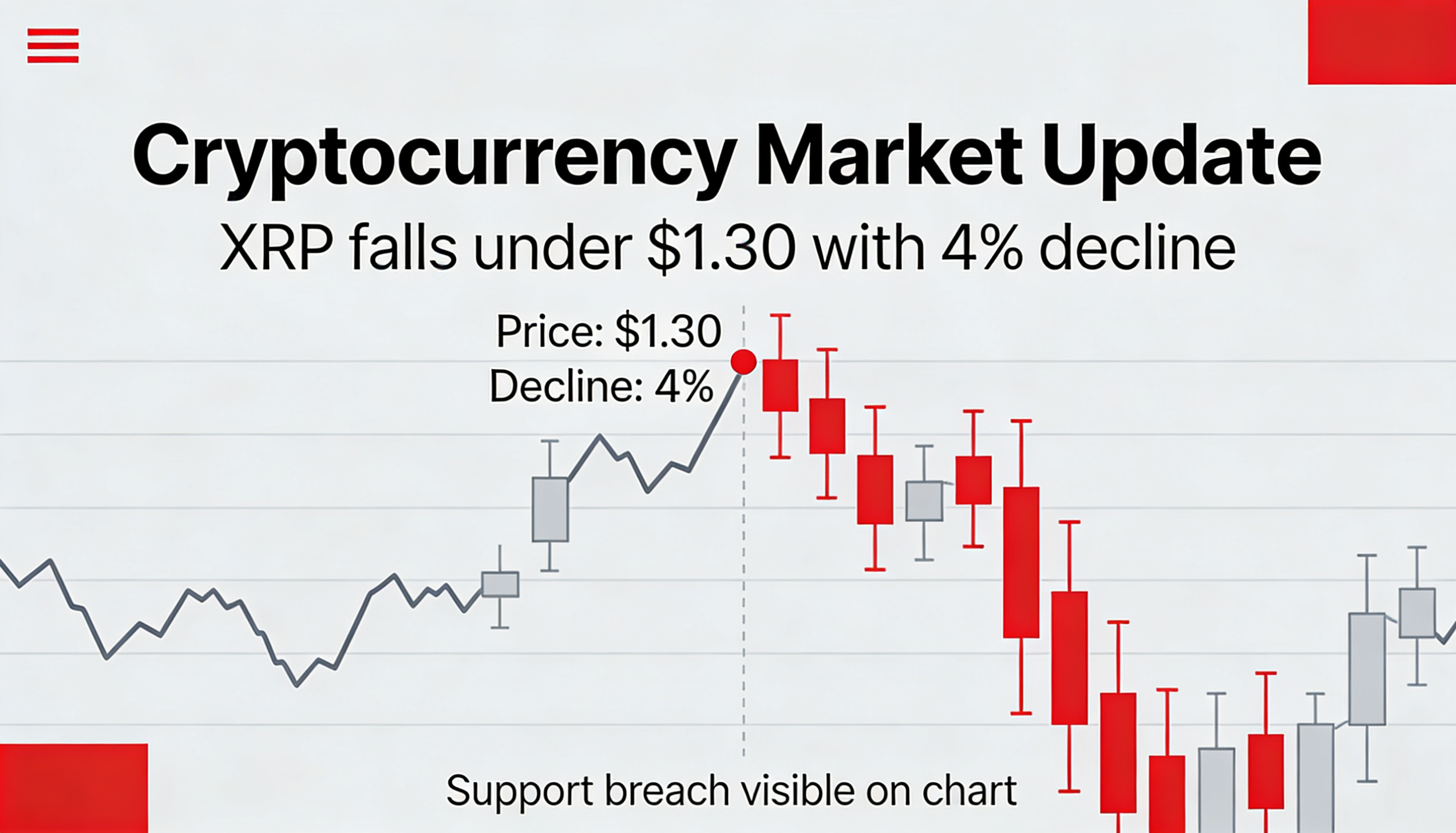
The flagship cryptocurrency traded at $72,978 during Asian hours on Thursday, down 3.4% over 24 hours and 6.3% over the past week after hitting an intraday low of $72,912, according to CoinDesk data. Ether dropped 4.2% to $1,976, slipping below the $2,000 threshold and extending its weekly losses to 7.7%. Solana declined 3.5% to $80.57, XRP fell 3.6% to $1.28, and Dogecoin lost 3.2% to $0.0979.
Hyperliquid remained the only major token with a weekly gain, despite falling 4.5% on the day, still up 2.4% over seven days. Tron also showed relative strength, holding a 1.9% weekly increase against the broader market decline.
The downturn triggered a cascade of liquidations in leveraged positions. CoinGlass data showed $958.8 million in liquidations over the past 24 hours across more than 167,000 traders. Long positions accounted for the vast majority at $897 million, while short liquidations totaled $61 million.
Bitcoin led the wipeout with $386 million in liquidations, followed by ether at $246 million. The largest single liquidation was a $15.34 million Bitcoin position on Hyperliquid.
With roughly 93% of liquidations tied to long positions, the data highlights how traders had been positioned for further upside before being caught off guard by the sudden reversal. Leverage accumulated during May’s consolidation phase was unwound rapidly in a single session.
The catalyst came from the Middle East. U.S. Central Command confirmed strikes on an Iranian military site near the Strait of Hormuz and said it intercepted four Iranian attack drones targeting a commercial vessel. Officials described the action as defensive and aimed at maintaining a ceasefire reached last month.
Tensions escalated further as the U.S. Treasury imposed sanctions on Iran’s Persian Gulf Strait Authority, accusing it of extorting vessels passing through the strategic waterway. Iran reportedly responded by targeting the U.S. airbase used to launch the strikes, according to reports citing the Islamic Revolutionary Guard Corps.
Kuwait also reported heightened security activity, with its military saying explosions heard across the country were linked to air defense systems intercepting incoming missile and drone threats.
President Donald Trump reiterated that the Strait of Hormuz would remain open to global shipping, stating during a White House cabinet meeting that it is “international waters” and that the U.S. would ensure continued access.
Risk assets weakened globally alongside crypto. The MSCI All Country World Index fell 0.4% from record highs, Asian equities dropped 1.7%, and futures tied to the S&P 500 and Nasdaq 100 pointed lower. Oil prices rose as the escalation cast doubt over efforts to reopen the strait.
The market reaction underscores how quickly ceasefire optimism has faded. Bitcoin had held above $74,000 through weeks of geopolitical developments, even as ETF demand slowed. Thursday’s breakdown below that level — combined with the scale of forced liquidations — suggests traders were heavily positioned for stability and caught offside by the sudden escalation.
Share this content: