Bitcoin’s market bottom could be approaching — at least relative to gold, analyst says
Bitcoin’s current drawdown could stretch into late 2026 when measured in U.S. dollars, but a different picture emerges when the cryptocurrency is priced against gold, according to Rony Szuster, head of research at Mercado Bitcoin.
Historically, bitcoin bear markets have lasted between 12 and 13 months. In dollar terms, bitcoin peaked around $126,000 in October 2025. If the present cycle mirrors previous ones, the correction could persist into the final months of 2026, Szuster said in a report shared with CoinDesk.
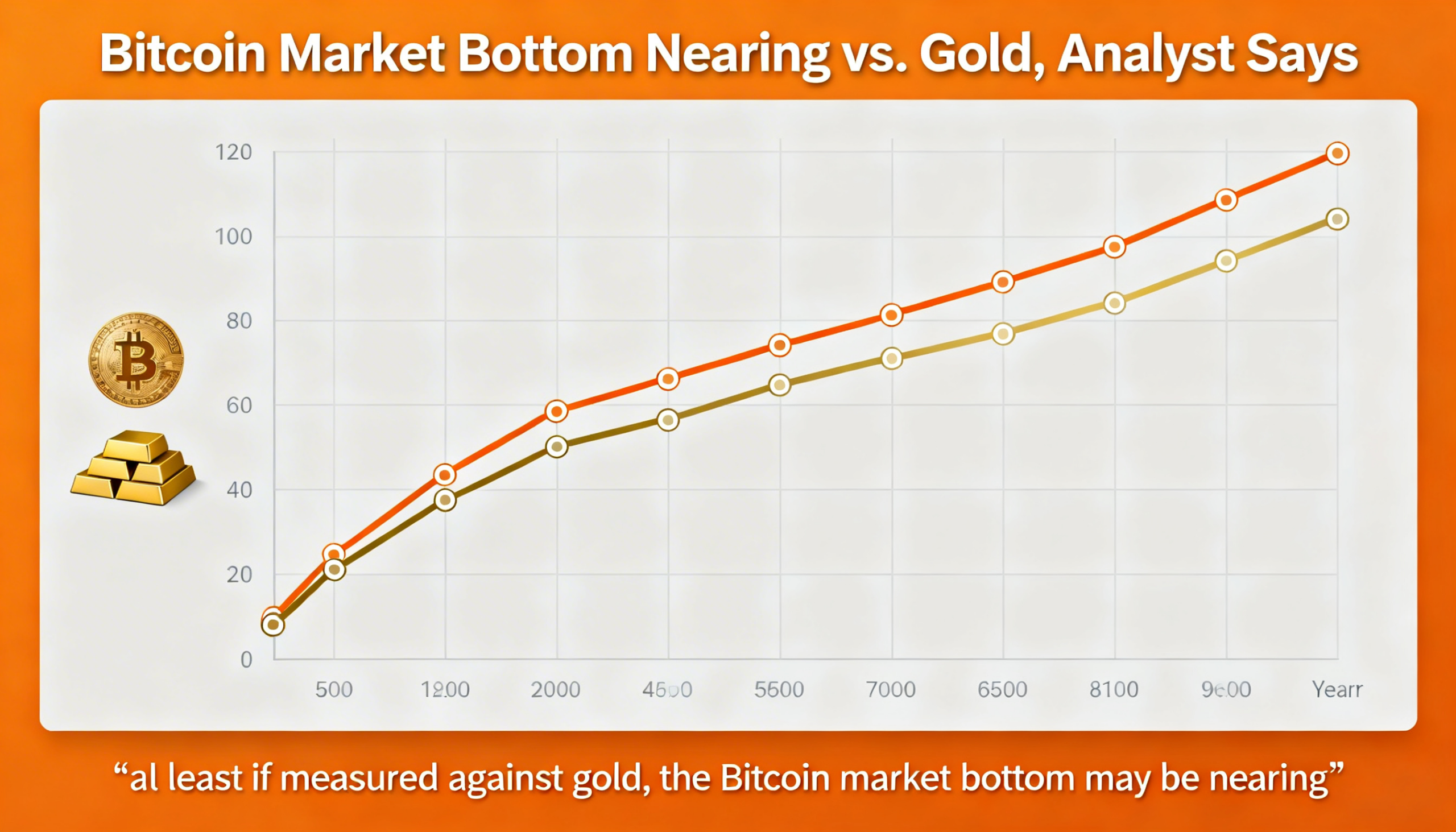
However, bitcoin’s performance relative to gold suggests the timeline may be shorter. The BTC-gold pair topped out in January 2025. Applying the same historical pattern would point to a potential bottom forming around February 2026, with a possible recovery beginning as early as March.
The gap between the two timelines reflects shifting macroeconomic forces. Since the start of President Donald Trump’s new term, markets have grappled with aggressive trade tariffs, domestic institutional tensions in the U.S., and escalating geopolitical strains involving China and Iran, which have since developed into ongoing military conflict.
That uncertainty has fueled a powerful rally in gold. According to the World Uncertainty Index, global instability has surged, helping bullion climb more than 80% over the past year to roughly $5,280. As capital rotated into safe-haven assets, bitcoin weakened against gold sooner than it did versus the dollar.
Flows from exchange-traded funds have compounded the pressure. Since November, approximately $7.8 billion has exited spot bitcoin ETFs — about 12% of the $61.6 billion total assets — reflecting risk-off positioning among more reactive investors.
Yet the sell-off does not tell the whole story. While short-term capital has retreated, larger investors appear to be accumulating. The report highlights that Abu Dhabi-based firms, including Mubadala Investment Company and Al Warda Investments, increased their exposure to spot bitcoin ETFs in mid-February.
Against this backdrop, Szuster advises investors to build positions methodically, favoring a dollar-cost averaging strategy to navigate volatility and avoid the pitfalls of market timing.
“Historically, periods of fear have offered more attractive entry points than moments of euphoria,” he wrote. “That doesn’t guarantee the bottom is in, but statistically, this is the range where stronger average prices are typically established.”
Share this content: