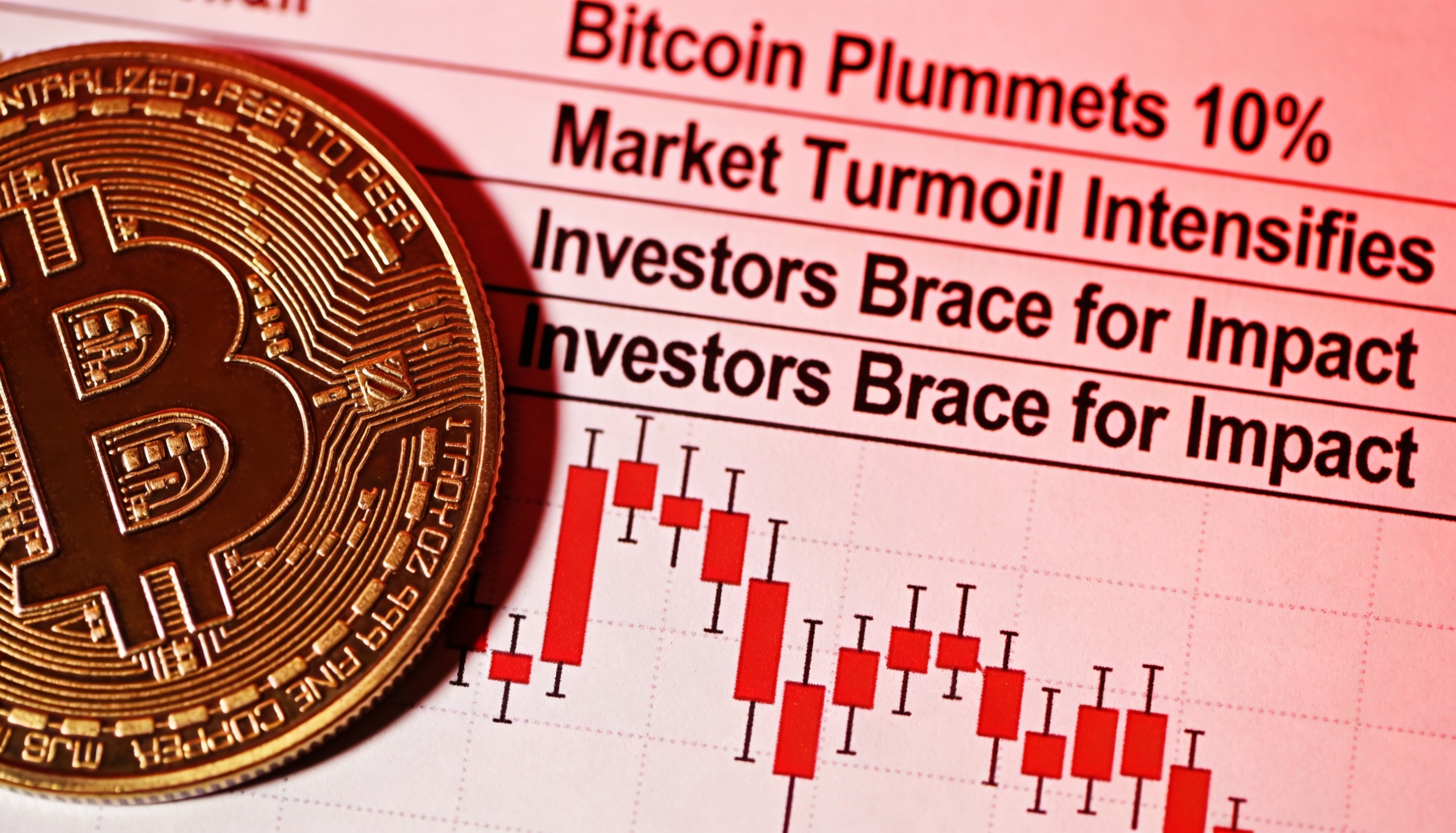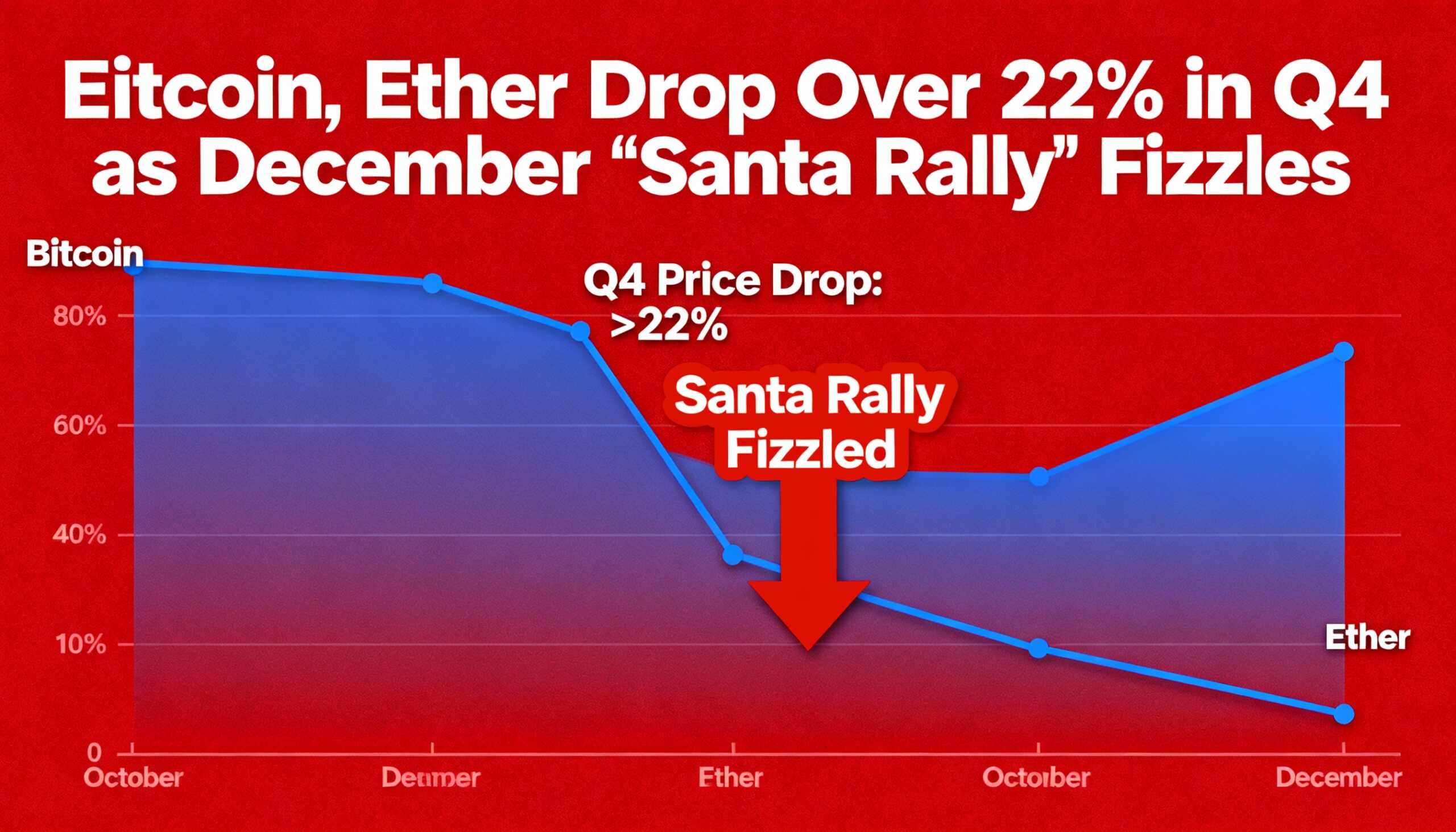
Bitcoin, ether tumble more than 22% in Q4 as hopes for a December Santa rally evaporate.
Investors are now watching whether bitcoin can preserve key support levels as the new year approaches, after December’s failed rally raised concerns that the recent pullback may extend further.
Bitcoin and ether ended December without the year-end lift traders typically anticipate, closing out a quarter that highlighted how fragile crypto price action can become when liquidity thins and risk appetite fades. The expected “Santa rally” never emerged. Instead, repeated efforts by bitcoin to reclaim important technical levels were met with steady selling, pulling ether and other large-cap tokens lower.
Bitcoin is on pace to finish December down around 22%, marking its steepest monthly decline since December 2018. Ether, meanwhile, is set to close the fourth quarter of 2025 down 28.07%, according to CoinGlass data.
The Santa rally — a seasonal tendency for markets to rise in the final days of December and early January — is often supported by light liquidity, year-end portfolio adjustments, and positive holiday sentiment. This year, however, December trading resembled a broad de-risking phase rather than the beginning of a renewed advance.
That weak finish is notable because crypto markets have historically relied on strong late-year inflows to establish momentum for the early stages of a cycle. With bitcoin’s fourth-quarter performance turning sharply negative, the overall market tone now leans firmly risk-off.
The divergence with precious metals has been particularly clear. Gold has climbed to record highs on expectations of interest-rate cuts and ongoing geopolitical uncertainty, while silver has rallied sharply and platinum has also notched fresh highs, as previously reported by CoinDesk. Persistent central-bank buying and growing ETF allocations have reinforced gold’s role as a defensive store of value.
Bitcoin, by contrast, has continued to trade like a high-beta risk asset. Even as macro conditions increasingly point toward easier monetary policy, the cryptocurrency has struggled to sustain gains without broader participation across risk markets.
That dynamic has characterized much of late 2025, with rebounds quickly sold into, leverage reduced during the holiday period, and U.S. trading hours often seeing the heaviest selling as funds scale back exposure. Volatile bond yields and an uneven dollar have kept investors focused on capital preservation — an environment that tends to favor gold before speculative assets.
Share this content: