BTC Dominance Falls Rather Than Rises During Major 30% Decline
Bitcoin Plunges 36% in Swift Correction Amid Unusual Dominance Drop
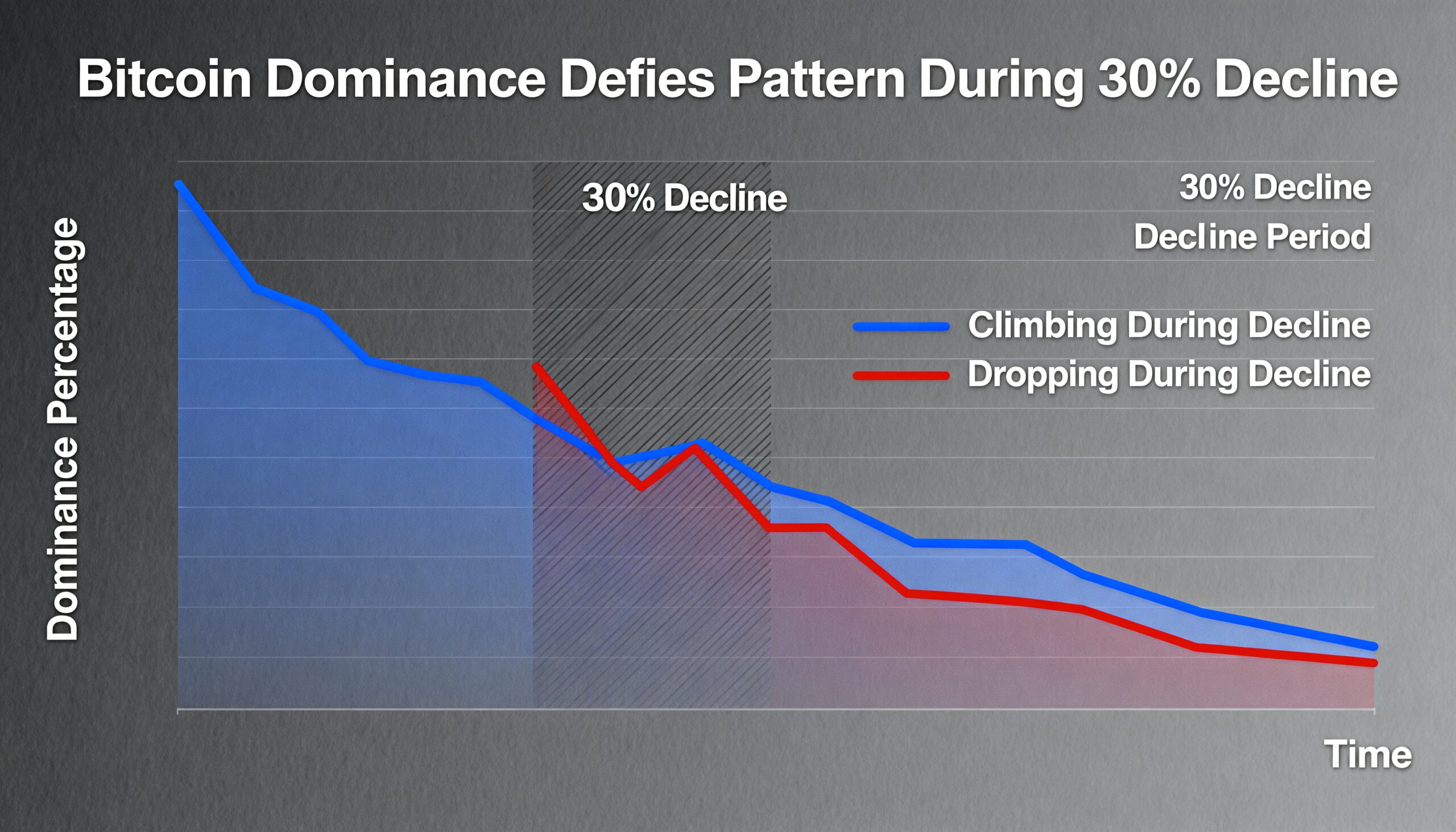
Bitcoin (BTC) has now experienced three corrections of 30% or more in the current cycle, but the latest pullback stands out for its atypical impact on BTC dominance. Unlike previous sell-offs, bitcoin’s market share fell instead of rising, signaling a deviation from the usual risk-off pattern.
BTC slid to nearly $80,000 last week, a 36% drop from October’s all-time high above $126,000. The downturn coincided with broad market deleveraging, while altcoins demonstrated relative resilience.
Typically, bitcoin dominance—which measures BTC’s share of total crypto market capitalization—rises during sell-offs as altcoins tend to fall faster. This pattern occurred in October, but since early November, dominance has declined. Even during BTC’s recent rebound to $90,000, dominance fell from 61% to as low as 58.5%, recovering modestly to just over 59%. In most risk-off scenarios, dominance usually rises more decisively.
The contrast is stark compared with earlier corrections. During the February–May “tariff tantrum,” dominance climbed from 58% to 65%, and the August 2024 yen carry-trade unwind saw a rise from 56% to 60%. The muted dominance shift this time suggests bitcoin was more severely impacted than the broader crypto market.
The speed of the drop also sets this correction apart. The current drawdown lasted just 47 days from peak to trough, compared with 77 days during the tariff tantrum and 146 days in 2024, intensifying market fear.
Taken together, the rapid decline and unusual dominance behavior indicate that this correction broke from the pattern of prior cycles. As bitcoin nears the end of its typical four-year cycle, analysts are monitoring whether falling dominance points to further potential weakness.
Share this content: