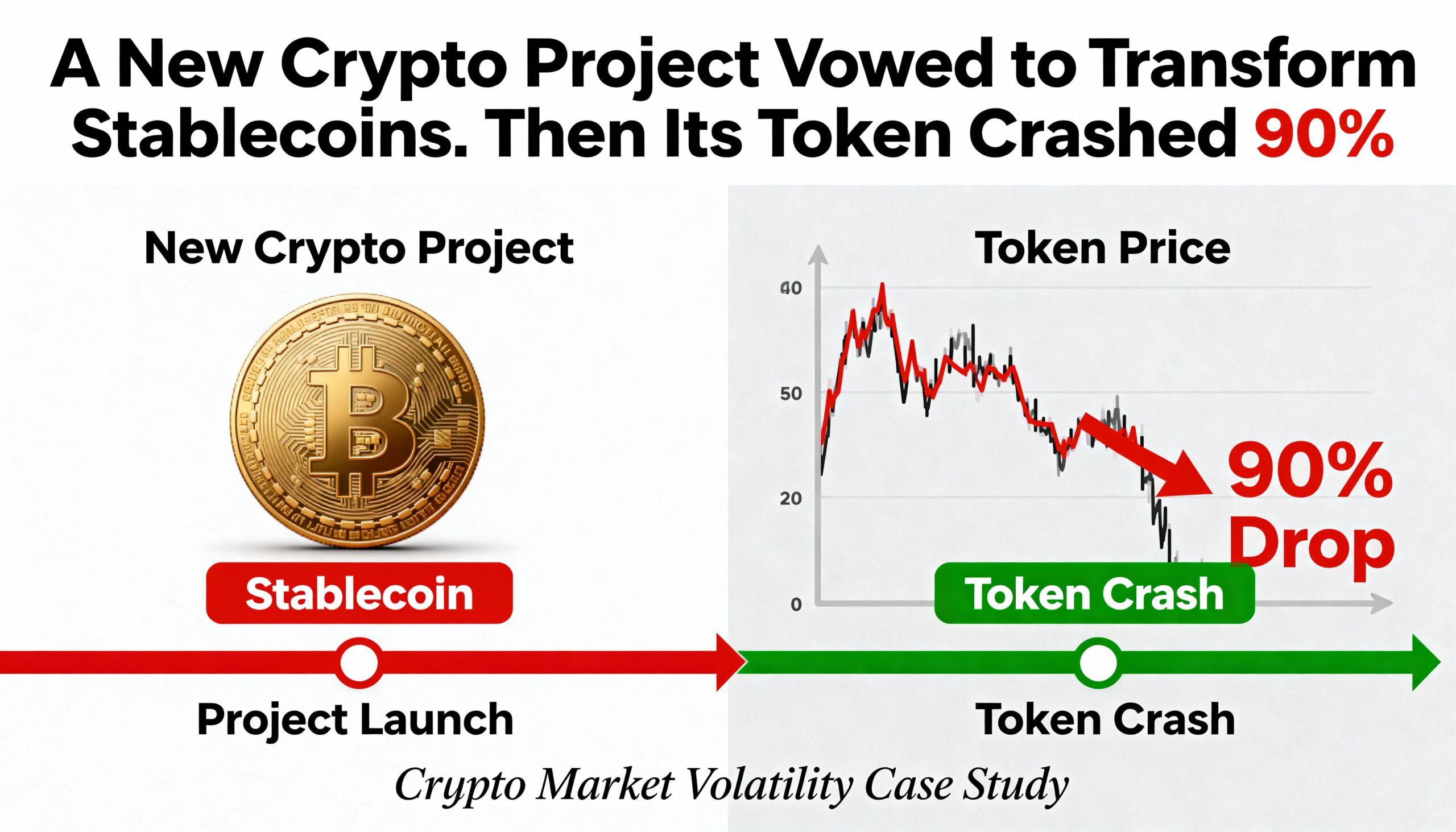
The latest crypto venture promised a stablecoin breakthrough; instead, its token crashed 90%.
Plasma’s Big Stablecoin Bet Is Stalling as XPL Trades Near 90% Below Its High
Plasma’s highly anticipated push into stablecoin infrastructure is quickly losing altitude. XPL, the Layer 1 project’s native token, is now down nearly 90% from its initial peak, weighed down by sluggish network activity, mounting supply concerns and minimal outreach from the team — raising doubts about whether the sell-off is truly over.
Plasma launched its mainnet in late September riding a wave of optimism. Its public token sale had drawn an eye-popping $500 million — ten times the intended raise — immediately positioning it as a frontrunner in one of crypto’s most talked-about themes heading into 2025: stablecoin-centric blockchains.
The project rolled out all the right talking points: instant settlement, high throughput, effortless scalability. It spotlighted partnerships with names like Elliptic and integrations with Binance Earn and Chainlink Scale. On paper, Plasma seemed built to shake up stablecoin settlement. Instead, its debut has become one of the cycle’s biggest disappointments.
According to CoinMarketCap, XPL climbed to around $1.67 on Sept. 27, briefly giving Plasma a valuation above $2 billion. But momentum vanished just as quickly: by late October, the token had plunged more than 80% to roughly $0.31. Since then, XPL has slipped into the $0.18–$0.20 range — a staggering 88–90% decline from its early high.
With XPL stabilizing but nowhere near recovering, investors are left debating whether the bleeding has finally stopped or if further downside is still ahead.
Part of the early hype stemmed from Plasma’s rapid development timeline. The Milan-based team built the chain in under a year — a pace it acknowledged may have required compromises. Even so, the concept of a dedicated stablecoin settlement chain with zero-fee USDT transfers and a self-custodial payments suite attracted huge speculative interest.
But with no follow-through on usage and no breakout on-chain activity, that enthusiasm evaporated. Traders — always quick to jump to the next narrative — simply moved on.
Current network data underscores the slowdown. Plasma is processing only 3.6 transactions per second over the last 10 minutes, a far cry from the 1,000 TPS “potential” promoted at launch. The gap between expectation and reality has been hard for the market to ignore.
XPL’s token structure added to the pressure. The project launched with 1.8 billion tokens circulating — about 18% of its 10-billion supply — and significant allocations reserved for the team, early backers, and ecosystem incentives. With unlocks still ahead, traders worried about lingering sell pressure.
These ingredients — low usage, aggressive expectations, and a substantial circulating float — created ideal conditions for a sharp repricing once hype collapsed. Today, with short-term participants gone, the token is largely held by long-term believers waiting for the ecosystem to take shape.
A November Progress Report That Didn’t Boost Sentiment
Plasma released a detailed November update outlining seven weeks of development work. While thorough, the report offered few catalysts that might reverse XPL’s downward trend.
The team highlighted a refactored codebase, expanded testing and a rebuilt peer discovery layer. But the primary focus remains “Plasma One,” a wallet and payments product designed to become the project’s core real-world utility.
Plasma One — described as a neobank-like stablecoin wallet with yield features — is pitched as the product that could set Plasma apart. Yet the update didn’t spark visible on-chain activity, leaving investors with a roadmap but no tangible adoption.
Minimal Communication Fuels Growing Concerns
Perhaps the most persistent criticism of Plasma is its minimal public communication. While most major crypto projects maintain an active presence across social platforms, Plasma communicates sparingly, more like a traditional financial institution than a Web3 startup.
In a round-the-clock market like crypto, silence often translates into uncertainty — and uncertainty into selling.
CoinDesk’s attempts to engage with the team highlight that communication gap. After nearly two weeks of arranging a video interview through an external spokesperson, Plasma abruptly canceled the meeting the night before, offering only a written interview instead. When questions were submitted, the spokesperson replied that the team was “not in a position to comment.”
After repeated follow-ups, a brief statement finally came: Plasma will share updates and speak with media “when we have significant product developments to share and progress made toward that vision.”
For now, what’s happening inside Plasma remains opaque — and that lack of clarity continues to hang over XPL at a moment when confidence is already fragile.
Share this content: