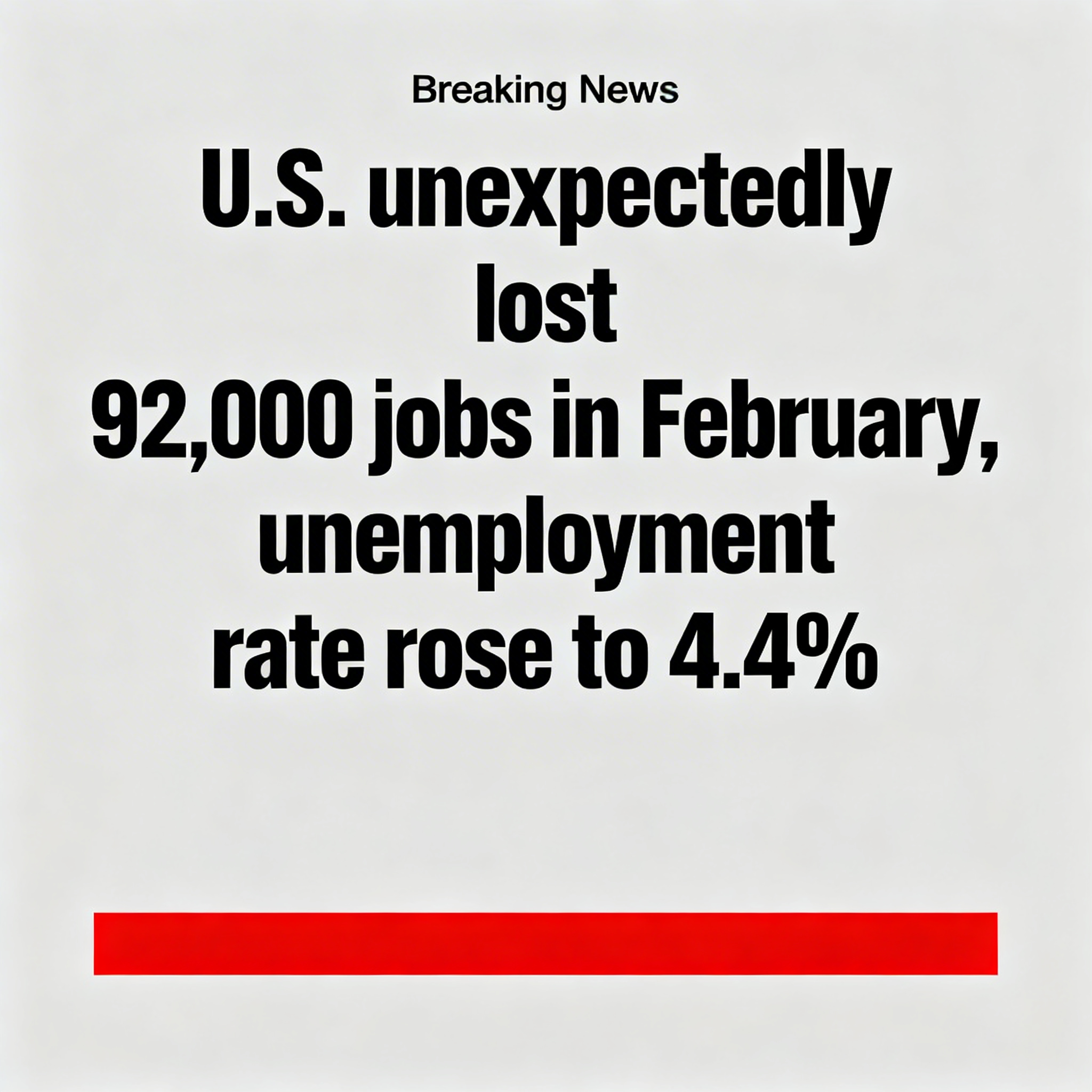
The U.S. economy unexpectedly shed 92,000 jobs in February, while the unemployment rate climbed to 4.4%.
Bitcoin remained under pressure following the latest U.S. employment report, even as the weaker data revived expectations that the Federal Reserve could begin cutting interest rates in the first half of 2026.
The U.S. labor market showed notable signs of cooling in February. According to Friday’s report from the U.S. Bureau of Labor Statistics, the economy unexpectedly lost 92,000 jobs last month. Economists had projected a gain of 59,000 positions, following January’s increase of 126,000.
The unemployment rate also ticked higher, rising to 4.4%, above forecasts of 4.3% and January’s reading of 4.3%.
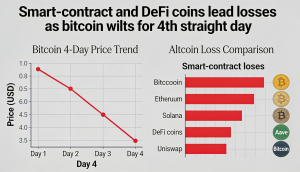
Bitcoin had already been under pressure ahead of the data release, slipping toward $70,000 overnight as oil prices surged and equity markets weakened. In the minutes after the report, the largest cryptocurrency continued hovering near that level, with Bitcoin trading around $67,300.
U.S. equity futures extended losses after the data. Nasdaq Composite futures were down about 1%, while S&P 500 futures declined 0.8%. Meanwhile, the yield on the 10-year Treasury note slipped four basis points to 4.11%.
Precious metals reversed earlier declines, with Gold rising roughly 1% and Silver gaining about 2%. Energy markets also remained strong, with West Texas Intermediate crude oil climbing 6.2% to around $86 per barrel.
Before the release of the jobs report, markets were pricing in a 95% probability that the Federal Reserve would leave rates unchanged at its March 18 meeting and an 85% chance that policymakers would also refrain from cutting rates in April.
At the same time, rising oil prices tied to escalating tensions in the Middle East could complicate the outlook for inflation. Sustained increases in energy prices may push inflation expectations higher, particularly through fuel and food costs. Combined with signs that parts of the U.S. economy may be gaining momentum again, this dynamic could lead investors to reassess the expected path of monetary policy.
Share this content: