How a £5M Crypto-Linked Gift Transformed Reform’s Political Playbook
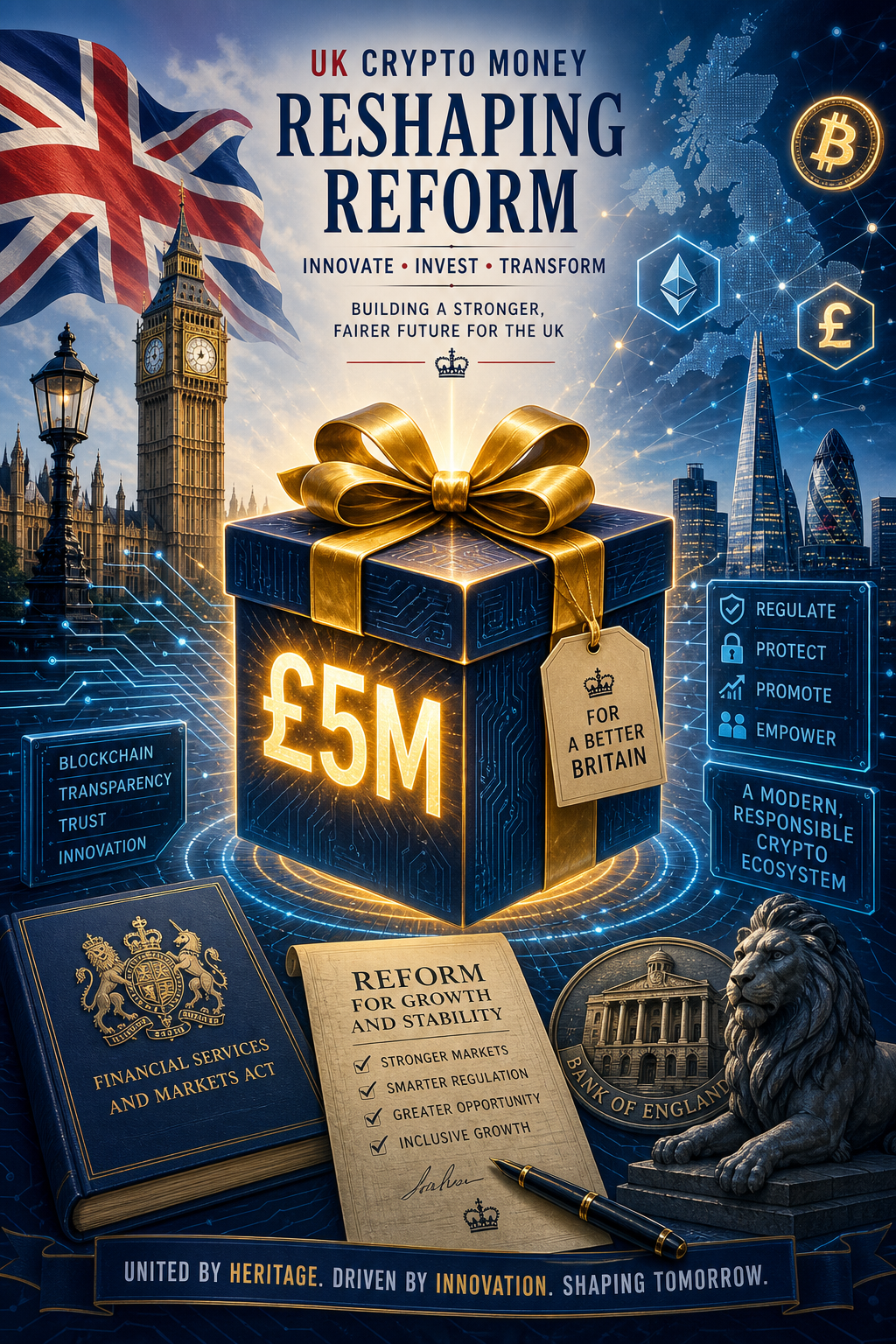
Recent developments in the UK’s crypto and political landscape have brought renewed scrutiny to Christopher Harborne, a major investor in Tether and Bitfinex, after he channelled approximately £30 million into British politics. Central to the controversy is a £5 million personal payment to Nigel Farage ahead of the 2024 general election—reportedly the largest individual political donation in UK history.
The matter is now under investigation by both the Parliamentary Commissioner for Standards and the Electoral Commission. A separate complaint alleges that Farage may have used his political influence to oppose the introduction of a UK central bank digital currency, a stance that could align with Harborne’s financial interests in the crypto sector.
The £5 million payment was made before Farage became an MP and was not declared under parliamentary disclosure rules. In addition, Harborne has contributed over £25 million to Reform UK and its predecessor parties since 2019, accounting for a significant share of the party’s overall funding.
Farage has maintained that the payment was a personal gift intended to cover lifetime security costs and insists no rules were broken. He stepped down from Parliament on July 7, 2026, presenting the subsequent Clacton by-election as a broader political battle against establishment forces.
The controversy also intersects with debates around the proposed digital pound. In September 2025, Farage met Bank of England Governor Andrew Bailey to voice opposition to a retail central bank digital currency—often dubbed “Britcoin”—which could compete with private stablecoins such as Tether.
While the Bank of England has yet to make a final decision on the digital pound, the issue remains a key policy question for the future of the UK’s financial system.
Labour MP Phil Brickell formally referred the case for investigation in July 2026. Harborne’s reported 12% stake in Tether places him in potential competition with any state-backed digital currency. Tether itself is estimated to generate around $10 billion in annual profit, supported by roughly $184 billion worth of USDT in circulation.
Analysts point to a broader ideological alignment between parts of the crypto industry and political movements like Reform UK. Economist Frances Coppola has described this overlap as rooted in “anarcho-capitalist” thinking, emphasizing resistance to centralized financial control and skepticism toward traditional regulatory frameworks.
The political implications are already emerging. According to political finance expert Sam Power, Reform UK faces increasing pressure as controversies surrounding funding sources begin to affect voter perception. The party’s recent underperformance in the Makerfield by-election has been cited as an early sign of reputational damage.
Additional concerns stem from Tether’s broader associations. A 2024 report by the UN Office on Drugs and Crime highlighted the stablecoin’s use in money laundering activities across Southeast Asia. It has also been linked to alleged fraud and trafficking networks—claims that Tether has denied.
Critics, including analyst David Gerard, argue that Tether continues to play a significant role in illicit financial ecosystems, further intensifying scrutiny of its connections to political funding.
This situation reflects a wider global trend, with similar concerns emerging in the United States, where crypto-related donations are increasingly influencing policy debates and raising questions about conflicts of interest.
Ultimately, the case underscores the growing convergence of digital finance, political funding, and regulatory decision-making—an area likely to remain under close examination in the years ahead.
Share this content: