FlightAware Ends Legal Fight With Kalshi After Contested Market Struggles to Grow
FlightAware Ends Kalshi Lawsuit as Flight-Cancellation Market Sees Little Interest
FlightAware has dropped its legal action against prediction-market platform Kalshi just one day after filing the lawsuit in a New York federal court.
The flight-tracking company voluntarily dismissed the case without prejudice and did not disclose what prompted the decision. Because the dismissal was without prejudice, FlightAware retains the ability to pursue the allegations again.
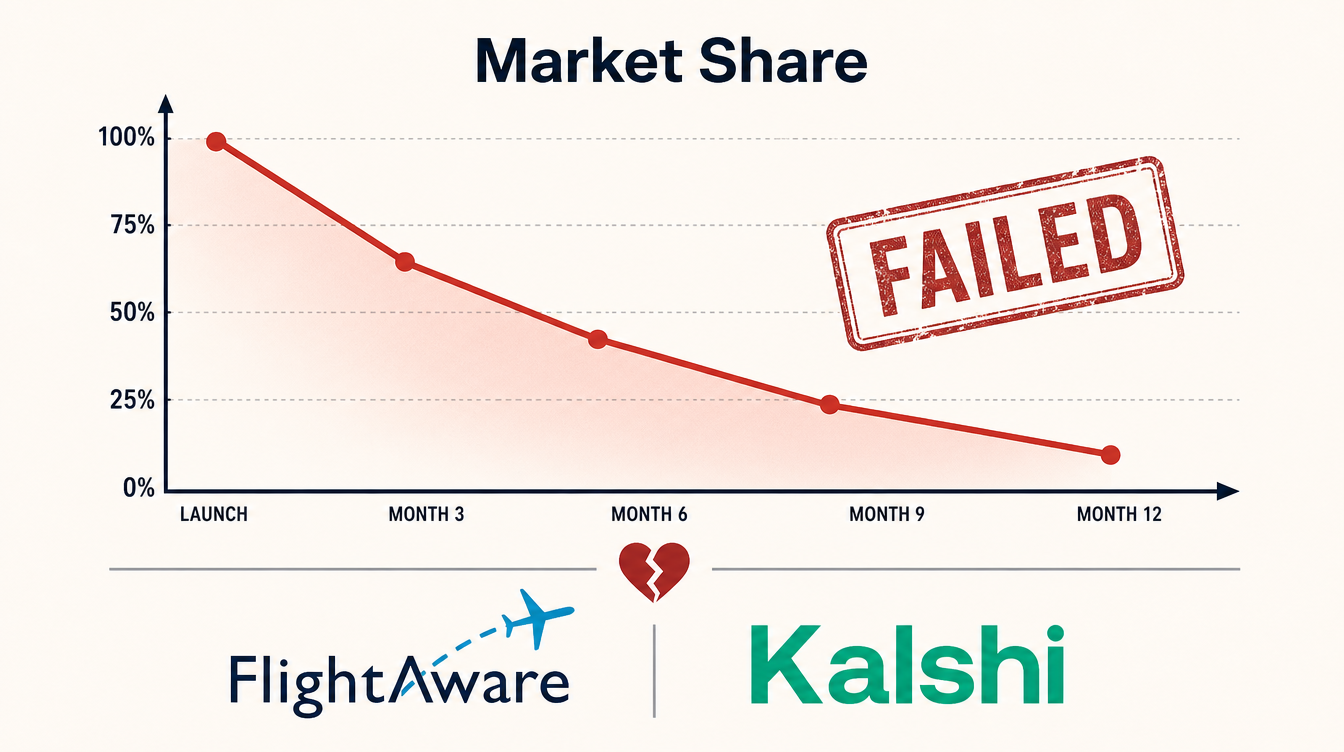
The move comes amid weak activity in Kalshi’s flight-cancellation markets, which have also attracted criticism from users concerned about potential manipulation.
Kalshi’s Flight Markets Struggle to Attract Traders
Kalshi reportedly paused its flight-cancellation contracts in July after social media users raised concerns that participants could intentionally disrupt flights to influence contract outcomes and collect payouts.
Trading figures point to limited demand for the products. A U.S. flight-cancellation contract scheduled to expire Aug. 14 had seen 31,412 contracts traded, producing only around $1,842 in total volume. Open interest stood at roughly 1,120 contracts.
That is a fraction of Kalshi’s broader trading activity. The platform has reported approximately $148 billion in total trading volume this year.
FlightAware’s dismissal did not say whether the companies had reached an agreement or whether Kalshi had altered its flight-cancellation markets or settlement methodology.
Neither company immediately responded to requests for comment.
FlightAware Claimed Kalshi Used Its Data and Trademark
The lawsuit accused Kalshi of using FlightAware’s flight information and trademark without permission to support contracts linked to airline cancellation rates.
FlightAware sought monetary damages and an injunction against markets covering the percentage of flights canceled across the U.S. and at specific airports.
Kalshi rejected the claims, arguing that it had neither breached FlightAware’s license nor infringed its trademark. The prediction platform maintained that its use of the FlightAware name amounted to nominative fair use.
FlightAware’s complaint also stated that Kalshi had identified U.S. Department of Transportation data as another potential source for settling the contracts.
Case Dismissed Before Kalshi Responded
FlightAware withdrew the lawsuit before Kalshi filed an answer or pursued summary judgment, allowing the company to dismiss the action under Federal Rule of Civil Procedure 41.
Kalshi launched its nationwide and local flight-cancellation contracts on July 14, the same day it submitted a filing to the Commodity Futures Trading Commission seeking to list the event contracts.
The contracts enabled traders to speculate on the percentage of scheduled flights that would be canceled during particular timeframes.
The lawsuit withdrawal followed another development involving Kalshi and the CFTC. A day earlier, the regulator announced that Kalshi had been directed to continue operating in New York amid a dispute with state authorities.
Prediction Markets Continue to Face Legal Challenges
Kalshi and other prediction-market operators are facing lawsuits in several states, including Wisconsin and Nevada.
FlightAware’s case raised a different legal issue by focusing on data and trademark rights. The dispute questioned whether prediction platforms can rely on third-party information and branding to settle contracts without securing a commercial licensing agreement.
For now, FlightAware has walked away from the case, but the dismissal without prejudice means the company could potentially reopen the dispute in the future.
Share this content: