Bitcoin’s post-halving surge has largely followed its familiar boom-and-bust trajectory, and history indicates the market may not be finished correcting, according to Michael Terpin, CEO of Transform Ventures.
Speaking at Consensus Hong Kong 2026 on Thursday, Terpin said the current cycle is unfolding much as previous ones have, which makes recent calls for an early bottom look overly optimistic.
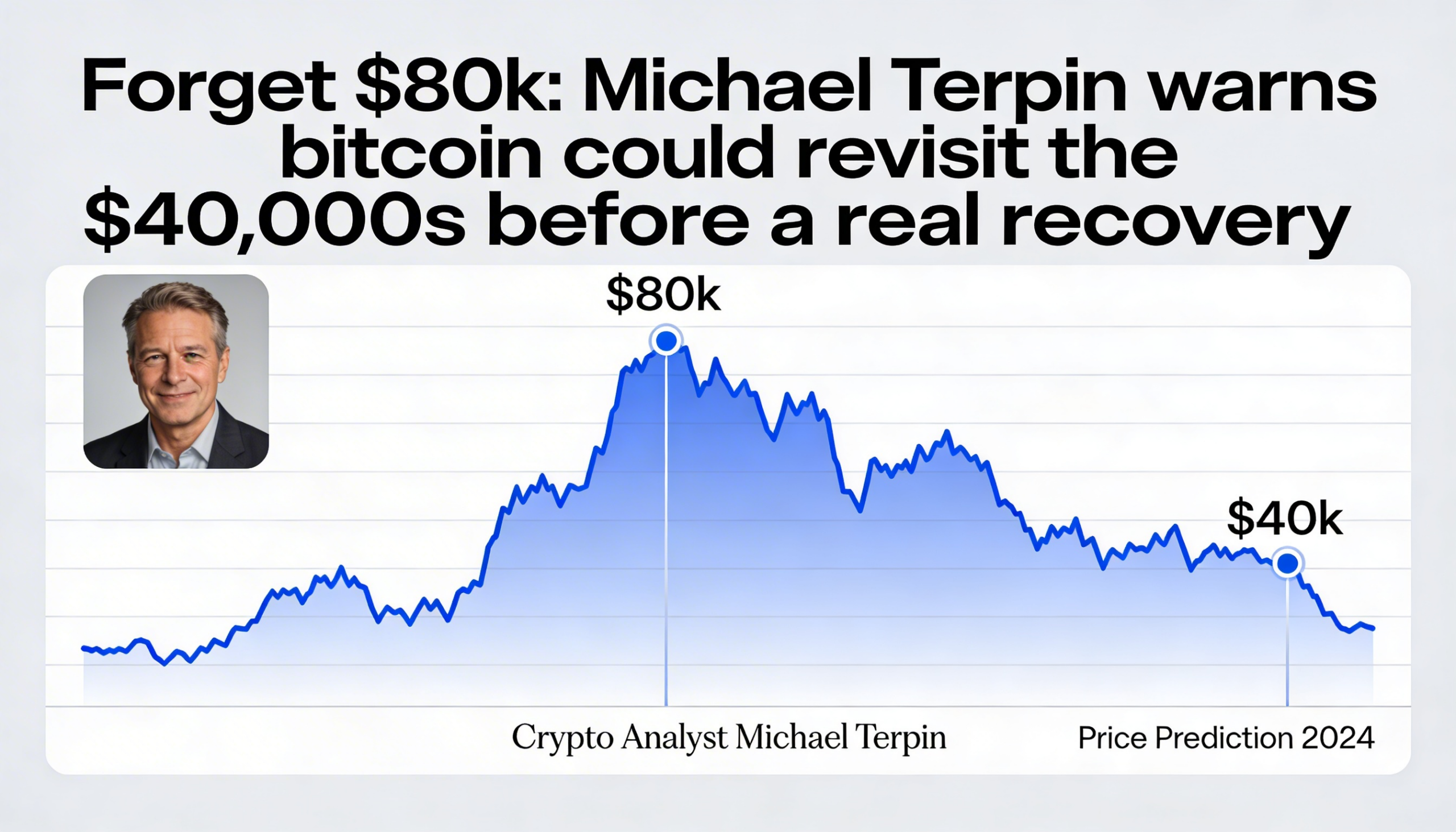
“When people thought the bottom was going to be at $80,000 and that it would only be a six-week bear market, that seems ridiculous to me,” he said. He also dismissed forecasts that bitcoin would quickly find support at $60,000 and resume its climb, calling such expectations premature.
Although Terpin stopped short of predicting a prolonged, year-long downturn, he warned the market could still face “one more point of pain” in what he described as a fragile environment. In his view, bitcoin may need to revisit the $50,000 range — or even dip into the $40,000s — before establishing a durable floor.
Central to his thesis is bitcoin’s halving cycle. Roughly every four years, the network reduces the block reward paid to miners by half, slowing the issuance of new coins. The mechanism, embedded in bitcoin’s code, reinforces scarcity by cutting supply growth over time and ultimately capping total issuance at 21 million coins.
Historically, these supply shocks have preceded major bull markets, as reduced new issuance collides with steady or rising demand. At the same time, they have also set the stage for speculative excess and subsequent corrections.
“We are exactly where we should be,” Terpin said, pointing to the well-established four-year rhythm anchored around halving events.
He argued that one of the most consistent features of past cycles has been the timing of the peak and subsequent unwind. “The bull market popped in the fourth quarter after the halving,” he noted, adding that the euphoric phase typically runs between nine and 11 months. “This time it was 11 months.”
Drawing comparisons to the prior cycle, Terpin highlighted the symmetry in timing. Bitcoin reached its peak on Nov. 10, 2021, he said, and the cycle low followed shortly after the bankruptcy filing of FTX on Nov. 10, 2022 — almost exactly one year later.
For Terpin, that historical pattern suggests the market’s current retracement may be less an anomaly and more a continuation of bitcoin’s established cyclical playbook.
Share this content: