
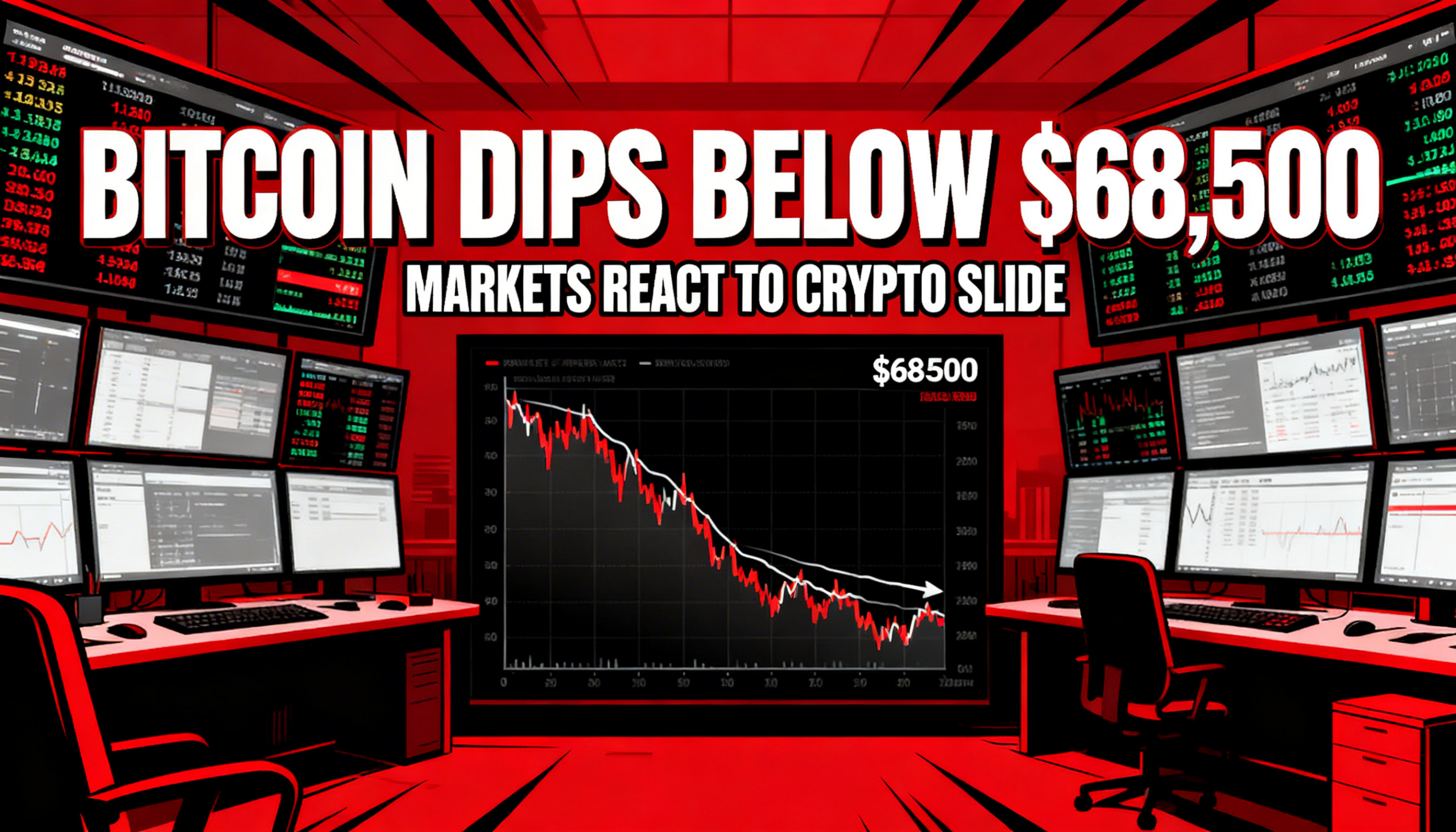
All major cryptocurrencies traded in the red Friday as the Iran conflict entered its fifth week without resolution, even as underlying data pointed to continued institutional accumulation.
Bitcoin fell to around $68,500 in early trading, down 3.2% over the past 24 hours and 2.7% on the week. The move followed a now-familiar pattern: an initial de-escalation headline quickly offset by renewed escalation, keeping markets on edge.
U.S. President Donald Trump extended the deadline for Iran to reach a ceasefire agreement by 10 days, stating that negotiations were progressing well. Brent crude briefly dipped 1.3% to $106 on the news. However, sentiment reversed after a report indicated the Pentagon is considering deploying up to 10,000 additional troops to the Middle East, erasing earlier optimism.
The broader crypto market declined roughly 1%, with total market capitalization slipping to $2.4 trillion. Ether dropped 4.6% to $2,050, slipping below a key level it had been attempting to hold throughout the month. Solana fell 5.3% to $85.93, while XRP lost 2.8% to $1.36, bringing its weekly decline to 6.5%. BNB declined 2.3% to $626, and Dogecoin fell 2.8% to $0.091. Tron stood out as the only major token in positive territory, rising 1.2% on the day and 2.4% on the week.
Global equities also weakened. Asian markets fell 0.6% after Wall Street dropped to its lowest levels since September in the previous session. South Korean technology stocks led the decline, with Samsung and SK Hynix dragging the KOSPI down 2.3%, while Taiwan’s market fell 1.2%.
The fifth week of the conflict continues to produce the same pattern seen in prior weeks—headline-driven volatility that whipsaws markets without establishing a clear trend.
Despite the price weakness, some analysts point to constructive technical signals. FxPro chief market analyst Alex Kuptsikevich noted that the total crypto market cap is approaching its 50-day moving average while still holding above it, describing this as a bullish indication.
Underlying institutional flows also paint a more supportive picture. Bitcoin ETFs have attracted approximately $2.5 billion in inflows over the past month, according to Bloomberg, offsetting most of the outflows seen since January. BlackRock’s bitcoin ETF has ranked among the top 2% of all ETFs by inflows so far this year.
At the same time, net bitcoin outflows from exchanges suggest accumulation, as investors move assets into self-custody rather than preparing them for sale.
BlackRock further emphasized this trend, noting that large investors are concentrating allocations in bitcoin and ether while largely avoiding the broader altcoin market.
With the Iran deadline now extended by 10 days, the next major catalyst for markets is likely to emerge in early April.
Share this content: