Bitcoin’s Futures Market Faces Yield Reset as Institutional Arbitrage Weakens
Bitcoin futures’ once-premium carry trade has lost much of its appeal, with quarterly basis yields staying below two-year U.S. Treasury yields since February. The decline reflects weaker arbitrage opportunities and highlights the growing maturity of crypto markets.
A trading strategy that once offered exceptional returns has now fallen behind traditional fixed-income investments, as bitcoin futures have consistently delivered lower yields than government bonds.
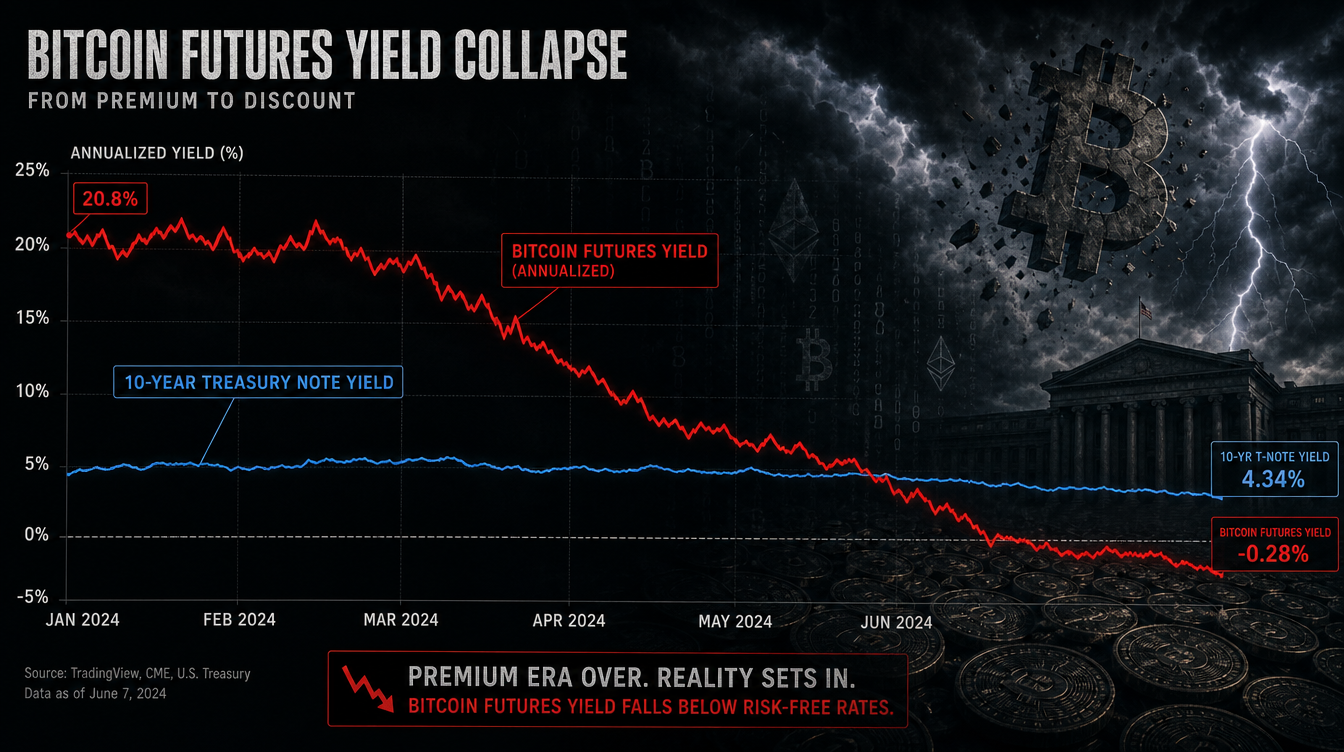
During the 2021 crypto bull cycle, bitcoin futures carry trades generated annualized returns of more than 20% across both regulated and offshore platforms. The strategy typically involved selling bitcoin futures short while holding spot bitcoin exposure, allowing traders to profit from the price difference between futures and spot markets. Today, those returns have fallen to about 3%, compared with an average 3.8% yield available from two-year U.S. Treasury notes.
The basis trade has long been a popular way for traders to capture inefficiencies between futures prices and spot prices. However, annualized bitcoin futures basis yields have remained below two-year Treasury yields for more than five months, according to Glassnode data.
Glassnode said three-month bitcoin futures basis returns have stayed below Treasury yields since February, marking one of the longest stretches of this kind. The only comparable period occurred between August 2022 and January 2023, which ended around the previous crypto market bottom.
The current period has extended to 157 consecutive days, with bitcoin futures continuing to offer weaker returns than government debt.
When futures carry falls below short-term Treasury yields, the incentive for traders to allocate capital toward arbitrage strategies declines. Investors can earn similar or better returns from safer government securities without taking on bitcoin market volatility.
The shrinking futures premium has also contributed to reduced activity in bitcoin derivatives markets. July trading volume fell to slightly above $880 million, continuing the decline from February’s peak of $1.47 trillion, according to Coinglass. The broader crypto market downturn has added further pressure on trading volumes.
However, the collapse in futures yields may indicate a healthier market structure rather than a negative development alone. Since basis trades depend on price gaps between connected markets, lower spreads suggest improved market efficiency. As bitcoin markets continue to mature, this could result in stronger liquidity, tighter spreads, better hedging conditions, and fewer unusually large arbitrage opportunities.
Share this content: